Showing posts with label Stellar Authors; A Collection of the most Supreme Writers.. Show all posts

Monday, 6 January 2025

Salman Rushdie's Victory City: Stellar Author


Salman Rushdie's Victory City

'Stellar Author'

 an occasional series of posts on 

Kitchen Table Writers

Copyright New Yorker

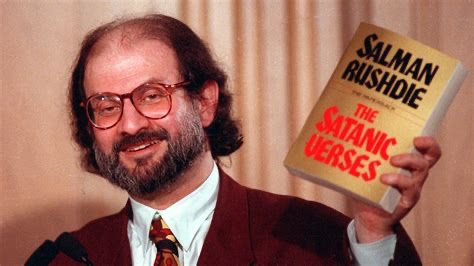
Salman Rushdie was born in 1947 in what is now Mumbai, India, but is also a British-American citizen. One might say he's a citizen of the world, being a writer whose novels are  allegorical examinations of historical and philosophical issues. He achieves these heights by using magical realism, non-linear narratives and surreal but very believible characters. There is always a dark, yet gentle strain of humor, and a dramatic, exhuberant, unconstrained prose style. Rushdie has never muted what he wants to say about sensitive religious and political subjects, and as a direct result of this, he barely escaped with his life in New York in 2023.

I first encountered him when Midnight's Children came out in 1981 and immediatey won the James Tait Black Memorial Prize  and the Booker Prize. It was also awarded the special Booker of Bookers prize in 1993, and the Best of the Booker in 2008. It was so well recieved, it's been called 
Copyright  Sky News

a watershed in the post-independence development of the Indian English novel,  and in the 80s subsequenty became known as 'post-Rushdie'. The story moves back and forwards in time, but is focused on the children born in India at midnight on the moment of its independence. In it he employs inherited myths, and generates new myths as it traces the story of these children. 

Having loved Midnight's Children, which was his second novel, I couldn't wait to read The Satanic Verses when it came out in 1988. This is the story of two Muslims confused by the temptations of the west. The first returns to his cultural roots. The other, intellectually unable to return to the faith, finally kills himself. I loved it. One of its themes is the way immegrants are treated in the UK and another looks at the very foundations of Islam.  

As I read, it was being burnt. Despite the fact, that to me, a westener, I couldn't see any content that seemed to denounce or critique the faith of Islam, Muslims had many issues with the book, including the story, the title, and some of the names used. In December 1988, around 7,000 Muslims in Bolton held a peaceful protest where they burnt a copy of the book. The Ayatollah Khomeini, leader of Iran, announced a Fatwa was on 14th February 1989.

Could Rushdie have expected this reaction? 

Writers stick out their necks. By the nature of being able, especially via fictional works, to say anything about anything, they constantly fall foul of current morals, ethics and the law. Of course, it’s wise not to be disrespectful, especially without researching and understanding your chosen subject. On the other hand, remaining neutral and inoffensive generally results in bland, insubstantial writing. 

An attempt at a private prosecution to get The Satanic Verses banned was unsuccessful, in fact, the Home Office announced it would not allow any further blasphemy prosecutions. 

Martin Amis, who interviewed Rushdie, suggests… a Fatwa is at once a death sentence and a life sentence. In his own phrase, Rushdie is firmly ‘handcuffed to history’. He is neither a god nor a devil; he is just a writer – comical and protean, ironical and ardent…I bought an evening paper. Its banner headline read: EXECUTE RUSHDIE ORDERS THE AYATOLLAH. Salman had disappeared into the world of block caps. He had vanished into the front page…His uniqueness is the measure of his stoicism. Because no one else – certainly no other writer – could have survived so well…. Amis interviewed Salman in September of the same year, at a Mystery Location…‘When I first heard the news, I thought: I’m a dead man. You know: that’s it. One day. Two days’… (Visiting Mrs Nabokov, Penguin Books 1993  pg 172) 

After a failed assassination attempt  in 1989, Rushdie began came out of hiding and soon became a central figure in debates on free speech and censorship. In 2007 he received a knighthood for services to literature and by then, was in public more and more. 

On 12 August 2022, he was about to start a lecture in New York, when man rushed onto the stage and stabbed him repeatedly, including in the face, neck and abdomen. Rushdie was airlifted to a trauma centre  and underwent surgery. Only one day later, he was taken off the ventilator and was able to speak. He had lost sight in one eye and the use of one hand but survived the murder attempt and was soon writing a memoir about the attack, Knife: Meditations After an Attempted Murder, which hit number one in the Sunday Times Bestsellers List straight away. 

Perhaps the most Rushdiean part of this awful event was the fact he reported remembering a vivid dream, in which he was stabbed in a Roman amphitheatre, only two days before the actual stabbing occurred. The intensity of the dream caused him to consider canceling the event–but he eventually decided on attending.

Since then, just one novel has been released, an amazing, rich and vibrant story called Victory City which was mostly written before the attack. 

The story is  purported  to have been found, hidden in a earthenware pot by a woman called Pampa Kampana, who is reaching the end of her 250 years of life. It begins when she is nine, and watches her mother commit Sati along with hundreds of village women. Immediately after this tragedy, a goddess enters Pampa and she becomes magical, and long-lived.  She takes refuge in a cave with a holy man, and is abused by him, but also educated. 

She is still a young woman when the magic begins. Pampa instructs two of her brothers, Hukka and Bukka, to sow a bag of seeds at the site of their old village.  A city grows, and  people sprout from the earth. Pampa whispers memories into them, so they feel they have a history. The brothers become the first kings. Pampa marries them each in turn, though her daughters are born of her true love, a Portuguese horse trader who names the city Bisnaga.

The city she founds becomes a utopia—a feminist one–Pampa is an avid advocate for gender equality, and wishes her daughters to rein after her husbands’ deaths. This request is met with much conflict and her sons seize control of the kingdom. Pampa and her three daughters are forced to flee into a magical forest where they shelter for several decades. The three daughters eventually grow in separate directions and Pampa returns to Bisnaga. In her absence, she had become a legend, and, as she still looks much the same age, can move about the city freely. Eventually,  she becomes the advisor of the latest monarch, Krishnadevaraya.

After many wars to guard and widen the borders of the kingdom, Krishnadevaraya goes mad and Pampa, caught in one of his rages, is forcefully blinded with an iron-rod. She takes up refuge with a holy man, finally beginning to feel her age which is now over two hundred. The residents of the city become outraged at this betrayal and turn against their king and the kingdom degenerates and is ransacked and destroyed. The novel ends with Pampa burying her written history in a pot and waiting for the Goddess to release her so that she may die.

So what is this allegory about? 
It is possible that he has used an ancient empire, the  Vijayanagara, and to a degree followed major turning points in the history of the empire. But it strikes me we could actually be following major turning points of human history. Even so, there are moments that need careful analysis; for instance the invasion of the pink monkeys in the forests where Pampa and her daughters have settled. Who are the conniving pink monkeys who inveigle their way into the monkey tribes and then take them over? Maybe that is what human history was: the brief illusion of happy victories set in a long continuum of bitter, disillusioning defeats (pg 155).

 And why, when she takes refuge in a cave with a holy man after her mother’s death, is she regularly abused by him? This passage struck me: That's how men were, Pampa Kampana thought. A man philosophized about peace but in his treatment of the helpless girl sleeping in his cave, his deeds were not inlignment with his philospopy. 

Virupaksha Temple, Vijayanagara, Karnataka

In some ways, Pampa could almost be Salman, who has experienced both adoration and opprobrium for his acts of creation. Without doubt, to me, the writer is saying that we humans are both good and evil. In this book we meet oppression, religious zealotry, authoritarianism, divide, patriarchy. But there is also equality, redemption, the power of love, and a demonstration of how humans can be at their most creative when they live in an atmosphere of openness, tolerance, and egalitarianism.


The 'Stellar Author' series of posts on Kitchen Table Writers has looked at several amazing writers, including:

George Eliot

HenryJames

Cormac Mccarthy

Virginia Woolf

A S Byatt

Herman Melville

Boris Pasternak

Just click on the link to read the blogs. 

Thursday, 23 November 2023

Donna Tartt, Carel Fabritius, and The Goldfinch


Once morning in 1654, in the city of Delft in Holland, there was a "thunderclap". That was the way the people of Delft described the  explosion of a  factory containing 90,000 pounds of gunpowder. Large sections of the city were devastate, and 100 people died. 

Carole Fabritius was among them, and that may be why so few people have heard of this artist, who had been a  pupil of Rembrandt, and, before he reached his thirties, was already an  acclaimed painter of the Dutch school. He left a sadly small portfolio of work, and it's clear might have gone on to paint so much more, if he had survived the blast.

One of his most beloved works is also one of the most upsetting, from the viewpoint of an animal lover; The Goldfinch.  Just 9X13 inches, and possibly as a trompe d'oeil and perhaps a clever part of a window shutter, it is beautifully rendered. A small songbird sits on its perch, staring out at the viewer. Every feather is a perfect rendering. And the little gold chain that prevents the bird from seeking its freedom is lost in shadow, you have to peer closely to see that the goldfinch is a captive. It was sitting in Fabritius's workroom, almost next door to the factory, when the blast destroyed almost everything there, including the artist himself.

Donna Tartt launching The Goldfinch in Amsterdam
. Photograph: Bas Czerwinski/AFP/Getty Images
When I read Donna Tartt's third novel in 2014, titled The Goldfinch, I was expecting something grand, something with an explosion at the centre of it, because her previous two novels had been acclaimed and their powerful stories were still in my mind.

She certainly offered an explosion; moments after the story begins, a bomb blows out the New York's Metropolitan Museum. 14 year old Theo Decker is in one section, his mother elsewhere. She is killed by the blast.  As Theo tries to extricate himself from the wreckage, a dying man tells him to take the small, framed picture  lying in the dust. He thinks to  take to his mother for safekeeping and finds his way home; she never arrives. From then on, The Goldfinch, with its imploring theme of captive beauty, is his guilty secret, and a physical connection to his mother. It becomes something he can't bear to be rid of but something he cannot admit he possesses.

How fittingly linked these two stories are. The fiction of a boy who walked out of an explosion with the painting of an artist who died in an explosion.  The Goldfinch, painted in the year of Fabricius's death, was one of only about 12 of his paintings to have survived the tragic explosion, and  in Tartt's story, it survives again, albeit in a setting it has never traveled to; it's hung in The Haig. 

I was reminded of The Goldfinch when I read Laura Cumming's latest book

on art; Thunderclap. Although the focus of this book is Fabritius and his works, she also looks at her own approach to art, as an art critic. She says, 'We see pictures in time and place. We cannot see them otherwise. They are fragments of our lives, moments of existence…' I wonder if that is also true of fiction; certainly, a school of literature theory suggests that works can only be judged though the eyes of the reader, who brings their own emotional smörgÃ¥sbord to the interpretation.

Certainly, I began reading The Goldfinch knowing nothing about the painting, or having even heard of Carel Fabritius, but I devoured this long book; it reminded me of Dickens in its complexity and with its whirlwind of amazing characters, and its 'cause and effect' plotting – the dying man who tells Theo to take the painting is guardian to a young girl named Pippa, who was also in the museum when the bomb exploded, and is the only person who Theo feels can understand his heart, as they both lost someone dear in the explosion. Their lives will collide and separate, repeatedly, throughout the book. 

And yet, Tartt told The Telegraph, shortly after publishing the book that she hadn't even known about the Delft Thunderclap when she wrote it.  She said'The the first time I saw it, I connected very strongly with it. This little bird, so brave and so dignified, and then you see that terrible little chain…' She was simply looking for the right painting, that would be small enough to carry and would appeal to a child. 

The rôle of synchronicity in creating a novel can make one gasp. For, if Tartt didn't know much about Fabritius’ death when she chose the painting, why is her central character called Theo Decker? Because at the time of his death Fabritius was painting the portrait of a church deacon named Simon Decker. 

Writing is full of such coincidence, as Tartt admits: 

'It all fit together in ways I could never have imagined. When coincidences like that start happening you know the muses are at your side.

It's good to know that when such amazing moments occur, the writer should grasp them with both hands. 


Friday, 31 March 2023

Virginia Woolf, A Writer's Joy - (Writers Writing about Writing).


 My copy of Virginia Woolf’s A WRITER'S DIARY

In this occasional series, A Writer's Joy (Writers Writing about Writing), I want to look at how writers use their notebooks and diaries to record their thoughts, reflections and ideas on writing. A wealth of interest and knowledge from down the ages can be found in these pages, often unpublished, but nevertheless facilitating and enlightening. 

 My copy of Virginia Woolf’s A WRITER'S DIARY seems to be a first edition of 1953 from The Hogarth Press. It has that smell of an old book about it – a mix of tobacco, spores and midnight oil. The original owner of the book has written her name in on the first page in slanting black ink...Marjory Todd...and dated it 1/1/54,suggesting that this was a Christmas present. Dipping into it on occasion, as I do, reminds me of  something Virginia wrote...What a vast fertility of pleasure books hold for me! I went in and found the table laden with books. I looked in and sniffed them all. I could not resist carrying this one off and broaching it. I think I could happily live here and read forever...Virginia Woolf’s diaries were kept over a period of twenty-seven years and after her death, her husband, Leonard, gathered extracts from them together. He went through 30 handwritten volumes and selected passages that related only to her writing life. They take us from 1919, when she was 36, to 1941. The last entry, just 20 days before she walked into the River Ouse with an overcoat filled with stones, finishes...I think it is true that one gains a certain hold on sausage and haddock by writing them down. 

    
     It has been suggested that Leonard kept the more intimate areas of Virginia’s diary from publication because she wrote of their relationship, her sexuality and the state of her mental health. But he maintained in his lifetime that the abridgement was far more to do with concentrating on the entries that demonstrated her art and intellect as a writer so that her reputation could be restored. It seems remarkable to me that this might need to be done, but in fact through the 50’s and 60‘s Woolf was not widely read and no university taught her work. She had lost her rating as a writer in the vanguard of modernism and English literature. And so the published diary accompanied her return to recognition; in the 80’s the full diaries were published for the first time and she become reinstated as a great writer.

     Woolf teaches the 21C writer through humility and humanity. She feels ‘like us’; we can empathize on the depressions and mood swings of a writer’s life...I’m a deal happier at 38 than I was at 28; and happier today than I was yesterday having this afternoon arrived at some idea of a new form for a new novel...(January 26th 1920)..the creative power that bubbles so pleasantly in beginning a new book quiets down after a time and one goes on more steadily. Doubts creep in...(May 11th 1920) I expect I could have screwed Jacob up tighter if I had foreseen, but I had to make my path as I went...(October 29th 1922 – all referring to Jacob’s Room). Sometimes she witnessess and records things that feel historic...It is a decaying village (Rodmell) which loses its boys to the town. Not a boy of them, said the Rev. Mr. Hawkesford, is being taught the plough. Rich people wanting weekend cottages buy up the old peasants' houses for fabulous sums...(September 25th 1927)

     Although she is modest in her own appraisal of her writing, clues to the homilies
    people have recently paid to Wolfe can be spotted. I was gripped to read on June 19th 1923.But now what do I feel about my writing?–this book, that is The Hours, if that’s its name? Finally, Woof called the book she was writing Mrs Dalloway, but that The Hours was the title Michael Cunningham chose for his Pulitzer Prize-winning novel about three generations of women affected by Mrs Dalloway. 

     Maybe I shouldn’t be, but I’m often amazed at how organized she was. On April 12 1919, she wrote...Moll Flanders, which I finished yesterday in accordance with my time sheet...Not everyone likes to be so regimented in their work, but any of my students who have suggested to me that they can’t get a routine going will know I do recommend using tick lists, time sheets, work diaries and pie charts to get motivated – I would certainly recommend reading A Writer’s Diary as a wonderful way to inspire your own writing, and one of my students has been doing just that...
     I’ve had a Virginia Woolf splurge this month...she wrote to me... I particularly liked Woolf’s discussions about using her notebook and especially her entry on 20 January 1919 which talks about her freewriting leading to “the diamonds of the dustheap”...She went on to say how the diary contained lots of very useful nuggets of advice on writing generally and this led to me reading To the Lighthouse and Orlando....which has provided some helpful lessons in bending the boundaries of life writing and I was inspired by Woolf’s amusing observation that when the facts aren’t there, sometimes the writer has to make them up... Helen quotes Woolf in Orlando...We have done our best to piece out a meagre summary from the charred fragments that remain; but often it has been necessary to speculate, to surmise, and even to use the imagination...explaining how this affected her  her own writing... With this in mind, I have conflated a number of events to create a more focused story... bringing techniques from fiction, I’ve used some stream-of-consciousness to try to convey the strangeness I felt ... 

    It has been said that writers are ‘born not made’, but they don’t come fully-formed from an egg – they have to practise their skills to hone them.As I write, my son is  playing the same phrase from Chopin over and over again. Perhaps he’ll perfect it and move on before I brain him! But, like musicians, writers do have to practise ‘over and over’, and it really does get better as you do that. Recording the slow improvements you make will help you see real progress.

    Keeping  a diary, as Woolf did, or a notebook in which you only write about your own writing can feel perverse to some new writers; they ask why on earth, when they're so busy writing creatively, why they should stop to talk to themselves about the process. But doing so is invaluable - and reading it back to yourself from time to time  will really inform and inspire you.

    The analysis you attempt will increase your ‘learning curve’ considerably –  do this for a week or two and you will quickly see the affects for yourself once you’ve begun. Reflecting on the progress of your writing life is an important aspect of starting to write.

    Even though it’s possible you may think you have nothing to record at the moment, that simply isn't true. I'm not, after all, suggesting you fill this diary with notes that start I got published today! Instead I'm suggesting you look at the process you use to write.

    At first, you might find it hard to know what to put down. Sectionalizing your analysis may help your understanding. Try writing about:
    • What works for you as a writer, and what you find difficult
    • Your journey through each session of writing.
    • Any advice you read or are given – what you understood and what you didn’t.
    • How any witing exercises you try out went – also make a note of those you wish to extend or repeat
    • Why you’ve chosen certain genres and ways of writing, 
    • What you think about your abilities – track their improvement
    • Explore various ‘parts’ of writing; your thoughts and your preferences on:
      • Dialogue 
      • Description
      • Narrative 
      • Characterization
      • Structure and plot
    • Your understanding and clarification of concepts such as Show, don’t Tell
    • Problems of drafting, redrafting, tightening
    • Discuss themes with yourself; look at how you can add symbolism to your work by exploring themes
    • Add commentaries on the books you have read
    • You can moan about the pitfalls of the writer’s life
    • And of course you can note down anything that feels like progress.
    Start this diary now! 
    A writing diary help you talk through your writing. It’s important to help yourself to make sense how it works for you – how your thought processes relate to your growing battery of skills and understanding. When you put all this down in words it begins to be understood on an intellectual level…whereas, when writing, you may be learning more on an intuitive level. It’s like ‘synergy’ in medicine – the idea that two separate things work okay separately, but together they work many times better. 
    Grab any bit of paper (you can always paste it into a nice book you later buy) and try to answer some of the bullet points above. Don't think too much about what you write. You're writing this to yourself, for you and only you to read back later. Even as you write, you might notice how you're putting your thoughts in order through the things you're jotting down.

    I  will be recommending other writers writing about writing – aptly titled 'A Writer's Joy'. To find these posts  search the Label for 'A Writer's Joy.'

    Meanwhile,  I can’t recommend Woolf’s diaries highly enough to any writer; it won’t matter one whit if you’ve not read anything else of her work...although reading the diary may entice you into the marvel of her novels. Perhaps we should end with Virginia's words; a marvellous description of the June 1927 eclipse of the sun...In our carriage were Vita, Harold, Quentin, Leonard and I. This is Hatfield, I daresay, I said. I was smoking a cigar...so we plunged through the midlands; made a very long stay at York. Then at 3 we got out our sandwhiches and I came in from the W.C to find Harold being rubbed clean of cream....We got out (at Barton Fell, Yorkshire) and found ourselves very high, on a moor, boggy, heathery, with butts for grouse shooting...We could see a gold spot where the sun was, but it was early yet. We had to wait, stamping to keep warm...Then, for a moment, we saw the sun, sweeping - it seemed to be sailing at a great pace and clear in a gap; we got out our smoked glasss; we saw it, crescent, burning red; next moment it had sailed fast into the cloud again; only the red streamers came from it; then only a golden haze, such as one has often seen. The moments were passing. We felt cheated; we looked at the sheep; they showed no fear; the setters were racing round; everyone was standing in long lines, rather dignified, looking out. I thought how we were very like old people, in the birth of the world - druids on Stonehenge. At the back of us were blue spaces in the cloud. These were still blue. But now, the colour going out. The clouds were turning pale; a reddish black colour. Down in the valley it was an extraordinary scrumble of red and black; there was the one light burning; all was cloud down there, and very beautiful, so delicately tinted. Nothing could be seen through the cloud. The 24 seconds were passing. Then one looked back again at the blue; rapidly, very very quickly, all the colours faded; it became darker and darker as at the beginning of a violent storm; the light sank; we kept saying this is the shadow; and we thought now it is over - this is the shadow; when suddenly the light went out. We had fallen. It was extinct. There was no colour. The earth was dead. That was the astonishing moment; and the next when as if a ball had rebounded the cloud took colour on itself again, only a sparky ethereal colour and so the light came back. I had very strongly the feeling as the light went out of some vast obeisance; something kneeling down and suddenly raised up when the colours came. They came back astonishingly lightly and quickly and beautifully in the valley and over the hills - at first with a miraculous glittering and ethereality, later normally almost, but with a great sense of relief. If was like a recovery.


    Monday, 21 February 2022

    The Wings of the Dove by Henry James – Stellar Authors


    Anyone out there who has never read a Henry James? Is it because you believe he's inaccessible, boring, difficult, over-long, too fixated on minutiae, too exhausting for the brain? 

    He is known to be a writer who takes his sweet time to tell a story. Although James writes with a deep and finely detailed eye, he moves his novels along at the pace of a growing bramble shoot. No matter – his style inveigles  you, and before you know it, you're chapters in. His writing voice gets 'into your head' and it's not hard to become involved and absorbed.


    James was well known in his life as a critic and a scholar –  he was enthusiastic and exacting about the craft and theory of writing fiction. His theories work to this day – in fact, he's one of the best teachers, both through his acclaimed manual The Art of Fiction and through the example of his fiction. James is the past master of character development, plot construction, authentic dialogue, and structural timing – he places the where and when of each event and incident in their perfect place.

    Above all,  his stories are dark. Each of his characters has a 'shadow side'. Through his books, he examines and exposes some of the worst traits of human nature. 

    I've loved Henry James since my twenties. I'm not alone. Nigella Lawson explains, in her 1998 cookbook  How to Eat:

    When I was in my teens, I loved Henry James. I read him with uncorrupted pleasure. Then, when I was eighteen or so, and had just started The Golden Bowl, someone – older, cleverer, whose opinions were offered gravely – asked me whether I didn’t find James very difficult, as she always did. Until then, I had no idea that I might, and I didn’t. From that moment, I couldn’t read him but self-consciously; from then on, I did find him difficult. I do not wish to insult by the comparison, but I had a similar, Jamesian mayonnaise experience. My mother used to make mayonnaise weekly, twice weekly; we children would help. I had no idea it was meant to be difficult, or that it was thought to be such a nerve-racking ordeal. Then someone asked how I managed to be so breezy about it, how I stopped it from curdling. From then on, I scarcely made a mayonnaise which didn’t split. It’s not surprising: when confidence is undermined or ruptured, it can be difficult to do the simplest things, or to take any enjoyment even in trying...

    For my Read Classic series this time, I'm looking at The Wings of the Dove.  In lockdown, our village hall always had a box of free books in the porch and this Henry James was tucked in there, waiting for a new reader.I plucked it out because  I knew this novel would end up in Venice, a city I love. I read it over the winter, snuggling in front of roaring fires, and tucked into bed on a mound of soft pillows.  

    On the first page you meet Kate, waiting for an interview with her unloved and unloving father – a wastrel who lives in poverty. Beautiful and full of style, it's fair to say that Kate is a designing young woman who does not want to end up poor like her dad, so has thrown her hand in with her Aunt, Maud Lawder, who is a rich widow able to show her niece off to polite London society. 

    There's no stopping love, though; Kate has fallen so deeply for Merton Densher that she engages herself to him 'forever'. All this is kept a secret from Aunt Maud, because Merton is a poor working journalist, with nothing to recommend him as a husband – no fortune, in other words. 

    Into the story steps Milly Theale, an American girl, bereaved of all her family and so in possession of a vast fortune. Milly arrives in London with her companions, young Susan Shepherd, and the more mature Mrs Stringham, who is an old school-mate of Kate's aunt. Milly strikes up a friendship with Kate, and she is already linked to Densher; she met and fell in love with him when he visited the states for his work.

    Milly learns she is dying. She asks her physician 'what shall I do?' and he says…'live, live.' Milly is fatally ill, but she's not unwell; she is a vivacious, very genuine girl although of course, a little naive, so when she visits the grand estate of  Maud Lowder, she is wooed by Lord Mark, who Mrs Lowder had hoped would be a suitor to Kate. He's an unpleasantly shallow man, and gets rejected by both of them.

    Kate, however, is devising a dastardly plan. She knows Milly loves Densher and encourages him to pay court to Milly. It is at this moment in the book that clever dialogue is everything. Kate wants Densher to believe her idea is primarily a ruse to cover his relationship with Kate, so the reader is not told outright that Kate's true plan is for Millie to marry Densher, before she dies, or at least, leave him an inheritance, so that they can marry in comfort. And Densher does worry about the subtextual implications Kate's not talking about. At this point in the story, the reader is no wiser than Densher – unless they have (like me!) turned to Google to check what is actually going on. Perhaps that is the 21st C equivalent of 'reading the last page', and it did colour my understanding, but not my enjoyment.

    Milly goes to Venice and the sun of Northern Italy, to enjoy 'her life' with her companions, and Kate and Densher follow. Milly can afford to rent an entire waterside palace, Palazzo Leporelli. This was modelled on the real Palazzo Barbaro, which was owned by friends of Henry James. And, according to Wikipedia, Milly herself  is based on Minny Temple (1845–1870), James' beloved cousin who died from tuberculosis. In his autobiography James said that The Wings of the Dove was his attempt to wrap her memory in the 'beauty and dignity of art'. Milly's illness is never openly diagnosed. It's not tuberculosis, at least not in its final stages. James may not have cared about the nicety of a diagnosis; it was the prognosis that occupied his writing.

     Venice is a mysterious place, the heart of romanticism, a place where Densher might easily seduce Milly Thele, but James’s Venice slides away from symbols of love and passion towards corruption, destruction. Asking your fiancé to play around with another women is never a great idea, and as Kate  and Densher meet at various famous city venues, Kate reveals outright that she wants Densher to marry Milly. Densher is horrified, and their relationship begins to grow strained. Meanwhile, the rejected Lord Mark arrives and is given an audience with Milly, telling her Densher is engaged to Kate. Wth that cruel revelation, Milly's palace becomes a place of siege. Densher is visited by Susan Shepherd who describes her as 'broken-hearted'. She has 'turned her face to the wall'.  Her health deteriorates and Densher returns home to Kate.

    Back in London, Kate and Densher face the fact that their relationship has been irreparably damaged by their misadventure with Milly. Milly does leave him a large amount of money, but Densher wants to believe that Kate would marry him, rich or poor. He tells Kate that they should  refuses the bequest. The book ends with this glorious exchange;

         He heard her out in stillness, watching her face, but not moving. Then he only said: "I'll marry you, mind you, in an hour."        

        "As we were?”

    "As we were.”

    But she turned to the door, and her headshake was now the end. "We shall never be again as we were!" 


    The lovers have been over-shadowed and separated forever by the wings of the dead dove.


    Tuesday, 26 January 2021

    Doctor Zhivago: Novel or True Story?


    Boris Pasternak 
     'Stellar Authors', an occasional 
    series of posts on 
    Kitchen Table Writers

    For almost all my
      life I’ve been under an illusion – a massive misapprehension – that I can trace back to an afternoon matinee in 1965 when we settled into our plush popcorny seats for the new David Lean Epic, a film that featured spectacular landscapes, a heartbreaking love story and brutal scenes of civil war.

    Yes, Doctor Zhivago, the film.


    Five years later I bought a two-volume edition of the book and started the long journey though those landscapes, that love story, that awful bloodshed. Yesterday, fifty years on, I finally came to the last page in  Pasternak’s book. As I did so, my illusion lifted. 


    For all those years of faltering, stopping and restarting at the beginning of the book yet again…I understood and presumed that Doctor Zhivago was a real person. 


    It was clear to me that the book was biography. I was unable to come to terms with the idea that anyone could invent such an epic tale –  starting at the time of the last Tzar and documenting the revolutions of 1905 ad 1917, finishing in the  days of the 2nd World War. Surely such an expansive boundless tale was based in some truth? Surely Pasternak had researched the real, if slightly forgotten, life of a Moscow doctor? 


    Hum along as you read

    I’m a novelist myself, always on the lookout for characters and ideas, but not for one moment did it occur to me that Pasternak had made those  life-sharp characters up….Yuri and his gracious wife Tonia…Lara and her idealistic, ruthless husband Pasha Antipode…the evil Viktor Komarovsky and the shadowy figure of Yuri's half-brother, General Yevgraf Zhivago. 


    But of course Doctor Zhivago is a work of fiction. It’s not even Pasternak's first work of fiction, although most of his writing is poetry. Of course, he made it all up!


    Or did he? 


    Pasternak's sister, Anna,
    wrote a book about Olga

    In 1946 Pasternak met Olga Ivinskaya, a 34 year old single mother, Every afternoon Boris came to her office and walked Olga home. They became lovers, despite Paternak remaining married. In 1949, while carrying Pasternak's  baby,  Olga was arrested by the KGB. Her apartment was ransacked for items connected with Pasternak and she was repeatedly interrogated. She refused to say anything incriminating about Pasternak. She was sentenced to ten years hard labour and miscarried early in her time in the GULAG. When he heard of her arrest, Pasternak said, weeping, "Everything is finished now. I'll never see her again. It's like death, even worse…Stalin is a ‘murderer.’"


    Of course all novelists are inspired by the love they themselves feel – all loved ones are the most ‘special’ of people. Olga Ivinskaya was a poet, a clever and compassionate person and I like to think that their deep love, and their terrible parting, galvanised Pasternak to write his greatest work. Doctor Zhivago was smuggled to Europe by an Italian journalist and published in Milan in 1957.


    Boris Pasternak
    Now that I know the truth, I can see that in the novel Pasternak created his own alter-ego – a poet, philosopher and physician whose life is disrupted by war and his enduring love for a charismatic, beautiful woman. Most of us have seen the film, and know the story shows the way his life brushes past Lara’s at crucial times in hers – they both witness her mother attempting suicide, and Yuri is there when she tries to shoots her abuser, Komarovsky, at a party. Pasternak sets up this yearning and almost eternal love early on in the story.


    One of the most romantic aspects of the book is the way Zhivago journeys through the vast landscapes of Russia. After serving in the First World War, the Zhivago family leave communist Moscow for the Ural Mountains, where, Tonia is pregnant with their second child and Yuri begins an affair with Lara. Zhivago is forced to join a partisan army fighting the Tsarist Whites, but he escapes, walking through the snows to Yuriatin, where Lara lives. 

    Pasternak’s intent was to interconnect Zhivago to as many of the Russian people as he could.  Like his inventor, Zhivago’s gentle and artistic character makes him vulnerable to the brutality and harshness of the Bolsheviks. He is unable to take control of his fate, and dies in utter poverty. leaving poems as his legacy. 


    Doctor Zhivago is not an easy read, but it is a heady and rewarding one. 


    Wikipedia sums it up when it says; The plot of Doctor Zhivago is long and intricate. It can be difficult to follow for two reasons. First, Pasternak employs many characters, who interact with each other throughout the book in unpredictable ways. Secondly, he frequently introduces a character by one of his/her three names, then subsequently refers to that character by another of the three names or a nickname, without expressly stating that he is referring to the same character.


    Oh, ye gods, those names are sooo hard. This Wiki character map shows what that really means for the reader; 


    But I do like to complete a work of classical literature every year, and 2000 was a great year to be reading this complex but breathtaking book. I started again at the beginning once more, and I kept going…until I reached the end of the story. 


    I felt fantastic. I’d read this book, described as ‘the first work of genius to come out of Russia since the revolution’ (V.S. Pritchett). I'd loved every word of brilliant prose...


    But the sun sparkled on the blinding whiteness and Yury cut clean slices out of the snow, starting landslides of dry diamond fires. It reminded him of his childhood. He saw himself in their yard at home, dressed in a braided hood and black sheepskin fastened with hooks and eyes sewn into the curly fleece, cutting the same dazzling snow into cubes and pyramids and cream buns and fortresses and cave cities. Life had had a splendid taste in those far-off days, everything had been feast for the stomach!


    In 1958, Boris Pasternak won the Nobel Prize for Literature. Six days later,  under pressure from the Soviet Union, he sent a telegram: "Considering the meaning this award has been given in the society to which I belong, I must reject this undeserved prize which has been presented to me. Please do not receive my voluntary rejection with displeasure.” Pasternak’s poetry, plays, and translations were well known in the USSR but Stalin’s government  had threatened, suppressed, and spied on him. Doctor Zhivago was never published in the Soviet Union. 

    Alec Guinness as  Yevgraf Zhivago
    and Rita Tushingham as Tanya

    It is the ending of the story that is most surreal and puzzling…most of which is absent from David Lean’s 1965  film version. After Yury has tricked Lara into taking her daughter and going away with her previous abuser, Komarovsky, he returns to Moscow and begins living with Marina, and they have two children. On the way to his first day’s work at a Moscow hospital, he dies of a heart attack. Lara comes to the funeral and asks Yury's half-brother if there is any way to track the location of a child given away to strangers. She stays for several days and then disappears, likely dying in a concentration camp. Years later, Misha and Nicky are fighting in World War II and encounter a laundry-girl, Tanya, who tells them her life story. They determine that she is the daughter of Lara and Yury. And that is how the story ends, except of course, there are pages of the poetry of Pasternak, writing as Zhivago. These straggling, strangely plotted final sections only consolidated my idea that all this must be true. It felt too raw, too human and, to a degree, too far a coincidence. I could see the reality of the lonely man seeking solace, already sick at heart and shameful that his wife and first two children now live in Paris. It felt painfully true.


    Doctor Zhivago is mind-widening and lyrical. Beautiful prose and strange, eloquent dialogue. Descriptions of the huge landscapes of Russia, and a story that documents its turbulent twentieth century. If you've never read it, you can do so here, in an excellent translation (Pevear and Volokhonsky).