Showing posts with label starting to write. Show all posts

Monday, 17 August 2026

Flash Fiction Writing: 7 Rules for Success

Flash fiction is usually defined as being under 1,000 words. As a writer who loves the long and complex novel, something that weighs a ton and takes a nice long time to read, I'm quite a stranger to 'less than 1000'. But I'm now trying to write a couple of <1000s, each month, at around 500-700 words and I'm enjoying it. I'm sharing some of these short-shorts on Substack. 

They say it all started with the 'six-word story' written by Ernest Hemingway (which we all know, don't we? For sale, baby shoes, never worn... Here's some more recent 6-word attemps, 

"Wrong number," said a familiar voice."

"Ghost seeks body. No experience necessary." 
"Introduced myself to myself. Amnesia hurts."
Six-words stories are clever, but I don't find them very satisfying. I prefer something that has a clear beginning, middle and end, even though it's only hundreds of words long. Every so often I offer one to be read: you can find my latest here, on Substack:
I've learnt a few lessons as I've been honing the craft. And it is a craft, and possibly an art; people continue to debate the difference between these stories and poetry. I'm not going down that wormhole today except to say that flashfiction must tell a story; a poem does not need to. 
Very short fiction depends on having complete control of point of view and language including tense, and working out how much detail to put in your story. Reading Short Circuit, the book about writing short fiction, (editied by Vanessa Gebbe), I noticed that a famous early short-shortist, Edgar Keret, had five staunch rules for the form. 
Number One: Sweat the Title 
'Make it work for a living', Keret recommends. it can anchor the story, or illuminate the theme, click with the surprise in store for the reader, explain the plot, develop character flaws or expand a metaphore you're weaving in. You could steal it  (titles are pretty immune from plagiarism rules), add hidden context, create drama, friction, emotion. The best advice is; don't use vague terms. Don't call your story about your cat, The Cat's Adventure. Call it Midnight Escapology, or something even wilder. 
Number Two: Don't use too many Characters 
A story of  less than 1,000 words can’t hold the number of characters longer pieces can. It must have the least number of characters and one point of view.
Number Three: Start in the Middle
Use your In Medias Res knowledge to drop into the story as late as you possibly can. You don't have time for exposition or scene setting. You don't have space for life stories.
Number Four: Make Sure the Ending is in the not at the End
Creating a microscopic volta can help focus a flash fiction. Volta is a literary term for a turning point which shifts the perspective. this way you can summarise the narrative in very few words, exposing the emotional core of the story. Keret believed that getting to the denouement before the end helps the reader wind the story down as it plays out.
Number Five: Make your Last Line Ring like a Bell.
Your last line isn't your ending; we had that at that volta moment (above). Keret says the last line should leave the reader wth something which will continue to sound after the story has finished...take us into a new place, where we can continue to think about the ideas in the story, puzzle over them.
The more I practise the art of flash fiction, honing it each time I start a new story, the more I realise that, five rules just isn't enough! So I'm adding these two to the mix:
Number Six: Hook your Reader with Voice. 

Character is a defining force in flash fiction, therefore, the voice of the narrator becomes an essential component in hooking the reader in from the beginning. Create a distinct voice that is saying something arresting and original.

Number Seven: Tighten to Get the Word Count Down
Flash fiction thrives on compression. There is no time to stop and smell the roses, so sneak your description in, using powerful imagery to convey emotions and themes You have to imply any world-building with no extra wordage. Flashbacks really don't work, and you can cut down on speech tags––and eliminate adverbs. Avoid exposition; SHOW everthing and TELL nothing. Remove details unless they are critical to the meaning of your story. Take out everything that doesn't move the story on––even dialogue if it holds the story up. In fact, the only thing I insist on including in my short fiction is the name of the narrator. I know writers love to keep that quiet, but readers really want to know. 
But Remember––Rules, are made to be broken! 
Who knows, a flashback may make the story sing. The entire piece could be in dialogue; or description. You might find three characters are really necessary! Nothing is impossible. Because flash fiction is as much fun to write as it is to read.


Saturday, 19 April 2025

Core Emotional Truth: A Craft of Creative Writing


Emotional truth is elusive and difficult to capture. No standard definition exists. Here’s my crack at it: Emotional truth allows readers to feel a certain way about the experiences of people who may live different lives from them. It’s the lens that allows us to see ourselves in a story that results in a heartfelt connection in a fictional narrative. Emotional truth transcends facts...Writer's Digest. 

Writing fiction? Have you ever pulled back from what you are writing and asked, what does this…my writing…mean? It it making sense to me? Will it make sense to a reader? 


To answer that question, I’d like you to think about the Core Emotional Truth of your writing. This is something that grows with the creation of a story. In other words, you might not recognise such a truth when you start writing––in fact such a truth might not be present when you start writing––but as the story comes into itself (often around the point you might finish a first rough draft), it is something you should think about. 


This core emotional truth (CET for short), is like a golden thread running all the way through a piece of fabric, and like beautiful embroidery it is usually bound up with the passion behind it.


Being passionate about your work will help tighten and bind it. But to create a narrative that really pulls the reader into the text and along the entirety of it, you have to believe yourself in its need to be released out there into the world; to be appealing to readers. Searching for the ‘point’ of what you are writing, so that the reader can understand why they should continue to read, suggests working towards fully understanding what has developed in your story (be it a short story or a longer novel). . You can, if you like, call it your  'Vision', 'Thesis' or 'The Premise'  (and even, perhaps wrongly 'your Theme')…the CET is a central, single concept that sums up your work; your ‘Core Emotional Truth’.

Don't get confused by my used of the word 'truth' here. Novels are inventions, made up in the writer's head, at least in part an invented narrative...a lie. Finding a core truth in such a fabrication is an emotional experience, not rooted in facts––for readers and their writers alike. To gain the readers empathy, there must be some sort of true thing that you are attempting to commnunicate, and that emotional truth will engender empathy and help hook the reader into the story. Most great classics of literature do this perfectly, and it is what they are loved for. 


Most of those great classics can have their core emotion truth summed up in a phrase––at most a couple of objective sentences, preferably in an abstract style, such as an aphorism. This phrase won't necessarily tell us about the contents of the story, or its subject, but about some fundamental truth of life, something that makes us all human. It doesn’t have to be a statement that everyone would agree with, but it must make sense to anyone reading it. Here' we're thinking about a summary of what a story is truly about – the deep core of what it is saying to its readers.


As an example let us think about a book we all probably know in some way; A Christmas Carol. The CET of this Dickens' small masterpiece would not be, for instance,


Scrooge learns to be a better person when he’s visited by the ghost of his partner…


That’s more of a ‘blurb’ really.  What about...


Financial wealth never makes you happy?


This is separate and slightly different from any themes you've been thinking belong to your work. The themes that run through a short story or novel can be reflected in symbolism within the story. They can usually be summed up in a word or phrase. In A Christmas Carol, the themes might be; ghosts, meanness, poverty––poverty of emotion…These probably will  link with the CET, but can be thought of as far more observable, something that the reader will ‘see’ as they read, and be able to isolate after reader, so, easier to explain to friends or use in a review. The CET is often ‘felt’ rather than discerned. 


I can recall the first CET I 'got' after reading a book. I was hanging out some washing and why ever the book came into my mind at that point, I dont know––hanging out washing is a pretty mindless task, after all. I'd just finished The Inheritors by William Golding, and though I'd enjoyed it and understood its themes of a doomed species, of violence and pacifity, I'd not thought further. Suddenly, as I pulled a peg out of the bag to pin up a sock, I realised how the entire story was explaining to me how people are; how humanity always behaves. In the book, Neanderthals are portrayed in the novel as peaceful, in contrast to the more aggressive Homo sapiens and are at the point of dying out. Now I could see how true that was; over and over, we've killed each other just as the new speces kills out the old. 


Exercise; Find your CET.

What do you believe your own CET might be? Remeber, the truth will grow with the writing of the story, so if you are still planning it out, don’t allow any attempt to be written in stone–– the time to finalize what your story is deeply about is when you have finished at least a single draft. But you can still have a go at developing something, because sometimes, isolating the emotional truth in your story can make the writing of it really zing; once you know what this story means to the world, you can drive towards a satisfying conclusion.


You can bear your themes, characters and plot structure in mind when you to sum up your novel, but be sure the CET is an entirely abstract sentence stating the core values of the book – something objective, not personal – it shouldn’t talk about characters or plot or be at all subjective. 


Writing your CET is amazingly revealing and can help whittle all those disparate thoughts down to a single essence. If often helps open and lift your narrative, so you can write from your heart. This is bound up with the ‘passion’ I spoke about above. Being passionate about your work will help tighten and bind it. But to create a narrative that really pulls the reader into the text and along the entirety of it, you need to let them see the ‘point’ of what you are writing, so that they understand why they should continue to read.


You can also read about the symbols that help form your themes in Kitchen Table Writers click on the links; 

Symbolism in Writing - The Tree

Symbolism in Writing - The Snake

Symbolism in Writing - The Chair

Symbolism in Writing - The Sea

Symbolism in Writing – The Sun


Monday, 30 December 2024

Finding your Writing Voice Part 3: A Craft of Creative Writing


In the previous two  blogposts in this short series, we looked at how you could start the process of finding your own unique writing voice. We established that your writing ‘voice’ is as valid as anyone’s, so long it has sufficient flow to hold a reader’s attention. You were offered some exercises to practise gaining a hold on your voice, and beginning to have confidence in it. You can find this blogpost here. 


We then looked at writing in a character's voice, and how this might be different...and the same...as your own unique writing voice. 


Hopefully, you're gaining that confidence as you write––whatever you write––because voice’ matters whether you're engaged in poetry, fiction, nonfiction or whatever form or genre you write.You can find this blogpost here.


It might be said that the essence of a poet’s work is involved in voice. The prose writer’s decision on how the narrative voice should sound is also an essential one. Although more subtly understood, it’s important for the script writer to understand how they can employ voice in their work. Here is David Mamet (Great American Plays): The dramatic poetry (the text) must possess all the fluidity, rhythmic forces and tonal beauty of which the author is capable. This is to say it would be good if the playwright could actually write… 


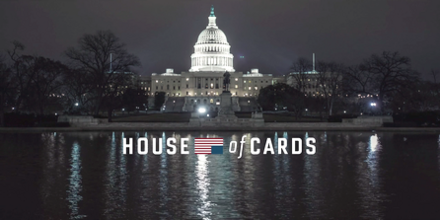
In Writing for TV and Radio, Teddern and Warbutten, suggest ‘voice’ is about: direct address – talking to the audience The technique of direct address is frequent in radio plays, and was employed to great effect in the US version of the TV drama House of Cards. Here is Frank Underwood, in the opening scene of the first series.


He’s bending over a dog injured by a car. After sending the only other witness to fetch help, he turns directly to the camera and says: 


There are two kinds of pain. The sort of pain that makes you strong, or useless pain, the sort of pain that's only suffering. I have no patience for useless things. Moments like this require someone who will act, who will do the unpleasant thing, the necessary thing… And, looking down at the dog…There. No more pain… The voice, and what it shows us about Underwood, who has just broken the animal’s neck off screen, has our early attention.


We established that voice is closely related to pouring your thoughts into your writing, and youll find that your voice will be at its most confident when you write about the things you know best. Write what you knowis one of the oldest pieces of advice offered to writers, but confusion arises about this because the advice seems contradictory. Many writers create vivid pieces after researching a subject from scratch. Writers of fiction invent new worlds, or set stories in historic periods they cant experience. How does this fit with the notion of writing only what you know?

Writing what you know means drawing on your experience, memories, knowledge and your passions. Struggling with subjects that have no interest for you will result in work that is flat and stilted. The very act of researching new ideas will be made easier if you have a sincere interest.


Style and Tone

The terms style and tone are often spoken about, especially in connection to whether a reader enjoyed a book and is talking about the voice of the author. But what are they, and how do they differ from the writer's voice? Are they something you should think about when you are writing or do they just happen? And aren’t they essentially the same thing?


Both are ways to express yourself, and serve an important purpose, while being quite different from each other.  


The words, sentence structure, and grammar—the nuts and bolts of language––create your style and form the way you tell your story. One writer's style might be long, flowing sentences, other writers love sparse, short sentences.  and simple, easy-to-understand words.Think about some of the authors or different genres you’ve read. Typically, each genre will have some style similarities, but each author will put his or her own touch on it. 


Start by asking if your writing style fits the genre you’re writing. For instance, a crime press release should not read like a crime thriller. After all, the reader will have expectations, and veering too far off the established path can cause them to lose interest or simply be too puzzled by the disparity between theme and style to keep reading. So your first step, then, is to find the appropriate style for the genre you are writing, and make it your own.


Tone

can be described as your ‘attitude’ when writing a piece; the feelings about the subject and content. Here is Donna Tart's protagonist: They were deep in their own world; for all the attention they were paying to me I might as well have been in Idaho but that was fine with me; I knew this story. My dad who’d been drama star in college, had for a brief while earned his living as an actor: voice-overs in commercials, a few minor parts (a murdered playboy, the spoiled son of a mob boss) in television and the movies. Then – after he’d married my mother – it had all fizzled out. (The Goldfinch). The tone Theodore takes as he describes his parents explains and illuminates his attitude to them.


When done well, the skilled writer can use the tone of their voice to entice the reader right into the mood – the way the writing makes you feel – of the narrator or other characters.


Exercise: Immersing in Style and Tone

Take a book by an author you admire and love to read (not necessarily contemporary). Read enough to immerse yourself in the writing style and the writer’s voice as well as the themes and forms that are characteristic of this author


Now think how you can use those skills without sounding like that writer. In other words when writing with your unique voice. 


Start by being intentional – Do some research, and figure out what styles and tones can work effectively for your genre. How do you want your work to come across to the reader? Choose your style and tone before you even begin. Remember, you want to find the appropriate style and tone and then make them your own.


Also be consistent – Make sure your writing stays true to those choices or make a full change if needed, but don’t flip flop. This involves reading your work closely after you have finished, to ensure your style and tone stays consistent throughout. Inconsistencies in style and tone can leave the reader confused or annoyed.


Verbal Inventiveness

Alongside the use of sound devices such as assonance, consonance, alliteration and euphony, writers of all disciplines have the opportunity to use phono semantics, employing sounds that create a meaning in the reader’s mind. Children’s writers often take advantage of onomatopoeia, which young readers enjoy. Phonetic symbolism – the emotional use of sounds – can work for adults, but needs to be subtle. Take for instance the use of certain longer sounds, such as EE OO and SS. These are often used in the genres of horror, sci-fi and ghost stories, while GL is visual – glittering, glowing and gleaming. S can sound underhand and slippery, while STR feels strong – strong enough for words used in connection with punishment, such as strapping, striking and even strangling. To find and use sounds in this way, without the reader consciously noting your use, keep an ear open yourself, as you read.


Eimear McBride uses audaciously radical and challenging language  in her book  A Girl Is A Half-formed Thing


Feel the roast of it. Like sunburn. Like a hot sunstroke. Like globs dropping in. Through my hair. Spat skin with it. Blank my eyes the dazzle. Huge shatter. Me who is just new. Fallen out of the sky


 McBride’s subject matter is harrowing and she wanted her novel to be a physical experience – a disjointing, sickening and often frightening experience. It was described as being written in…not so much a stream of consciousness, as an unconscious railing against a life that makes little sense… McBride wanted it to be seen as a clear attempt to push literary boundaries and break new ground in how language was used. Read the interview she gave for The White Review describing how she was trying to give us the thoughts in the first person of a young girl before those thoughts become words. http://www.thewhitereview.org/interviews/interview-with-eimear-mcbride/.


Exercise Thinking about Language

  • Advertising is a particular area where language is pulled apart and re-invented to help in the selling of goods and services.  So copy-writers come up with new words like melty, dependability, manscaping and ‘Stoptober’, for the NHS October campaign to help smokers quit smoking.
  • Choose any advertisement from any medium which attracts you because of its use of language (rather, say, than it imagery).
  • Write a poem, a prose freewrite, or a very short scripted scene, using any lingual inspiration or influences you can take from the advert.
  • Reflect on your use of language – whether this exercise made you think about the language you use, or if you want to experiment further with these elements – in your writing diary.


Sunday, 20 October 2024

7 Writing Tips from 7 Respected Authors

Free Number Seven Cliparts, Download Free Number Seven Cliparts png ...  

Seven Writing Tips from 7 Respected Authors ...and me.

1.  Maggie O’Farrell

‘What I wish I’d known when I was starting out, is that you don’t have to worry about beginnings. Don’t worry too much about knowing what you’re doing at the beginning. You can start in the middle if you want! Just put the words down.’

2.  Iris Murdoch 

Writing is about practice, and not about luck.


3. Lionel Shriver 

‘Write whatever you damned well want. Trying to please ends up pleasing no one, including yourself. And caution is boring. Especially in these touchy times, I suggest getting yourself into trouble. (That won’t be hard.)’


4. Virginia Wolf (from Mr. Bennett and Mrs. Brown, Woolf’s famous essay)

Eavesdrop. Listen to the way people speak, but pay special attention to their silence.


5. Katherine Mansfield

Looking back I imagine I was always writing. Twaddle it was too. But better far write twaddle or anything, anything, than nothing at all.

6. Hilary Mantel 

Be ready for anything. Each new story has different demands and may throw up reasons to break these and all other rules. Except number one: you can't give your soul to literature if you're thinking about income tax.

7.  Zadie Smith

Work on a computer that is disconnected to the internet. 

.

...and me...  Imagine your scenes in your head, imagine the dialogues taking place and the setting coming alive. Imagine a character saying to you––"no–I'm not doing exactly what you planned for me, I'm doing this, instead!


Wednesday, 4 September 2024

What Took Me So Long to Start Writing?


    Jane Edmonds is a Stage 3 student at the 
Open College of the Arts, studying poetry and prose. 
At this moment, she is writing a memoir of her life, as she
travelled around the world as both a child and a young woman.

At Stage Three, she is reaching the culmination of her degree pathway and will soon graduate with honours.  Although she's in her eighties, she's an energetic student with plenty of ideas and a great sense of humour, and her output is worthy of someone a quarter of her age. I asked her why she 'left it quite late' to study something she is clearly so passionate about, and this is what she explained to me:

'I’m shy about telling people I’m doing a creative writing degree, because at 85 it seems either ridiculous or a boast about my mental ability. The responses when I do own up are variable:

‘Good on you!’

‘Really?’ with a slight frown.

Jane in Malta
Or a shrug and turning away because ‘what is creative writing and anyway…sorry, not interested.’

But I am interested in writing and still puzzled why I didn’t take myself seriously enough to engage at degree level. What were the barriers, the excuses, I set up for myself? 

I have a notebook sent to me by my grandmother in 1949. I know the date because my name and the date of my eleventh birthday are printed in gold lettering on the leather cover. I’ve never been able to write in it. It has expectations and depressing blue pages with lines. I didn’t write anything other than school essays until, as a young wife and mother who had seen so much of the world and its people, the full force of the life I was living overwhelmed me. By then, it felt to me that there really was no time for writing. 

I did write, though. Poetry, intermittent diaries, notes in unlined notebooks, on the backs of envelopes, margins of newspapers. These are stacked in boxes as a sometimes surprising, sometimes shaming archive. 

It was at this stage of my life I met Val Giamatti, father of a friend. He was Professor of Italian studies at Mount Holyoke University in America. A born teacher, enthusiast for Dante, with an all- embracing warmth of personality. For a year or two I exchanged letters and cards with him. In one card he tells me to ‘write poems, novels for publication as you express yourself so well.’ 


https://www.mtholyoke.edu/directory/departments-offices-centers/classics-and-italian/valentine-giamatti-lecture-and-dante-collection


I also sent poems to a librarian friend who wrote an encouraging critique. Although I have kept these responses since the 1970s it is only now that I can believe they saw something in my writing, raw though it was, that was worth nurturing.

Reading has always been my greatest pleasure. At first anything to hand, then after the classics, discovery of T.S. Eliot, Dylan Thomas, the American novelists - Hemingway, Scott Fitzgerald, Raymond Chandler helped me become more discriminating. In my hubristic youth I decided I didn’t need academics to tell me what was worthwhile literature. I still don’t. But I wasn’t able to analyse what makes effective writing, which I have been learning the past few years with the Open College of the Arts (OCA).

In the early days of the Open University my father suggested taking one of their courses. Apart from being averse to anything he thought might be good for me, I still had reservations about academia and a deep-rooted objection to exams as I think of them as a test of memory. The continuous assessment of OCA suits my style of learning and is probably more rigorous.The need to earn a living as a nurse took over from family cares and even when I retired I took up art and creative sewing, until finally I was attracted to OCA through a random brochure in the post. 


All of the above makes me the arch procrastinator. Not for me the daily excuse of cleaning the house or going shopping. No - I have allowed a disbelief in myself to make me content to fiddle at the edges, until it is almost too late to call myself a writer. Even when I started with OCA I didn’t intend to do more than one or two units for interest, though as a ‘why not’ I signed up for the degree.  It was the third unit of Level 1 Creative Arts Today, that finally grabbed me. Exploring what I thought about very modern visual art, close reading of the first two paragraphs of Graham Greene’s The Quiet American and the positive tutor 
feedback gave me a buzz. I became hungry for more brain food. Open College of the Arts

Poetry at level 2 continued to take me into new worlds of writing and experimenting and just enjoying playing with words. Now, writing a memoir is another genre to explore. 

Within the creative writing community at OCA, more visible since the pandemic, I feel at ease as a student; have left behind the reasons for not writing. I enjoy the collaborative aspect of a peer group whose writing I respect and whose comments come from the same level of struggle and gain. 

Nowadays if I’m roaming round unanchored because I haven’t got a book to read, I think ‘I’ll start writing myself. It’s just as absorbing.'


Thank you, Jane, and I'm sure we all wish you the very best of luck for graduation.