Showing posts with label reading. Show all posts

Tuesday, 2 September 2025

Stories About Artists; Amazing Novels about Artists and Paintings: Steel, Chevalier, Smith and Hustvedt

What is it about visual artists that attracts those word artists...writers, I mean...to use them so often in their novels?

Stories about artists, both real and fully imagined, abound. 

We've all heard of Girl with the Pearl Earring, which features a real oil painting by Dutch Golden Age painter Johannes Vermeer, but Chevalier's The Lady and the Unicorn is also a great read; about an imagined 15thC artist, Nicolas des Innocents, who created the illustration for a richly embroidered wall tapestry, based on a real tapestry, rediscovered by French historian and archeaologist Merimee, in 1841, in Boussac castle in central France.
Then there's The Goldfinch, which, when I read the book, I imagined Donna Tartt had invented this rather wonderful little oil painting for her scintilating 2014 Pulitzer Prize novel, but is in fact a painting by Reneissance artist Carole Fabritius, which   I talk about here 

I've love all of Ali Smith's novels, but How to Be Both is perhaps as challenging read as you're likely to find. Smith plays with conventional fictional form, letting the reader in on  the poignancy of the story before the characters even start to realise. Smith examines a little of the life of  the 15th-century Italian painter Francesco del Cossa. Meanwhile, George is a teenager who has lost their mother, and tries to bring her back to life by recalling how they saw this  artist's  work.   Smith seems to investigate the symbolism of frescos: many layers, simultaneously.

curtesy of The Women's Prize
Most recently, Lucy Steed has just won the Waterstones Debut Prize for her first novel. She writes about one Edouard Tartuffe, “the Master of Light” an artist who lived in the early 20th Century,  a bit of a hermit and not a very nice man, really. He loves to paint rotting food, which gives his young housekeeper, Ettie, a bit of a headache. In 1920, Joseph Adelaide, an aspiring journalist, arrives at the remote farmhouse in the Provençal village of Saint-Auguste. He takes
comfort in art after being branded by the horror of the first world war, and wants to write an article about the famed oil painter.  Slowly, the young Englishman falls for Ettie, and tries to persuade her to escape her overbearing uncle.

If you're wondering why you haven't heard of Tartuffe, it's because Steed has created him, but he could be real, a cross between many artists of this incedury time. But her depictions of his art feel sensual and authentic and I could almost smell the paint...and the rotting peaches. 

Finally, a book I read some time ago, but have never forgotten. I must read more by this American author; Siri Hustvedt, Her 2003 novel, What I Loved sparkles with intelligence. It begins in the New York art world in the 70s, with art historian Leo Hertzberg and his friend, artist Bill Wechsler, whose artwork Leo has discovered in a SoHo gallery. Hustvedt is strong on the psychological effects of love, grief and hysteria, and her narrative voice pulls you into, and through, the story.

So now I'm looking for more exciting depictions of art and artists through a novelist's eye, although, I don't think, for now, I'm going to find more emotional maturity, than Steed, more passion than Hustvedt, more tense drama than Chevalier, or more brilliant plotting than Tartt.


Sunday, 24 November 2024

How to Win the Booker: THE SAFEKEEP by Yael van Der Wouden


The Safekeep by Yael Van Der Wouden

In her website Yael Van Der Wouden introduces herself as A great smalltalker... available as a +1 for your cousin's wedding. Woulden also keeps a blog, Dear David: An Advice Column, in which Sir David Attenborough speaks about the natural world in answer to writers' problems. It's funny and clever in a similar way that The Safekeep is funny and clever. And yet her 2018 essay, On (Not) Reading Anne Frank  suggests that The Safekeep is also a darkened polemic on the Dutch position after the 2nd WW.


In her Booker interview, she explains the moment that this book came into her mind, starting with… a fascination with how the Dutch narrativise national histories; my obsession with homes and the fantasy of owning a home; wanting to explore desire as the flipside of repulsion. The way it happened was like this: I was in the car on the way back from a funeral, looking out over flat Dutch fields, and somewhere between grief and a need to escape the idea bloomed, of a house, a woman and a stranger.


A house, a youngish woman, her two siblings and a stranger. 


It is Holland in the 60's and Isabel lives alone in the family home, weighed down with duty left by her dead parents, avoiding contact with humans, hating most of the people she knows: Louis, who will be gifted the house once he marries (and he’s in no hurry to stop moving through pretty girls like his latest, Eva):  and Hendrick, who lives with Sebastian, a person Isabel particularly turns her face from in shame


Author Yael Van Der Wouden.


This book did not win the Booker Prize. So maybe you won’t want your book to be––suddenly and surprisingly-–this sexy, with intense emotion and fiery physicality… Isabel could see herself from the dresser mirror: face red, mouth like a violence


Wouden admits––erotica is about the knife’s edge of voyeurism and participation. As a reader, you want to feel like you are present, but if you are too present then I think the text tries to envelope you, tries to comfort, and I think good erotic writing makes you a little uncomfortable.


You might not want your novel to be in the 1st person perspective of a repressed, unlikeable woman such as Isabel, without being able to show that vulnerability that hides behind such a front. And, in 1st person, how can the story reveal what happened almost 20 years previously? Two-thirds of the way through, after the central explosion of love and lust, we reach The Diary. Diaries don’t often work in modern novels, but this one, stolen by Isabel after a caustic row with her lover, reveals the darkest sides of wartime Europe.


Think about taking an extended symbol throughout the book, as Wouden does. In the opening lines, Isobel finds  broken pottery in the garden. It's a shard from the china plates her mother loved, and which she now keeps locked away. She knows one has never broken, but if that is so, how could this shard be in the garden? The answer dogs her throughout the novel, and it is not until we read the diary that we know the shocking answer. 


You might like to be in Wouden's position,however, of having her debut novel snapped up by Penguin after a bidding war. 


What did the English reviewers say about this debut? The Observer says that the author weaves this story of historical reckoning (or its avoidance) with an account of Isabel's individual and sexual awakening,

The Guardian's reviewer said The book's powerful final act provides an already weighty emotional situation with an extra layer of historical heft.


Reviewer Anne Bonnet loved it; The Safekeep is simmering and sexy, but it is also a Trojan horse of a novel. Not much is, rightly, given away in the synopsis and it is only in the last third that you realise you have been reading a very different book…


Perhaps for me, the ending wasn’t quite perfect. But that might be because whatever way the final moments of such a twisted the story might go, I’ll have wanted it to go in the other direction. Happier? Darker? I’ll let you read it and make up your own minds.

Thursday, 21 November 2024

How to Win the Booker Prize: ORBITAL by Samantha Harvey

2024 Booker Prize winner Samantha Harvey holding a copy of her book "Orbital" and the trophy
photograph: epa

Orbital unfolds over a single day in the life of six astronauts and cosmonauts aboard the International Space Station. Samantha Harvey allows us to marvel at Earth’s splendour through the thoughts, memories and work of the people on board. She allows them to pose the question: What is life without Earth? What is Earth without humanity?

Orbital is Samantha Harvey’s fifth novel. On the 12th of November 2014, she stood amongst applause to receive the Booker trophy. Her acceptance speech began with a joke; ‘I was told we weren’t allowed to swear in our speech, so there goes mine’. She dedicated her prize to everybody who ‘speaks for and not against the Earth…and the dignity of other humans, other life; and all the people who speak for and call for peace.


If you would like your novel to win the Booker, you could start by picking apart what makes a winner. Why did the judges almost unanimously decide on Orbital?

Firstly, it's original. it is the first Booker Prize-winning book set in space. It has a natty little chart that describes the voyage of the SSI over one Earth day at the front of the book. It has chapters that align with the rising of the sun every 90 minutes. 

But there are some specifics that are probably key components each time. The judges recognised this book's beauty and ambition, saying: 'It reflects Harvey’s extraordinary intensity of attention to the precious and precarious world we share'.  They were 'determined to find a book that moved us, a book that had capaciousness and resonance, that we are compelled to share'. 

Surprisingly, it is very short. This is a novella. It is so much shorter than some winners, that you could fit four Orbitals into some of them.  The Luminaries by Eleanor Catton won in 2013, at 832 pages, compared to the 239 pages of Orbital. But judge Kit  De Waal said that Orbital is 'the right length of book for what it’s trying to achieve'.

I loved this book. Its descriptions of the Earth from the ISS are stunning, lyrical and memorable, and yet sparse; we can never quite get enough of them, which is the best way to write descriptions, after all. There are only six characters, plus the people they carry in their heads. We don't get to know them very well, but rather as they all get to know each other, in that intimate, yes sporadic way we get to know our work colleagues for instance, sometimes sharing something truly important about their lives and lots of minor, day-to-day things, while probably not knowing much, say, about their family or the layout of their homes. But what we do see is what they also witness; the marvellous beauty of the Earth as they witness a sunrise every 90 minutes and follow the progression and devastation of a super tornado of life-threatening proportions as it assaults and wrecks south-east Asia. They are passing on the information, but feel powerless to help.

The odd 'other' perspective is also allowed in, so that we can travel back to the 'Big Bang' or meet the laboratory mice who are learning to fly. And then there is  Diego Velázquez’s Las Meninas, which is with the crew as a postcard. They talk deeply about the unique illusion of reality created in this painting. Welcome,” Shaun’s wife has written on the postcard, “to the labyrinth of mirrors that is human life.”

Having finished the book and laid it down with a satisfied sigh, I turned to the reviewers to see what they had thought. Most had read this book before it had been shortlisted, and most, like me, found it such an absorbing, educative read. 

Anne Bonner, in INEWS says...With the modern world being as it is, it is not a surprise that a story set in space is a strong Booker contender.  At times it feels a bit like you’re reading an essay meditating on human existence as opposed to a novel. You also have the sense of observing these characters as though they’re floating in a snow globe: as beautiful as it is, something is stopping you from connecting with them.

The Economist did find flaws, and I can to a degree sympathise with the line they took: A slim, slightly worthy novel in which everything and nothing happens Yes, it is a tiny bit worthy, and nothing does much happen in it. So one thing you might try,  if you follow Harvey's model of winning the Booker, is create an epic poem in prose form.  

But who knows? With another night's sleep, the judges might have made a different decision. There are always 6 shortlisted novels for the Booker Prize, and I will review each of the 2024 books in turn and continue to think about...HOW TO WIND THE BOOKER PRIZE. 

You can read more about Las Mininas here.

Wednesday, 27 March 2024

Writing about the Climate Crisis; Fact or Fiction?

Recently, I've been reading four different books about climate change – two nonfiction and two novels. It made me wonder, what is the best way to get your point across, when you want to talk about a subject you are passionate about?


Nathaniel Rich, who wrote Losing Earth (The Decade we Could have Stopped Climate Change) and Michael E Mann, who wrote The New Climate War (The Fight to Take back our planet), have both taken the route of  writing nonfiction to attract the readers' attention to their subject matter.  But have approached global warming at an angle, looking at one very very specific aspect. This is  an important thing to remember when writing nonfiction about a large, well-covered debate such as this. There are already a lot of books out there, and they already contain all the salient facts on the subject. Unless you have very up-to-date information to newly impart, it is essential that you decide on a 'slant' that can gain you interest in. swamped market. This is what Brenda Miller and Suzanne Paola advise in their writing manual for nonfiction writers, Tell it Slant. Both are award-winning authors and using the Emily Dickinson quote,“Tell all the Truth but tell it Slant.” intend to reveal  how to develop your own distinctive and compelling creative nonfiction, showing writers how to move beyond mere facts and, instead, make the most of their own “slant” on the world. 

 Nathaniel Rich takes the 'slant' of retelling the story of the early days of realisation, the 1070s, and how that knowledge was squandered by allowing energy companies and oil firms suppressed the truth of global warming for their own profits. Rich deeply researched his book, demonstrating his arguments conclusively. But he must have known that, handled with the wrong style, this book might have been very dry. He overcomes this problem by approaching each of his stories through the characters (the protagonists and the antagonists), by setting scenes in a dramatic manner and by using a hight percent of dialogue within them. He's telling a story, which feels tense and full of jeopardy, and he reveals it steadily, using the skills of the novelist to keep every read on the page. Rich is a novelist, as well as a writer of nonfiction, and he utilises those skills well. 

Attachment preview

 M Mann also knows exactly what 'slant' he wants to approach in his book. For him, the 'antagonists' are the fossil-fuel industry and their allies, and the story of how they deflected the blame for climate change to the  'protagonist' – that is, the little man in the street, who is instructed to "recycle, fly less, eat less meat", and are made to feel that this is 'all their faults'. Mann is a distinguished  professor of atmospheric sciences, but like Rich, knows how to use novelistic skills to pull his reader into his debate.

To counter these two fact-based books, I've been reading two iconic pieces of climate-fiction. 

Ursula Le Guin is an acclaimed writer of science fiction, who has been at the top of her field for decades. Her early book, The Word for World is Forest (1976), is a slender, but gripping account of a future  Earth, devastated by humanity. The book is set on one of many of the planets we are now mining for assets, leaving each planet in as bad a state as the Earth herself.  In this planet, called Forest,  the inhabitants strike the humans as simple, possibly ape-like. But they are wrong. These are sensitive, intelligent individuals, and they are not happy at the rape of their home. 

The late JG Ballard is also an acclaimed writer of science fiction, but particularly famous for his autobiography, Empire of the Sun. In The Drowned World, a very early novel which helped make his name,  Ballard describes a future world that is hotter than ours is now, and where the rains have fallen with such ferocity that the cities of the world are lost into deep lagoons. We follow a few of the survivors in this desperate attempts to stay alive...without killing each other. 

Very recently published, but reminiscent of The Word for World is Forest,  is the sci-fi novel in verse by Langmead is known for his sci-fi Dark Star, and like that book, this is written as a long-form poem.  It's a saga of colony ships, shattering moons and cataclysmic war in a new Eden.

Rochelle wakes from cryostasis to take up her role as engineer on the colony ark, Calypso. But she finds the ship has transformed into a forest, populated by the original crew's descendants, who revere her like a saint.

She travels the ship with the Calypso's creator, the enigmatic Sigmund, and Catherine, a bioengineered marvel who can commune with the plants, uncovering a new history of humanity forged while she slept.

She discovers a legacy of war between botanists and engineers. A war fought for the right to build a new Earth – a technological paradise, or a new Eden in bloom, untouched by mankind's past.

And Rochelle, the last to wake, holds the balance of power in her hands.


Attachment preview .   Attachment preview             Attachment preview


So I have to ask, which of these books would make me more determined to help reverse the global crisis? The nonfiction states their case and made me feel both angry and more ready to act. But the fiction touched my soul, and gave me the passion needed. 


Thursday, 23 November 2023

Donna Tartt, Carel Fabritius, and The Goldfinch


Once morning in 1654, in the city of Delft in Holland, there was a "thunderclap". That was the way the people of Delft described the  explosion of a  factory containing 90,000 pounds of gunpowder. Large sections of the city were devastate, and 100 people died. 

Carole Fabritius was among them, and that may be why so few people have heard of this artist, who had been a  pupil of Rembrandt, and, before he reached his thirties, was already an  acclaimed painter of the Dutch school. He left a sadly small portfolio of work, and it's clear might have gone on to paint so much more, if he had survived the blast.

One of his most beloved works is also one of the most upsetting, from the viewpoint of an animal lover; The Goldfinch.  Just 9X13 inches, and possibly as a trompe d'oeil and perhaps a clever part of a window shutter, it is beautifully rendered. A small songbird sits on its perch, staring out at the viewer. Every feather is a perfect rendering. And the little gold chain that prevents the bird from seeking its freedom is lost in shadow, you have to peer closely to see that the goldfinch is a captive. It was sitting in Fabritius's workroom, almost next door to the factory, when the blast destroyed almost everything there, including the artist himself.

Donna Tartt launching The Goldfinch in Amsterdam
. Photograph: Bas Czerwinski/AFP/Getty Images
When I read Donna Tartt's third novel in 2014, titled The Goldfinch, I was expecting something grand, something with an explosion at the centre of it, because her previous two novels had been acclaimed and their powerful stories were still in my mind.

She certainly offered an explosion; moments after the story begins, a bomb blows out the New York's Metropolitan Museum. 14 year old Theo Decker is in one section, his mother elsewhere. She is killed by the blast.  As Theo tries to extricate himself from the wreckage, a dying man tells him to take the small, framed picture  lying in the dust. He thinks to  take to his mother for safekeeping and finds his way home; she never arrives. From then on, The Goldfinch, with its imploring theme of captive beauty, is his guilty secret, and a physical connection to his mother. It becomes something he can't bear to be rid of but something he cannot admit he possesses.

How fittingly linked these two stories are. The fiction of a boy who walked out of an explosion with the painting of an artist who died in an explosion.  The Goldfinch, painted in the year of Fabricius's death, was one of only about 12 of his paintings to have survived the tragic explosion, and  in Tartt's story, it survives again, albeit in a setting it has never traveled to; it's hung in The Haig. 

I was reminded of The Goldfinch when I read Laura Cumming's latest book

on art; Thunderclap. Although the focus of this book is Fabritius and his works, she also looks at her own approach to art, as an art critic. She says, 'We see pictures in time and place. We cannot see them otherwise. They are fragments of our lives, moments of existence…' I wonder if that is also true of fiction; certainly, a school of literature theory suggests that works can only be judged though the eyes of the reader, who brings their own emotional smörgåsbord to the interpretation.

Certainly, I began reading The Goldfinch knowing nothing about the painting, or having even heard of Carel Fabritius, but I devoured this long book; it reminded me of Dickens in its complexity and with its whirlwind of amazing characters, and its 'cause and effect' plotting – the dying man who tells Theo to take the painting is guardian to a young girl named Pippa, who was also in the museum when the bomb exploded, and is the only person who Theo feels can understand his heart, as they both lost someone dear in the explosion. Their lives will collide and separate, repeatedly, throughout the book. 

And yet, Tartt told The Telegraph, shortly after publishing the book that she hadn't even known about the Delft Thunderclap when she wrote it.  She said'The the first time I saw it, I connected very strongly with it. This little bird, so brave and so dignified, and then you see that terrible little chain…' She was simply looking for the right painting, that would be small enough to carry and would appeal to a child. 

The rôle of synchronicity in creating a novel can make one gasp. For, if Tartt didn't know much about Fabritius’ death when she chose the painting, why is her central character called Theo Decker? Because at the time of his death Fabritius was painting the portrait of a church deacon named Simon Decker. 

Writing is full of such coincidence, as Tartt admits: 

'It all fit together in ways I could never have imagined. When coincidences like that start happening you know the muses are at your side.

It's good to know that when such amazing moments occur, the writer should grasp them with both hands. 


Friday, 29 September 2023

Literary Giants of New York and the Algonquin Hotel


When  my daughter, Bex and I were in New York, we were determined to find out more about the literary side of the city, so we went to the Algonquin Hotel to meet Kevin, who knew all about writing and the Big Apple. 

The first thing we saw when we arrived at the Algonquin Hotel, was the cat in the window, snuggled up in a little bed for the world to see. This was Matilda  the Algonquin cat, who has been resident for something like 40 years. Each time a cat dies, a new cat is brought from a refuge. If it is male, it's called Hamlet. If it is female, it's called Matilda. Each puss wanders the hotel at will, but has this special basket in the front window, looking out onto the road. The hotel is located on Times Square,  with Yale, Harvard and the Yacht club headquarters nearby. The hotel façade is imposting and grand, and Matilda gives the place a more welcoming feel.

'I wonder what Algonquin means,' mused my daughter.           I laid down a dollar bet that the hotel name was of First Nations origin. But we were both puzzled – we'd done our homework and knew that the original inhabitants were called The Lenape, who had named the place Manahatta, meaning 'hilly island'.

When Kevin arrived, this was the first question we had for him, and he had the answer; the Algonquin people  lived in the Ottawa Valley for at least 8,000 years before Europeans arrived in North America. But the source of the word Algonquin is unclear. 'It is said to mean  “at the place of spearing fishes and eels from the bow of a canoe”,' he said.

Great – I'd won my bet. I tucked my dollar winnings away as Kevin led us through the hotel foyer, all Art Deco dark wood paneling and golden lighting.  He explained that the hotel had been built in 1902,  was twelve stories tall,  and shaped like an "H". Bex and I agreed that this was the hotel we'd stay at if we were ever to ship up in Manhattan again.

He walked us over to the famous literary round table, set in an alcove behind the reception area. 'This is where all the literati of New York would meet between the first and second world wars,' Keven told us. 'It was known for it's lively, witty, and sophisticated conversations.'

Dorothy Parker

The group included Harpo Marx, Dorothy Parker and Harold Ross and his wife, Jane Grant, who founded The New Yorker. Also members were the actor Peggy Wood, George Kaufman, Margaret Leech Pulitzer and Donald Ogden Stewart who won an Oscar for The Philadelphia Story, Herman J. Mankiewicz, who won an Oscar for co-writing Citizen Kane. The rumour was that people like F Scot Fitzgerald,  Ernest Hemingway and William Faulkner may have also dropped in for lunch; why not, these were wise-cracking wits who enjoyed pranks and word teasers, such Dorothy Parker's wordplay fun with: 'you can lead a horticulture, but you can't make her think…Brevity is the soul of lingerie…If you want to know what God thinks of money, just look at the people he gave it to…'

Above the large round table in the alcove is a painting of the club, showing many of its members. 


Keven took us for a walk around Hell's Kitchen, which is an inner-city 
area that was reputed to be like ‘the kitchens in Hell itself’ according to the NYPD of the prohibition era. There he pointed out where great writers of the time lived. He took us to the homes of James Thurber and Eugene O’Neil and F Scot Fitzgerald and his wife Zelda. A haunt of the young James Baldwin was  his Aunt Barbara's candy shop near Fifth Avenue. She would later provide inspiration for the character of Florence in Baldwin’s first novel, Go Tell It on the Mountain, published in 1952. Colson Whitehead also lives in Manhattan, where he set his masterpiece, The Colossus. This opens with the 'awful truth' about being a Native New Yorker – 'it leaves you ruined for anywhere else.

Most of these writers had written at times for the New Yorker, a magazine I know especially for its amazing short stories and brilliant cover illustrations. We found ourselves in the offices of The New Yorker, the New York magazine featuring journalism, commentary, criticism, essays, fiction and poetry. Although it's been around since 1925, it is still the pinnacle of good journalism, and has published some of the most famous short stories, including Annie Prouix's  'Brokeback Mountain' and Shirley Jackson's 'The Lottery'.

This office was the opposite of the Algonquin; it was plate glass and steel, giving off an atmosphere of being ultra-modern, professional  and efficient. But Bex and I were already longing for Art Deco, and we found ourselves back at the Algonquin, ready to dine very close to (but sadly not on) the round table. 


Tuesday, 12 September 2023

How Authors Plot, and how They Muse


I've just finished a marvellous novel called Still Life, by Sarah Winman. In its  400+ pages, we visit Florence in the Second World War, post-war London, and Florence during the flood of 1966 and Europe at the start of the 20th century.  Moving between these real events are a wide cast of characters, most of them allowing life to take them where it will, and land them wherever it pleases. In The New York Times, the main character, Ulysses Temper is described as  'a searching, wandering protagonist' but it's not just 'Temp' that wanders; the entire story behaves like a river journey. As I reached the final pages, I began to ask, 'what did Winman want to say in this novel?' The Kirkus Review notes this is ''the story of their friendship, though it is also a story of the creation of a family of friends', New York Times suggests, Does Life Imitate Art or Is It the Other Way Around? and the Independent says it is an 'exquisite testament to life, love and art. 

Fair points, the story is all about the art of Florence and 'odd families' especially. But thinking about the characters, I've decided that what Winman especially  wanted to say is: Ordinary People are Really Extraordinary. 

Ulysses is a young soldier in the Allied advance in Italy in 1944 where he works with Evelyn Skinner, a 64-year-old art historian. They form a friendship bond which remain after their paths diverge, But while he's in Florence, Ulysses 'talks down' an elderly gentleman who had decided to take his own life. They go back to the man's lavish but lonely apartment, and again, a bond is formed. Meanwhile in London his soon to be ex-wife, Peg has fallen for a GI called Eddie and gives birth to a daughter she names Alys, but calls 'the kid'. Ulysses is demobbed, and goes back to working at his friend Col's pub, where Claude the blue parrot is a tavern talking point but hated by Col. The  post-war decade moves on, and the novel meanders through many a story, until Ulysses hears that the person who's life he saved has bequeathed him his large apartment. He decides to go back to Florence, and asks his old mate Cress to come with him. Peg, who still yearns for Eddie and is not a good mother to Alys, persuades Temps to  take 'the kid'.  Cress secretes the unhappy Claude  into a bag and off they all go, to live in Italy. They convert some of the inheritance into a thriving pensione. Alys soaks up the Italian life as she grows into a woman and Cress, who was able to communicate with trees in London, can also communicate with trees in Italy.

Throughout the next three decades,  Ulysses continues to love Peg, Peg continues to dream of Eddie, Cress finds Italian love in his golden years, and Alys finds love with another teen girl. Ulysses goes back to creating globes of the world, and in this way, is crazily linked back to Evelyn, who keeps an eye open for her old war friend, but constantly misses him until, one day, they find themselves all together; now a largish group of young and old, English and Italian.

The story, then is a winding route, just like a river. I loved it but immediately thought; 'I don't write like this; I couldn't plot like this'. I'm a bit of a plot junkie; Winman is clearly a 'characterphile'. (I created these terms to describe different 'kinds' of plotter; you can read about them here.) 

When I start a book, I'm usually inspired by landscape, my first point of inspiration. In my Shaman Mystery series a walk, years ago, through the Somerset Levels, sparked my interest in the area, followed by a distant, then closer, then close view of the Hinkley Power Station, which is featured in On the Gallows. Landscapes do it for me, but there are many other starting points.

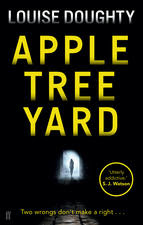
Louise Doughty makes a similar point in her article, Taking a Line for a Walk (Mslexia No 99).  'My most recent book', she says, 'arrived – like Apple Tree Yard and Platform Seven before it – with a strong visual image'. She then takes that image 'for a walk', asking questions of it, until she has a scene, 'followed by a scene showing what happens next on the journey...until I worked it out, some 100,000 words later.'

This is a great way to write a novel if you are a 'characterphile'. If however you are a 'plot junkie' the idea might fill you with horror! What, no chapter by chapter outline, no timeline, to plot points to lead you on? I'm a plot junkie, but I'm quite tempted to have a go at this meandering method, the next time such an image, or landscape, enters my mind. Or, as happened this time to Doughty, a line comes to you, out of the blue. The same questions can be asked of this line or phrase or sentence, the same walk take, until, chapter upon chapter, you find an answer. 

Doughty talks about how the 'synapses in your brain are prompted to join up by something'. She doesn't go on to say what that 'something' is, but I would suggest we go back to the Ancient Greeks, who personified the inspirations that arise from intuition, or 'synapses' if you like, as Muses. The nine daughters of Zeus and Mnemosyne, or Memory, the Muses prompt those they visit to remember what they have forgotten. Muses with a special affinity for writers are: 

Calliope, the Muse of epic poetry

courtesy of Wikipedia
Clio, the Muse of history

Euterpe, the Muse of lyric poetry

Melpomene, the Muse of tragedy

Erato, the Muse of love poetry

Polyhymnia, the Muse of sacred poetry, and

Thalia, the Muse of comedy

Sadly, there isn't a Muse for  short stories, as these weren't around in ancient Greece. Their stories were narrated orally, or dramatically, and poetry was used in both forms, especially as it helps with memory...Mnemosyne…when retelling a story!

Like Doughty, one should never sit around and  wait for a muse to visit, in the hope she'll just 'show up'. She should be seduced to come to you. Doughty had gone to Amsterdam, 'wandering around the city for a week...with an empty notebook...' in the hope that she would 'encounter my next book'.  She was seducing her Muse, and finally, was obliged. 'What do you do when you're in the tase of creativity that I might as well call 'pre-technique', where all your struggles for plot construction or character development are useless because you don't have the foggiest idea what you book is about?' Suddenly a line came to Doughty. The opening line to a story she didn't yet know. The Muse had descended. She could begin. 

It seems a bit extreme to visit a different country in order to find your Muse, but you should be on the alert at all times. When your muse pops in every so often to drop a story idea on you, sit up and pay attention.

When you have a story idea, write it down in a journal or notebook. You can't write every story right away, so put it in the pickling juice and go on. Also remember the wonderful 'Muse-filled'  Miscellany File, or Commonplace Book, which I talk about here. Read, look through your ideas from time to time, crossing out the ones that have lost their muster. Also cross out the ones that seem too cumbersome. Keep the simple ideas and the ones that give you chills in your spine. Maintain this practice and you'll find that you always have a few good story ideas in the queue. 


Wednesday, 12 April 2023

Who Owns Books? A look at the history of publishing

In 1476 Caxton established the first printing press in England and set about printing Chaucer's Canterbury Tales, and Malory's Le Morte d’Arthur among other books. He was publisher, printer and bookseller combined. Once he had a handwritten copy of something, he owned it, never mind who actually wrote it. Quite often, the writers was already dead; but it didn't concern Caxton if they were still alive. He'd done all the work to make this a printed book, which looked comely and was easy to read, display, and store. 

The Gutenberg Bible
He hadn't even invented the process; that was  Johann Gutenberg who printed with moveable type in 1450s in Mainz, Germany.This new print technology involved setting pages of type from individually cast metal letter forms that were then run off on a hand press, and this idea was taken up by Caxton in Britain. He printed more than 100 books in his lifetime, books which were known for their craftsmanship and careful editing. He was also the translator of many of the books he published, using his knowledge of French, Latin and Dutch. He died in 1492.

For over 200 years things continued in that vein. The books a printer took off their press belonged to them for sale. The argument ran that the printer had bought the paper, and the ink, and owned the press, ergo, they owned the writing. Restrictions were enforced by the Stationers' Company, a guild of printers who were given the exclusive power to print and sell —and the responsibility to censor—literary works.


John Milton
  In 1694, parliament refused to renew the Licensing Act, ending the Stationers' monopoly, censorship and failure to protect authors. For the next 16 years, the lively debate over 'who owned books' raged. John Milton wrote about his experiences with The Stationer's Company, accusing Parliament of being deceived Finally Parliament put out the ‘Statute of Anne’ in 1710. Here are the opening words:


An act for the encouragement of learning, by vesting the copies of printed books in the authors or purchasers of such copies, during the times therein mentioned.

I. Whereas printers, booksellers, and other persons have of late frequently taken the liberty of printing, reprinting, and publishing, or causing to be printed, reprinted, and published, books and other writings, without the consent of the authors or proprietors of such books and writings, to their very great detriment, and too often to the ruin of them and their families: for preventing therefore such practices for the future, and for the encouragement of learned men to compose and write useful books; may it please your Majesty, that it may be enacted, and be it enacted by the

Queen Anne

Queen's most excellent majesty, by and with the advice and consent of the lords spiritual and temporal, and commons, in this present parliament assembled, and by the authority of the same;

II. That from and after the tenth day of April, one thousand seven hundred and ten, the author of any book or books already printed, who hath not transferred to any other the copy or copies of such book or books, share or shares thereof, or the bookseller or booksellers, printer or printers, or other person or persons, who hath or have purchased or acquired the copy or copies of any book or books, in order to print or reprint the same, shall have the sole right and liberty of printing such book and books for the term of one and twenty years…


To read the Statute of Anne, click here.


This began the acknowledgement of an author’s ‘intellectual property’ of their writing. As soon as you have written your work – even before it reaches editor – you own its copyright. This has been extended from twenty-one years, in 1710, until, in UK and EU law today, to seventy years after your death. 


The Statute of Anne states that you may not publish, or profit from, copyright material belonging to any other writer. This is a complicated area covered by different regulations – plagiarism, trading-off, unauthorised infringement of copyright, intellectual theft and so on. The rule here is simple – don’t try to pass off as your own something written by someone else. However, the Statute of Anne also established there is ‘no copyright in ideas’. Novice writers often worry unduly about their own work being plagiarised. Although you can’t protect your ideas, it’s the way you write them that makes them distinctive. Even if you believe that your plot has been copied, go right ahead and write it anyway in your own unique voice. 


An excellent example of this being tried in the courts was the case in 2006 against Anchor, the publishers of The Da Vinci Code (Dan Brown, 2003). This was brought by the authors of The Holy Blood and The Holy Grail, published in 1982. Baigent and Leigh claimed that The Da Vinci Code was an infringement of their copyright as it borrowed a lot of its fictional content from their non-fictional, heavily researched work. The case failed; it was clear there was little copying of the actual text. But it’s possibly that Baigent and Leigh knew this; the action brought their book back into the public’s attention and increased its sales. On the other hand, in 2008, Author J.K. Rowling won a copyright infringement lawsuit against Steven Vander Ark’s Harry Potter Lexicon. Rowling was quoted as saying…I went to court to uphold the right of authors everywhere to protect their own original work. The court has upheld that right. The proposed book took an enormous amount of my work and added virtually no original commentary of its own…


        to read more about this case, click here


The Small Print 

The UK prides itself on the freedom of speech that we enjoy (although the US, for example, offers writers a great deal more freedom than British law does). The restrictions in Britain fall into a number of categories, most of which have little bearing on the sort of writing we’re thinking about here but, like plagiarism, there are some statutes that are relevant to the professional writer. Bear in mind, it’s publication rather than writing, that generally causes the problem.

  • Obscenity, blasphemy and racism. These laws are continually under review. If you think there’s any possibility that you’re contravening the law in these areas, seek advice. Start with your tutor
  • National security laws relate to D-notices and the Official Secrets Act. You will be well aware if your writing contravenes these.
  • Special injunctions are court orders, issued by a judge in response to a direct application. These can forbid the publication of individual articles on specific subjects
  •  General injunctions are permanent – for example those that prevent young criminals being named. There are also the uniquely British sub-judice rulings, which severely restrict what can be written about people charged with a criminal offence but awaiting trial, so that an unprejudiced jury can be selected
  • Slander is saying untrue things about other people, which cause actual damage to their business or social standing. Slander only applies to the spoken word and therefore doesn’t need to worry you as a writer
  • Libel is writing (and publishing, including online publication) untrue statements that are potentially damaging to the business or social standing of a person – ‘defamatory’ is the technical term. Unlike slander, a person suing for libel does not have to prove that any damage has yet happened, only that the statements made are potentially damaging. This acknowledges the greater power of the written over the spoken word. However, there is no law against publishing damaging statements that are true. There’s also no law against publishing statements which are untrue but not damaging (unless fraud is involved, or a form of advertisement). You have to have tell a deliberate lie, or at the very least be negligent in checking the facts, to fall foul of this law. 
Look at some early work by authors you admire, especially authors you think have influenced you to do this sort of writing. Examining their juvenilia will demonstrate how their own work has grown and developed. It might be an interesting idea to ask yourself how valid your own voice is, and what for you is the difference between plagiarism and simply reflecting the writers you love. 
  • Take a book by an author you admire and love to read. Read enough to immerse yourself in the writing style and the writer’s voice as well as the themes and forms that are characteristic of this author
  • Put the book to one side and freewrite for twenty minutes. Allow yourself to emulate the writing you admire; this should be fairly easy if you’ve really immersed yourself in the writing
  • Don’t copy any actual words from the book, but if you want to write similarly on a similar subject, feel free to do so. Put the writing aside for half an hour or so, then reread it
  • Analyse the effect that this exercise had on your writing. Ask:
    • Did the immersion change your voice or style?
    • Did it ‘free up’ your pen?
    • Did the eventual piece resemble the voice of the original author?
    • To what extent? 
    • Is this writing plagiarism? 
  • What you wrote will be your own work, albeit in the style of another, so the answer  to the final question should be ‘no’
  • Put the writing aside again, perhaps overnight
  • Reread it, then put it to one side and try to write a similar piece in your own ‘voice’
  • Analyse the result as you did before. Ask:
    • What changes did you observe?
    • Did your writing resemble the original or were you simply influenced by it?