Showing posts with label crime fiction reviews. Show all posts

Thursday, 8 January 2026

Books to Read While it Snows


If novels set at holiday destinations are the best books to read beside a pool, then surely books describing terrible winters are ideal snowy weather companions...so long as you are sitting snug beside a roaring fire, wrapped in fleeces with a hot chocolate drink on the coffee table.

This is how Robert Macfarlane opens his book, The Old Ways...

Two days short of the winter solstice, the turn of the year's tide. All that cold day, the city and the countryside around felt halted, paused. Five degrees below freezing and the earth battened down. Clouds held snow that would not fall. Out in the suburbs the schools were closed, people homebound, the pavememts rinky and the roads black-iced. The sun ran a shallow arc across the sky. Then just before the dusk the snow came––dropping straight for five hours and settling at a stead inch an hour…At around eight o'clock the snow ceased. An hour later I went for a walk with a flask of whisky to keep me warm…

The Old Ways follows the ancient tracks that crisscross Britain, but maybe it's no coincidence that Macfarlane opens his wanderings in snow. It reminded me of how I love a snowy walk, and will get out as soon as the blizzard stops, bundled into scarf, gloves, hat and extra socks. Four years ago I wrote on this blog;


I whistled my dog into the field beside my garden. It is clothed in snow, and the glow from the moon coated the snowy field in an eerie yellow light. This is our morning ritual, to get out and walk around the 10 acre field together before even a cup of tea. As I crunched through the snow, a thought occurred to me. What's the connection between you, me and everyone else on the planet today?

And now, deep snow is back in West Wales, a place used to drifts, white-outs and gritting lorries, and I'm still walking around the fields and lanes with my dog. The red kites are wheeling in sky, riding the air currents as if for the sheer fun of it, and the sun is golden over the valley.  I can feel my cheeks redden as I walk, and I can't help remembering three novels that made me feel as frosty as I do now. 


The Land in Winter by Andrew Miller, was shortlisted for the 2025 Booker Prize, and I couldn't help drawing closer to the fire as I read the descriptions of the terrible winter of '62/'63. In a small West Country village, two young couples get to know each over the Christmas period. Rita and Bill have taken on a dairy farm and are trying to make a go of it. Eric the GP, and Irene, his pregnant wife don't think they have much in common but when Irene discovers Rita is also having a baby, they become friends.  Eric has a dark secret, and Rita has a past she'd like to keep secret. At a Boxing Day party, everyone becomes far too drunk, while outside the blizzard begins to rage.

The Snow Child by Eowyn Ivey is set in 1920's Alaskan homestead. Jack and Mabel are childless, and drifting apart, under the weight of farmwork and loneliness. Following the pattern of a fairystory,  the couple build a


child out of snow, which strangely melts overnght. They glimpse a young, blonde-haired girl running through the trees, Faina. She hunts with a red fox at her side, surviving alone in the Alaskan wilderness. Jack and Mabel come to love her as their own daughter. But what they eventually learn about Faina will transform all of them.

Angela Carter also has a story called The Snow Child, the shortest tale in The Bloody Chamber. A Count sees snow on the ground while out for a ride with his wife, and wishes for a child ‘as white as snow', leading to an extremely bloody outcome. 

I first read Miss Smilla's Feeling For Snow by Peter Høeg in 1992.  A neighbour's neglected six-year-old boy dies in a tragic accident, and a peculiar intuition tells Miss Smilla it was murder. This was such an unusual, unpredictable and beautifully written crime fiction, set in the snowy winters of  Copenhagen, that I've never forgotten it.

Winter Solstice by Rosamunde Pilcher, has a warm theme of loss and the healing power of love, which will get you toasting your tootsies.

But if you want some that will really give you the chills, don't forget The Shining by Steven King. A classic snowy horror.


Sunday, 9 March 2025

HOW TO WIN THE BOOKER: Creation Lake by Rachel Kushner


A little hobby of mine is to try to read the shortlist of the Booker Prize and the Women's Prize.  It's fun comparng books and pretending for just a moment that I'm a judge. But to save pennies, I use my library a lot, and one novel on my Booker list was very, very, popular; I've only just received it, ages after the Prize Winning Date passed. 

left: Deccan chronicle---British writer Samantha Harvey's space-station novel 'Orbital' wins the Booker Prize for fiction


I'd already chosen my winner, and just for once, that was the actual winner––Samantha Harvey’s Orbitalan intergalactic story set on a space station, but definitely not a sci-fi, rather, it is almost a poem.


Would reading this mega-on-trend book change my mind?

Creation Lake by Rachel Kushner was the fattest (over 400 pages), and, like almost all the shortlist, responded to and interrogated current themes, particualry our varied human response to the climate crisis, but Kushner uses the thriller genre to stake her claim in this catagory. And in places, it really was quite thrilling, and in all places pretty un-put-downable. 

Rachel Kushner

A jobbing agent with the cover name of Sadie takes a contract with a mysterious employer. She is deliciousy free of moral considerations––she'll sleeping around to get a job done and promises us she'll kill anyone who gets in her way.  She is sent to infiltrate Le Moulin, a group of green eco-activists in Guyenne, south-west France, who almost worship an ageing guru called Bruno who lives in cave and believes we should adopt the lifestyle of his favourite of our great ancestors, the Neanderthals. 

Sadie is acerbic in her mocking of these people, especially Bruno. Shame, she suggests, that the Neanderthals didn't have a mobile link, as Bruno so obviously has when sending his epistle-like emails. As she hacks his emails, she becomes drawn in, enticed by his ideas of simplicity.

But her mind's still on the job. A farming co-op is staging a protest against a local scheme to turn local fields into a corn-based monoculture and Le Moulin is planning to help them. Sadie secrets a gun to one of the more thuggish members, hoping the death of a Paris polititian will fullfil her brief.

Anthony Cummins in The Guardian loved this book, describing it as hugely enjoyable…espionage drama pulsating with twisty revelation and drip-fed backstory, dealing with anarchy, agriculture and prehistory, it adds a killer plot and expert pacing to the reach and sophistication of her previous work, as well as vital fun

On the other hand, reviewing all the Bookers in the i Paper, Anna Bonnet's enthusiasm is more muted; Creation Lake was the biggest disappointment on the shortlist for me. It isn’t that it’s a bad book, but though I went in to it prepared to have a lot of fun, overly long passages about the Neanderthals somewhat got in the way. However, it has got some brilliantly dark humour, isn’t short on plot, and has some thoughtful things to say about activism and corporate land grabs. I don’t think it should win, but you can see why Kushner is one of the few women often referred to as a Great American Novelist.

Weirdly, I can see both perspectives, having read the book. While reading, I could not put it down; no wonder the library version was so popular. The final 100 pages, which Cummins describes as…pinballing between peril and farce, are amazingly tense: wall-to-wall entertainment, and a real treat...were a delight to read; hilarious and dramatic, just as he suggests. 

But once I'd put the book down, and mused over the length of it, I began to see its flaws. 

The final excitments of the last chapters felt over-plotted and a little too slapstick for me. 

The idea that Sadie was influenced by Bruno as she sails away into a James Bond type deserted tropical sunset, is slightly fogged by the amount of money she's extracted from her employer and her continued  self-interested stance. 

I always feel mean talking about the flaws in other people's novels. What about all those gaping holes in mine? What about the fact I'm never, never, going to be shortlisted for these big prizes? How dare I criticise a Great American Novelist? 

I'm going to let Christina Sanders have the last word; her blog describes Creation Lake as a …nearly excellent book, but...Where is the follow through? I am left feeling there was so much excellently laid build up for so little reward. The dirty kitchen doesn’t get another mention, the entrapped men fade away. Not sure what happens to the guy in the cave, who really could be interesting but this is not his story and if you want a story about Neanderthals among us I suggest you read Seventh Son instead

Well, I'm just reading that, so watch this space for the review!

The other Booker shortlist reviews are here;

https://kitchentablewriters.blogspot.com/2024/12/how-to-win-booker-everett-and-wood.html

https://kitchentablewriters.blogspot.com/2024/11/how-to-win-booker-prize-held-by-anne.html

https://kitchentablewriters.blogspot.com/2024/11/how-to-win-booker-safekeep-by-yael-van.html

https://kitchentablewriters.blogspot.com/2024/11/how-to-win-booker-prize-orbital-by.html


Tuesday, 2 July 2024

Read the first Chapter of the latest Shaman Mystery here!


The 4th Shaman Mystery
by Nina Milton


THROUGH THE FLOODGATE 


Chapter One


Boiling Blood in his Brain


John Spicer was already waiting, when Larry drove down into Harper’s Coombe.

It was like a lover’s tryst – a lung-drying desire.

Larry pulled the old pickup to a halt behind John’s Audi and jumped out the cab. The ground was so soft he felt his wellingtons sink by inches.  Across the coombe there were patches of shining water, the start of little lakes.

Bloody rain. It was never-ending. Even down here in the coombe, the wind behind it was throwing water into his face.

He pulled the fur of his trapper hat down around his ears and went to the back of the pickup. Water pooled on the tarp, trickling down to the metal base as he shifted it, wetting the random items he carried. His fingers were slippy as he spun the combination lock. It was an old-fashioned document case, but it did the job. Empty, of course, because the previous money he’d carried home was now in a Second World War tin box, which had belonged to his father’s father and had previously held old documents and his sister’s first baby shoes. 

Soon, he would buy a soft leather case with a laptop inside, slender as a slate tile.

He left the briefcase ready and waiting to be filled, and splashed over the wet grass towards the Audi, obscenely large, less than a year old and glowing gold-brown with its metallic finish.

He’d told people he’d been getting migraines since the disaster, but it wasn’t actual pain. It felt more like boiling blood. Eighteen months of acid thoughts rolling in his brain, steam pushing at the lid.

At first, he had blamed God for his ruin. Then, with the promise of compensation, he had blamed the government. But one afternoon, standing in his own yard, a chance remark lit the gas beneath his stew pan of resentment, and the truth rose in the steam.

John Spicer was to blame.

Spicer had taken
everything away from Larry, taken more than his livelihood, taken the man he was. He could afford to pay for his mistake and Larry saw it as his duty to suck at the man until he was hollow inside.

The window of the Audi rolled down, but Spicer didn’t look at him. 'This is the last time I come here. You’re getting no more, Larry.' 

Spicer’s voice had a softness about it, as if he’d just eaten ice cream. Through that gentleness came the final trace of Somerset accent that going to posh schools couldn’t get rid of. Listening to John’s soft voice made his own speech sound unnaturally rough, hoarse, and littered with swear words, like his tongue was a lash.

'If you think this is the last time, you’re a stupider fuckhead than I thought you were.' 

'I only came here to say it to your face.'

Yet he was not saying it to his face; he was still staring though the windscreen as if there was a football match being played on the far side of the coombe, rather than the damp drip of willows, green with moss and pale with age, stubby things that rose almost vertically out of the steep sides.

From the start of this, Spicer had rarely done him the courtesy of glancing his way, and it made his brain boil harder, the knowledge that he couldn’t stand the sight of Larry.

It had been late July, the first time they’d met in Harpers Coombe. Midday, the sun warm on the balding crown of his head. The dell had been full of colour – meadowsweet and marsh marigolds and huge clumps of loosestrife, as if someone had thrown a quilt, ready for a picnic. He’d asked for a grand. He hadn’t expected Spicer to agree, but as the pack emerged from the half-open window, a flexible wodge wrapped in plastic, still warm from Spicer’s touch, he’d realised he should have asked for more.

Once the money was in Larry’s hand, the Audi shot forward by a couple of feet then reversed skilfully around the Land Rover pickup, whining as it sped up the track.

He’d had a flash of panic, ripping open the plastic there in Harper’s Coombe. Bank notes spilt into the briefcase, crisp from a bank clerk’s count. For the first time since the flood, his head felt cool, rested…atoned. He had scared John Spicer, a man not easily frightened.

In August, he’d put a zero on the end –  ten grand, you fucker, or I go to the police. 

It was chilly and damp when they met in September, with sedge growing at the soggy edges of the coombe. 

By October it felt like he was amassing a small fortune. 

End of November, John had not turned up.

He’d gone to his house, under cover of darkness. The windows glowed against the storm outside. The Christmas decorations were already up. They were playing music and their voices rose, fell, cheerful and relaxed. He heard John chuckle and Alison was chattering to her granddaughter in that baby voice people did.

He’d turned his collar up against the storm and slunk away.

He’d taken too long to think what to do, finally scribbling something down, sealing the envelope and stuffing it into the postbox at the end of the Spicer’s half-mile driveway.

The run-up to Christmas was in full swing when the brief reply, unsigned, had fallen through his letterbox. Capital letters exploded across the page;

WE SHOULD TALK.

TOMORROW.

Well, yeah, John. We should. You’re a month behind. That’s what we should talk about.

Rain dripped into his collar from the back of the trapper hat and he sensed that his right sock was getting damp; there was a small hole at the heel of his boot that only let in water when he was actually standing in it. He shifted, trying to find a dryer spot and saw how the Audi’s wheels were sinking into the boggy turf. John would probably be bleating for a tow, when they left.

'I’ve had enough,' Spicer was saying. 'It’s taken me this long to realise that I should never have started it.'

'You’d like to forget what you did,' Larry hollered back. 'Sabotage! You put people in clear danger!'

'I never meant to! But blackmail? That’s what you are doing, Larry Waish, damn you!'

He’d never heard the man let out an oath. 'Okay. You’ve had your little rant. Now it’s time to pay. You missed last month. I need the money. It’s fucking Christmas.'

John shifted in the seat, until, finally they were staring at each other. 'It’s over, mate. No more money. I’m going straight to Bridgwater to make a police statement. Tell them what I did; tell them what you are doing.'

The look on the man’s face. Pity. Larry stepped away from what was in those eyes, forgetting the boggy ground, and suddenly, his butt was in the mud.

John did not laugh. As if Larry Waish, and his pathetic life – never married, living with his weirdo sister, scraping a living from a barn full of poultry – was not a matter for mirth or taunts, but for compassion. The knowing chaffed the bottom of his stomach. All this time, John Spicer had felt sorry for him.

He sucked his boots free of the marshy ground and scraped himself up. He was mired. Shat upon. 'Fuckhead,' he hissed. 'Fuckhead, fuckhead.'

Spicer looked away, like he hadn’t seen the fool he’d become, and dropped the stick into drive. The fat, black tyres flew round with a high whining sound, splattering further mud over Larry’s jeans. The engine screamed. His foot must have been on the floor. He punched at the wheel and the horn burped out.

‘All right,' said Larry. His heart was pounding, he could hear the rhythm of it in his voice. 'All right. Make this the last time. Give me your payment and we’ll call it  a day.'

Perhaps John Spicer’s lips twitched, in and out of a smile. 'You’re too late. Because, Larry, blackmail is the bigger crime.'

'I call it fair payment. I lost two-thirds of my living.'

'You got compensation. I heard in the village.' Spicer tried to reverse, taking it steady, but the wheels dug deeper into the furrow he’d already made. The engine hollered for mercy. He stuck his head out of the window. 'Could you pull back up the lane?' As if they’d only stopped here to exchange pleasantries. 'Give me a bit of room, please?'

'You’ll need a tow,' Larry grunted. 'You’re in too deep.'

He mashed his way to the pickup, his jeans stuck to his backside. Somewhere in the back was a bit of good rope they could use to get the Audi out of its predicament. He shifted the briefcase to one side. It was still wide open, like a dog waiting for a treat.


The bastard owes. 

A double payment.

Fucking feels sorry. 

For me.

Fuckhead.

He’s in too deep.

Bloody fluid fizzed inside his brain until it felt like it was oozing out of his eye sockets. He wiped them and looked at his hands. Nothing but mud and rain and hot, invisible tears.

Blackmail is the bigger crime.


The back of the pickup was littered with his stuff. Bits from the farm, bits for the car, a spare sack of layer’s pellets. He spotted the fat coil of blue rope towards the bottom and reached down for it. His hand knocked against his shotgun. 

How did this happen? How did that sod turn his one bit of luck around like this?

He picked up his gun so he could pull the rope out. His shotgun. It felt good in his hand, like a friendship.

  As he walked along the side of the Audi, he drew his right hand behind him, the shotgun nestling against his back. The rope dangled from his left arm, almost tripping him.

'Look, Larry…I’m sorry, mate,' said John.

And he really was; sorry he couldn’t pay him any more money, as if the Waishes were a charity case.

Had he only agreed to pay him because he was a fucking charity case?

'You will be sorry.' 

He dropped the rope in the mud and poked the barrel of the shotgun through the window. It crashed against John’s teeth. The man veered away as best he could within the confines of the seat belt he’d never undone, his hands clutching at the barrel, struggling with the gun. The fucker had not been expecting this.

He couldn’t think. Couldn’t control his head anymore.

He fired. His eyes slapped shut with the recoil. When he cracked them open, he couldn’t make out where John’s face had gone. 

For a few further seconds, everything was motionless. 'Mate?' 

He went to wipe away the blood. His hand touched bone, and the slippery stickiness of innards. Like the entrails of a drawn chicken. He tried to help John up. The body moved. There was no sound as it gained momentum, just a single soft, squelch as Spicer collapsed towards the steering wheel.

He couldn’t take it in. He had no idea his shotgun could do this damage. It could kill a fox, from across a field, but he’d never used it on anything close up before.

He couldn’t recall what had gone through his mind before he pulled the trigger, or even if he had pulled it. All he remembered was the look of pity in John’s eyes, the mud on his jeans. The stew boiling bloody in his head. The friendly gun in his hands.

And then, a soul-saving moment of clarity as he realised no one knew they were here. No one knew they had ever met here.

He walked back to the car and threw in the tow rope. He pulled on a pair of chainsaw gloves and polished his gun with an old rag, burnishing it as if for a game show.

It was quiet in the glade. Even the crows had been scared away. Was Spicer dead? 

He had left Spicer’s brain splattered over the Audi. Of course the man was dead.

He stood in front of the car for a long time, thinking about positions. How a man might kill himself with a shotgun in a car. He rested the stock of the gun on the open window, so the trigger was just inside. Yes, that seemed to work. He let go of it and it fell into the driver’s well, where blood was pooling.

It wasn’t Spicer’s gun, but luckily, it wasn’t his, either. He’d picked it up somewhere, probably in some pub for a good price.

Sinking into the wet ground was the discharged cartridge. He nudged it towards the car with his foot. 

As he did so, the clarity left. As if the last of his luck had turned and walked away.

He was on his knees before he knew he’d fallen. A thin trail of bile ran from his mouth into the grass and was dissipated by the rain. He’d only had whisky for breakfast. His eyes stung. He ran his fingers over them and this time, yes, blood came away, smearing the bright colours of the chainsaw gloves. 

But it wasn’t his blood.

It was John Spicer’s.


Now read on by following
this link;


Friday, 5 May 2023

The Bad Guys -- Do Novels Need Villians and Antagonists?


I've just had this email from a student; 

 I realised I had only thought of all my characters internal conflicts; however, I have not thought of a definite villain, and I am unsure of whether I want to include one after reading The Gloaming by Kirsty Logan. In The Gloaming, there is not one major external conflict that influences every character. Rather, it is a retelling of life and its unexpected twists. The book made me think of how I want to present the story; do I want there to be a villain to defeat? Or am I satisfied with writing only about their internal conflicts, and their battle with the storm?

Not all stories have a bad guy or gal. Conflict, and the thwarting of desire, can come from many other sources. In fact, having a villain at all could be thought of as an artefact of certain genres; action, crime, romance and adventure, for instance, although for the purpose of this blogpost, I’m casting my net more widely. Some of the greatest literature features ‘the villain’, Shakespeare being master of the purposefully evil human intent on destruction and full of hate, and Dickens taking up that mantle willingly, creating iconic villains such as Uriah Heep.

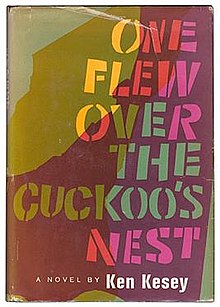
I asked my student why she was considering the idea of an specific antagonist. Maybe it’s because everyone loves a villain. Characters like Hannibal Lector (from Thomas Harris’ series of thrillers) Nurse Ratched (One Flew over the Cuckoo’s Nest, Ken Kesey),  or Stephen King’s Annie Wilkes (Misery),  have gone down in history to the point their names are synonymous with  cannibalism, bad nursing, and fandom obsession. It’s got to be fun to include a villain in your fiction, right? 

I wanted to suggest she gives this idea the wide, long view. A villain is only one type of antagonist, after all. Sometimes the protagonist in a story is faced with something that is not even human, such as natural or inanimate forces and events that take on the villain’s role. In The Handmaid’s Tale, Margaret Atwood isn’t pointing to one individual who is villainous. It’s the state itself, the Republic of Gilead, which sprang from the  ideas of  well-meaning people to become a monster in itself. 

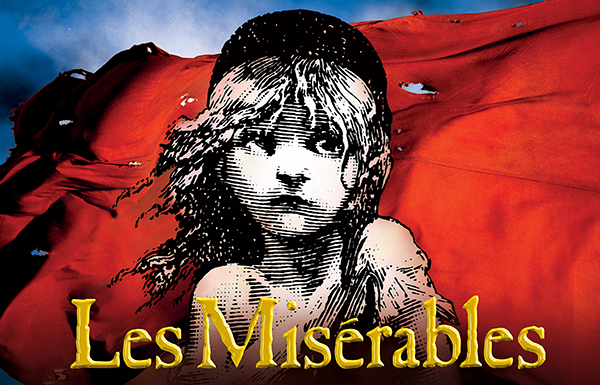
Of course my student doesn’t have to have a villain in their story…but does she need any type of antagonist at all? There are two kinds of antagonist often overlooked, when talking about ‘the bad gal or guy’. Creators of conflict can be antagonistic. Such conflict-generating antagonists are characters with goals and desires in direct conflict with the protagonist. Look at Javert, the police inspector in Victor Hugo’s Les Misérables. Javert’s lack of empathy with any criminal leads him to ceaselessly search for Valjean.


Another kind of antagonist is the protagonist themselves. We all know someone who is their ‘own worst enemy’. Holden Caulfield in J.D. Salinger’s The Catcher in the Rye. is such a one. Holden comes into conflict with almost everyone he knows, because the antagonising conflict is based in his own obsessions and insecurities. In Atonement by Ian McEwan, Briony holds such a degree of guilt internally that her entire life becomes wrapped up in atoning for it.

 If  you’ve decided to seat the conflict of your story within the protagonist, rather than an external villainous force, a strong backstory will be imperative for fuelling that inner conflict. It also becomes tricky to create defined moments of conflict and the solution often lies giving your protagonist a distinct trait, such as anxiety, anger-management or dissatisfaction with their life. You’ll need a incentivising goal for the protagonist, which is fully hindered by their internal struggle.

Antagonists are often forgotten at the character sketch stage. Villains may remain shadowy on the page for very good reasons, and this is often the excuse a writer gives themselves. However, for a bad guy or gal to be plausible, you need to know them inside-out, especially their motivation and their history. Don’t just expect the reader to assume that the antagonist is evil – end of story. The writer needs to justify them, and  know them inside-out, especially their motivation and their history. 

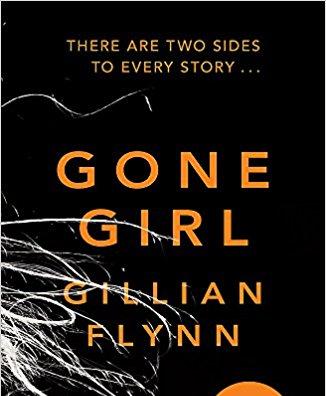
Some stories focus on conflicting protagonists. Here we encounter two characters, both taking the protagonist role, each with personally relevant but opposing, or incompatible, goals. Their conflicting struggle will cause them to want  to defeat the other, with the reader as onlooker, enjoying the clash, but not specifically invited to root for one over the other. Recent examples are Amy and Nick Dunne in Gillian Flynn’s Gone Girl, but we’ve seen conflicting protagonists as far back as Pride and Prejudice. Jane Austin shows us how to do this tricky conflict trick perfectly. Both main characters, Elizabeth and Darcy, have too much pride and too high a degree of prejudice, which almost prevents their happiness. Perhaps I’m stretching the description of ‘protagonist’ a little far by including Darcy here, but he is many a reader’s fantasy lover, after all. 

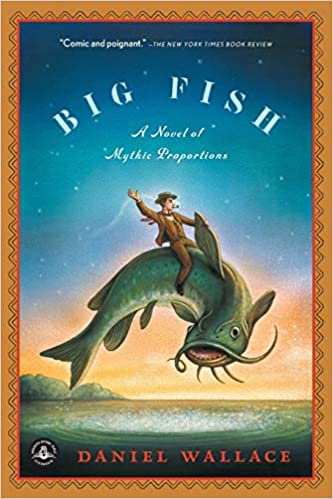
Conflicting protagonists can be wholly benign characters who make their own dramatic tension from almost nothing. In Daniel Wallace’s novel Big Fish; A Novel of Mythic Proportions, we meet Edward, who loves to spin a tale, and William, his son, who is often exasperated by what he desperately doesn’t want to think of as ‘Dad’s lies’.There is conflict between these two because they love each other. If you haven’t read the book, you may have seen Tim Burton’s movie version, where William only comes to terms with these tall tales at his father’s funeral. 

It’s possible that what my student really needs, is not a villain, or any type of full-blown antagonist but a contagonist. This term was coined quite recently by Dramatica, https://dramatica.com/dictionary/contagonist, but of course the concept has been around since novels began. Dramatica says…If Protagonist and Antagonist can archetypically be thought of as “Good” versus “Evil,” the Contagonist is “Temptation” to the Guardian’s “Conscience.” Because the Contagonist has a negative effect upon the Protagonist’s quest, it is often mistakenly thought to be the Antagonist. In truth, the Contagonist only serves to hinder the Protagonist in his quest, throwing obstacles in front of him as an excuse to lure him away from the road he must take in order to achieve success. The Antagonist is a completely different character, diametrically opposed to the Protagonist’s successful achievement of the goal.

In Enduring Love by Ian McEwan, Joe, the central character, and his wife Clarissa, become involved with a hot air balloon rescue with four others. One of these, Jed Parry, is so affected by the event that it changes all three lives. Jed offers the tension needed for the story without being in any way villainous. So if there is someone in the background of your prototype story who represents temptation and hinderance,  a character who throws damaging stumbling blocks in the protagonist’s way, luring them from any quest or goal they’re aiming towards, you might put dramatic tension in a contagonist’s hands. This character may be benign in aspiration, but would thwart the protagonist, often without knowing they have done so, and certainly without meaning to do so. 

What about the idea that fiction can survive without active opposition or  hostility from any quarter, human, or not? Can a writer completely do without an antagonist? Even the most worthy literature falls very flat without dramatic tension, and that does have to spring from some kind of conflict, which is usually described as the antagonist, whether this is a supernatural entity, an internal struggle, a jealous lover, or tsunami. Remember the first principle of writing; no conflict, no story.

If you’re not sure about the conflict levels in your story, ask yourself if your protagonist’s goal will seem too easily achieved if you keep the narrative arc as it stands at the moment. If the answer is ‘yes’, you may very well need an additional antagonist – something, someone, somewhat…to force your protagonist to struggle further before they can thrive.

So thank you, Henrietta, for your wonderfully reflective comment which has allowed us to wander among some pretty dark characters without harm to ourselves. 

Villains, eh? What would we do without them?  


Wednesday, 13 October 2021

Symbolism in Literature – The Snake

Brittanica.com

Across the world of fiction and world literature you can find the snake. It has probably more symbolic references than almost any other creature, from representing an insidious threat (the "snake in the grass"), to the idea of fertility or a creative life force. As snakes shed their skin through sloughing, they have becomes symbols of rebirth and transformation, even immortality. They're associated with the underworld and the abode of the dead because they spend so much time in pits or hiding under rocks – or in the UK under corrugated iron laid down for that purpose.

Ouroborus 

Two of the most known. symbols ares the ouroboros and the caduceus. 

In ancient myth, a snake devouring its own tail, known as Ouroboros, was a symbol of eternity. The snake’s ability to slough or shed its own skin 

The Rod of Aclepious

The caduceus, the staff of the messenger Hermes in classical Greek myth has two intertwined serpents. This staff was carried by Hermes (or his Roman counterpart, Mercury): the messenger of the gods. The two staffs are often confused, but the herald’s staff borne by Hermes/Mercury had two serpents, rather than one, with their heads facing each other. This  has been wrongly used as a medical symbol for a little over one hundred years. It has often been mistaken for the Rod of Asclepius, a visually similar symbol belonging to the god of healing and medicine.

The Caduceus

The caduceus only has one winding snake. while the Asclepius has two.

In stories the world over, as well as in modern literature, the snake often raises its head.


In the Epic of Gilgamesh, a 4,000-year-old story which also features a flood narrative, Gilgamesh attempts to seize a plant that might confer immortality, only for a snake to steal the plant away. This feels similar to the biblical  story although the creature who confronted Eve was only ever described as a serpent in Genesis – it is Milton, in Paradise Lost who first uses the term 'snake' to denote the evil of Satan. After he has tempted Eve  God punishes him by making him crawl in the dust.

 Fold above fold a surging Maze his Head            

 Crested aloft, and Carbuncle his Eyes;

With burnisht Neck of verdant Gold, erect 

Amidst his circling Spires.


In 
Good Omens, by  Terry Pratchett and Neil Gaiman, we meet  Crawley the satanic snake hilariously transformed into a burned-out rock star tasked with ushering in the apocalypse. Except Crawly—or Crowley, as he rechristens himself—isn't so keen on putting an end to his favorite earthly delights just yet. 

One of my favourite poems, D. H. Lawrence's ‘Snake’, was written while he was living on the island of Sicily, in the beautiful resort, Taormina, on the east side of the island:

The voice of my education said to me

He must be killed,

For in Sicily the black, black snakes are innocent, the gold are venomous.

And voices in me said, if you were a man

You would take a stick and break him now, and finish him off...

Lawrence stages a masculine battle,  two males facing off against one another. He ruminates on killing  the snake so that he will be safe, while accepting its power and individuality. This creates an inner drama.You can read the entire poem here

One of the most famous snakes in fiction has to be Kaa, the Indian python from Rudyard Kipling’s The Jungle Book. In he 1967 Disney film  Kaa is a villain, while in Kipling’s original book he defeats the Bandar-log monkeys and frees Mowgli, so showing that ambiguous symbolism, being both saviour and danger.


In The Poisonwood Bible, by Barbara Kingsolver, zealous Baptist Nathan Price takes his family to the Belgian Congo where he works as a missionary. Snakes appear, seemingly mysteriously, in gardens, and one morning the family find a curled-up green mamba and, as it slithers off, hear a shriek from Ruth May, the youngest of the four Price sisters. She has been bitten on the shoulder and dies as they watch. Read more of my thoughts on this fabulously rich novel here 


American poet Emily Dickinson (1830-86) wrote with passion about the snake; 

A narrow Fellow in the Grass                            

Occasionally rides –

You may have met him – did you not

His notice sudden is –

The Grass divides as with a Comb –

A spotted shaft is seen –

And then it closes at your feet

And opens further on 

I use snake symbology strongly in my second Shaman Mystery, On the Gallows. Sabbie first encounters an anaconda in a journey she takes for one client. But she meets this spiritual snake in an ice house, a long way from its home:

'Time and place can change. Home may change.'

I frowned. I didn’t want to forget a single word of what Anaconda was saying; I was sure it had meanings only Drea would understand. 

'Do homes change for the better?' I asked.

'Duty and purpose can change.'

'What is your duty and purpose?'

'First; do no harm. Next; protect your kin. Last; keep your secret.'

'What is your secret?'

Anaconda didn’t like this. He clearly felt I’d been presumptive to ask. For the first time I saw malevolence flicker in the small eyes. I heard the girl give a trembling sigh, as if even her breath shivered with cold. I tried to dodge past Anaconda, but he intercepted my move and I collided with him. His scales felt dry on my bare arms. My feet slid from under me and I fell on the ice, hard as concrete but much colder. It burned through my dress.

His tongue flicked. His head lunged at me. The razor-sharp points of his tongue plunged into my belly. I heard my throat scream in the world of my therapy room. My hands covered my stomach. There was no blood. This was a spirit wound from a serpent without a poisonous bite. Anacondas, I remembered, crushed their prey. I tried to slide away from him, wriggling like a snake does, struggling to gain a grip, but I was shivering so much my hands and feet refused to co-operate. I could hardly feel my body now. The bite wasn’t poisonous, but it had sent me spiralling into hypothermia.


The snake theme continues through the On the Gallows (Unraveled Visions in the US). Towards the climax, I make use of a reference to another fictional snake, the Mara, from Dr Who, when Sabbie interviews the woman who discovered a body on the cooling station at Hinkley Point Power Station;
The Mara, as it manifested itself in Kinda
...' I was cold, very cold and frightened and mad with myself for being so utterly stupid. I could hardly dial. I think I sort of lost it. Because behind me was a dead girl on the gallows and in front of me was the power station. I know I was screaming by then, on and on. Got myself right freaked out until I couldn’t move at all, like we did as kids, imagining Hinkley Point was the Dark Places of the Inside, where the Mara lived; we loved to scare each other with that Dr Who stuff, say the power station could transmit telepathically, and that the Mara was manifesting as one of us, we’d point to one of the gang and run screaming from them, the pure hatred and greed of Mara and that. It all came back to me. I was stuck there remembering that the Mara manifested into its snake form and could destroy me. Like her. I’d got it in my head that was what had happened to her.'     She stopped, and wiped her mouth. 'Madness. How your mind plays tricks.'
    'What did you say?'
    'That I went quite mad, really. Screamed so hard, I couldn’t use my voice for days, after–'
     'No – not that. The thing about Hinkley. What did you say about a snake?'
    'Oh, I was just frantic, totally back to when we were kids. We loved scaring each other. We knew about nuclear power, but we didn’t if you get me. We made things up. Even the signs are scary…DO NOT ENTER…to us, that mean, enter at your peril. It was Rick who started saying the power station was the Dark Places of the Inside. Said he could hear purring, but it wasn’t a cat, it was the Mara, who was, I dunno, this snake; a representation of all evil from another planet. It was what was on Dr Who at the time.'
    'The power station is…'
    'I’d half lost my mind, Sabbie, be fair.'
    'Yeah, I understand.'
     I did not understand at all.  Like I’d explained to Rey, the spirit world is full of twists and tangles...

Perhaps you have used snakes as symbols in your own writing. Or have been particularly affected by their reference in your reading. Do tell me about your experiences with snakes, by posting a comment below.

You can listen to Paradise Lost on BBC Radio 4 right now, with the great Ian McKellan as Milton, and Simon Russell Beale as the snake (Satan). It's live on Sunday afternoons and available on Sounds; click here to find out more

To read more blogposts about symbolism in literature, click here