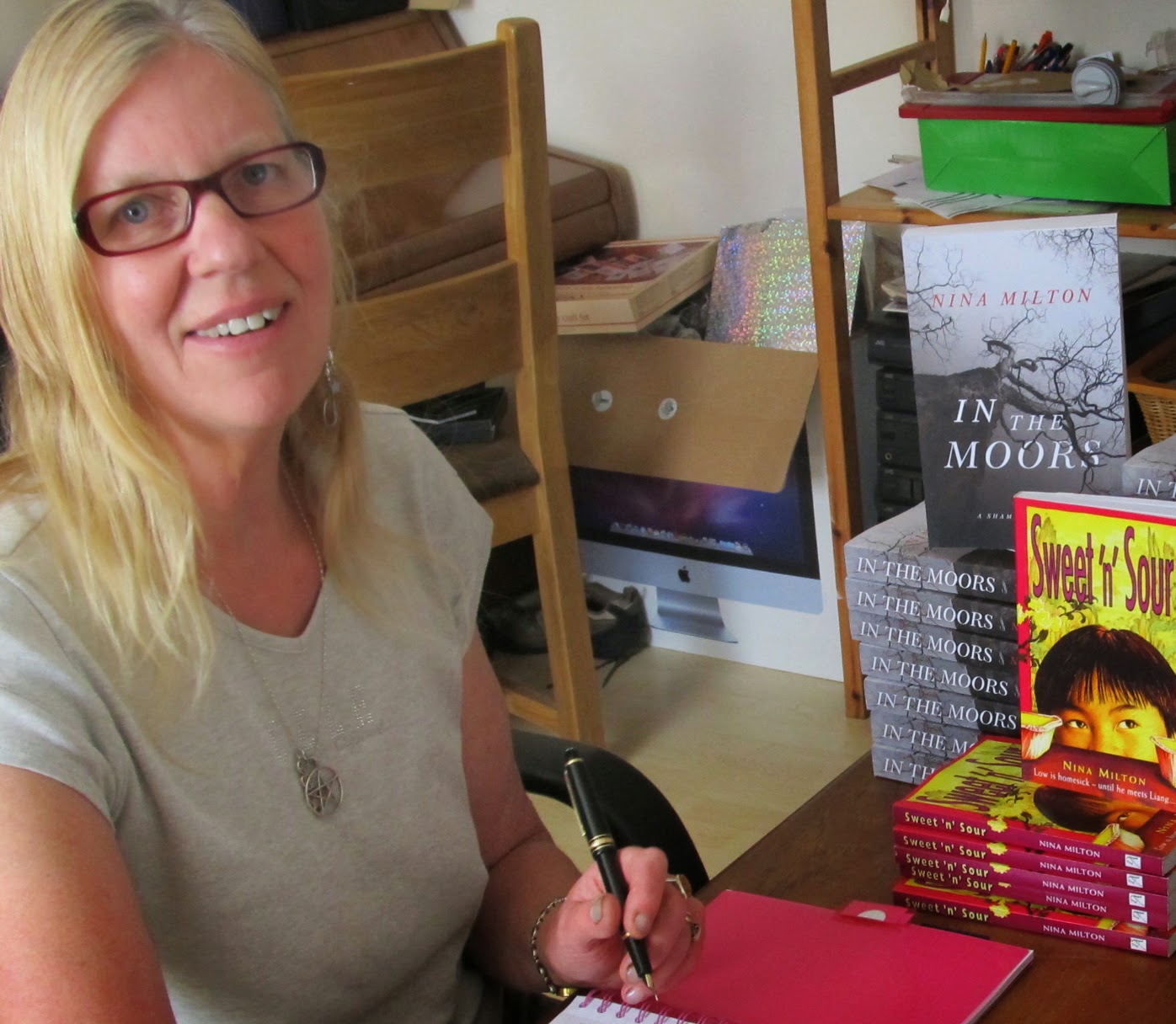
Sunday, 11 June 2017

Holiday Poems


Did you notice I'd been away? I've just got back from France, nicely tanned and full of thoughts on poetry. Holidays are such a good excuse for writing a poem – loads of new things to see, feel, taste, hear, and think about…plus all that extra time on your hands with nothing better to do than sit in the sun and write. Here are a few of the poems I have written as I holidayed around the UK and Europe. I hope you enjoy them, and that they inspire, or re-inspire you to write your own holiday poems.


Snowdon, Wales


When we set off
The sun was settled hot over the castle ruins
And the lake, agate-thin, had a rhinestone surface.
Halfway up, 
 Clouds.

Not fluffy cotton wool puffs,
Just unrelenting mist.
 We saw no more than
The crumbling path
 And our worn walking boots.
The peak arose, unexpected, 
Catching us short – shocked – 
A final scramble. We reached the summit.
I put my hand out to touch the cairn – yes!

The terminal made us weep fog-tears. 
   Tiny trains lifted their sardine loads, 
Shedding them straight into the concrete caf.
We were wet through to our aching thighs
Starved for the sandwiches  
Crushed and damp from their momentous journey,
But the staff stalk between the plastic tables
Alert for contravention of cafe rules.
We bought thin coffees,
 Gobbed our illicit food
With jerking eyes,
 Like mountain birds.


Mediterranean Storm

All night, the silent storm 
Has flickered across the horizon,
Silhouetting the perfect geometry of the earth.
Lightening running in lines and sheets, 
Proving the world is round.

All night the storm is an on and off parade,
Flickering like a silent film with erratic highlights
Or the boy with a torch under bedclothes that promise glossy dreams of breasts.
The slashing of heaven, the deadly spear of a fierce god sent crashing down, 
To puncture the sea as he will, when he chooses.


All night it persists,
Clouds tossing war at each other, 
Hurling insults as quiet as white noise,
While above, the stars blink,
Tiny statements of unaffected continuity.

All night – will it never stop?
Somewhere, thunder deafens ears and children scream their fear. 
Waves take the fishing boats until they are mountain goats, 
All hands to secure their harvest of ancient things,
The men shiny with rain in their scale skins.

But here, the storm is soundless,
A punctuated brilliance that illuminates the clouds
That dance like grey ghosts,
Phantoms that change their shape, 
Conjoin as they please, become one, or many,
Unravel or thicken or slide away, silent like the storm.

I watch until dawn.
I sit silent in my tower by the sea until the sky pales, 
The slow expansion of light sucks away the noiseless force, 
Until, diminished by the day, the flash is no brighter than the flicker of an oiled wick.
Blinded by the sun, 
It is gone.


In the Dublin Museum, Ireland

In the Dublin Museum,
Among the cornucopia of treasures,
The late Neolithic spear-head,
Honed to perfection,
Carved with utmost care.
Each flint dislodged to form
Lethal edges of symmetrical
Beauty
And a polished point
Bitter as a needle.
When the knapper stood back
To examine his work…
Elegance combined with utility,
Speed combined with precision…
Did he fear the first beads of molten ore
As they ran together and set hard?
Did he long to own the newest feats of engineering – 
The golden torc,
The bronze axe – 
Or did he lament the passing of this craft 
As the relentless pulse of technology move on.
Did he join with others of his trade
And protest the disappearance of their trade?
When did the last apprentice graduate
In the benign skill of 
Knapping flint?


Skara Brae, Orkney Isles


Whether I am in the hills
Hunting boar,
Or on the sea
Hunting fish
Or in the fields
With the barley or the beasts,
When the sun moves down,
I begin to think of Cadd,
Too heavy now with our second child
To stray far from the house.
I think about how the fire will be blazing


Before I reach the outer wall,
How, as we crouch to share out the shellfish catch
She will be heating the water and tearing herbs.

The day has been cloudless across the sea.
My face is burnt with sun and wind
My hands chilled as stone.
I stride through the passageway and Nitta comes running,
Grasps my knee, hugs and giggles.
She is the one that swells my heart.

When I went to find a stone for my mattock,
Nitta followed, singing to the flowers,
Gathering purple, yellow and white.
Cadd sat with her and named their gifts –
Which plants ease pain, which brings up a fever.
She spoke them after, like an echo of the cliffs,
With such clear intent 
It brought more water to my eyes
Than the passing of the Old One
Five moons ago.

The sun will go down red tonight,
As if bleeding into the hills.
After the fish is baked on the stones of the fire
And we are warm and replete,
I will take Cadd out.
We will lie on the soft heather and stare at the sky.
I will tell her the stars 
Are like the flowers of the land.
Both are scattered and purposeful and named.
And when she speaks them in her voice,
High as a bone pipe,
I will not mind if water comes again to my eyes


Spanish Song

 Heat virgin olive oil in a heavy pan,
Chop onion and gently fry
Crush garlic, but add later in case it might burn.
Heat the grill for the sweet peppers to sear…

 To sear in thirty degrees, 
Lay out the tropical towels 
Smear with factor ten in case we might burn
Add four thin bodies to the heat-swirled beach.

Add four thin pork boneless steaks to the pan.
Seal juices while peeling red peppers
Once they have blistered. Slice finely. 
Grind in black pepper, oregano seasoning…

Season for the murmurs of summer, 
For the glitter of the wide sea,
The screech and splash as the children leap,
For the sleepy Spanish tongue; those sun-dried sounds…

Drain and slice a jar of sun-dried tomatoes
Toss into pan the tomatoes and the peppers. 
Cover and simmer for twenty minutes
After which add twenty olives to salt the dish…

Salt in your hair and the feel of sand
Where the bar of your flip-flops grinds between your toes
Coming up the hill from the beach, stepping over wild thyme
Under the acacia trees into the marble chill of Los Arcos.

Chill the wine in the marble cooler,
As you lay out the ceramic you bought in Valencia.
Sweet pepper skins lift; gift-wrapped in scarlet tissue 
Spoon out the cerdo espanol and fluff up the rice

Long evenings, filled with fast guitars,
Smells of ceno from the next apartamento 
Twirl round the table to Flamenco,

Fast guitars and Spanish song.


Giant's Causeway, Northern Ireland

Out of the flat, black sea
Strides Fionn Mac Cumhail
His massive head 
Rises from the waves,
His vast shoulders
Shine with sea-brine.
In his one hand, he carries the sword of his people.
In his other, the spear.
Taller than two men, he is, 
As he emerges from the ocean 
And takes long steps across the Causeway,
Each hexagonal pillar lightly taking the ball of his foot.


It is said that he left his boot 
On the shore strand,
And his eye on the cliff,
But I think that Fionn lost his head 
At the Giant’s Causeway.

Only an old fool in love 
Would dream that
The fairest maid in all Ireland
Might choose him,
For all his wealth, prestige, power
And might on the field of battle,
Above Dairmuid,
The young upstart bound by geis and honour.

So, Finn reaches the cliff and 
Roars his displeasure on his land,
Scanning the horizon.
But the lovers have vanished,
And already sleep on their stony bed.


Faro Island, Portugal


She said; 
It’s a long road, straight, you can’t miss it once you’ve turned the roundabout.

She said;
Go over the bridge. That’s what makes it an island. 

 She said;
You’ll see where to park. You can buy an ice cream.

She said; 
 No one stays long.


She didn’t say;
Walk along the leeward side, facing the mainland, you won’t see a soul all the way.


She didn’t say; 
Climb over the brackeny dunes and walk back along the beach with an Atlantic wind in your     hair.

She didn’t say;
The moored boats are like jewels and the birds are wishes that can fly.

She didn’t say; 
You’ll think the little houses are shuttered against the winter until someone cries ‘Carlos! Comida!’

 She said to tell her what we thought of Faro island.

 We told her we liked the ice cream.


Saturday, 6 May 2017

Dumb and Dumber...a Moving Experience


We first saw the cottage we bought in West Wales in a snowstorm, and fell in love with it instantly A solitary sheep grazed in a small field. We could see miles of white countryside and the house was built of local pink and yellow stone with black slate. There was room enough to keep hens and grow food. We made an offer and started packing our things. 
Even so, everyone we knew was very dubious. "Won't it be lonely," they asked. "So far from your friends?" 
And, even more worrying, "The Welsh don't like the English. They won't talk to you, unless they're ripping you off."
This concerned us, and, just to get going, we made sure we used an English furninture removal firm to get our belongings from English A to Welsh B. Two skinny boys successfully loaded the contents of our last house into their van and taken it into storage. They seemed okay, but it turned out they were two of the biggest nincompoops known in the trade.
We went ahead to repaint the interior, and lay some flooring, and once we were ready for our furniture to arrive. We rang up and the boys…let’s call them Dumb and Dumber, because I wouldn’t like to reveal their true names…and asked for delivery. ‘Is seven am is okay to arrive,” they asked. “Because once we’ve finished the job, we’ve finished for the day; the earlier the better.”
Our new home
We said that was fine, but did they realise it was a three-hour drive from the depot to our new house? “You’ll have to leave before the sun is up,” I told them. 
“No problem,” came the cheerful reply.
Rather over-optimistically, we set the alarm for half six but after waiting an hour, we were taking bets on when they’d arrive. At ten to nine they rang to say they were just driving out of the depot; they’d had a few jars the night before...it was a bank holiday, after all... 
Our hens
Our next call was at midday. They were in the small town just fifteen minutes drive away, where their van was more or less stuck in the side roads.”Don't use the weak bridge!" I yelled down the line. "Why aren't you on the bypass? Why did your satnav send you into the town?”
Sheepishly, they explained their satnav was on their mobile and, (probably because of the few jars the night before) they’d forgotten to charge it up. I gave them the simple directions; thirty minutes later we had a call from two (rather beautiful, it transpired)  young Welsh girls out in their car. Hopelessly lost, Dumb and Dumber had stopped them to ask directions. The girls knew the area well and steered them in. Thus, our whacking removal lorry finally arrived behind a small, red mini. The lads jumped out and instantly asked where they could buy fish and chips; after a night on the tiles and a long drive, they were famished. We offered to get food for them if they would finally start work.
The first thing that had to be unloaded was the garden equipment, and we suggested they backed towards the field gate and took everything for the garden into the field. This, they managed without incident, but they had chosen to drive into the field and when they attempted to reverse out again...they discovered the van had gouged itself into the dry soil. They were stuck. Soon, they couldn't move forward, either. We put grit, then blankets and finally, in desperation, large planks of wood under the wheels. A smell of burning erupted from the rear tyres but the lorry didn’t budge. Dumb and Dumber were well and truly stuck. 
“Call the AA,” I said. But they blanched at the suggestion. The removal firm might find out just what they’d done!
Finally, I walked the 300 yards down the road to introduce myself to Denise and Dave, our nearest neighbours, and ask if anyone local had a tractor. 
 “Gino,” they suggested. “He’ll come out.”

The Italian Chapel, Henllan Ceredigion
I’d already heard of  Gino. He was the owner of a local restaurant, and of Italian descent. His father had been an Italian prisoner in Wales in the second world war, in a POW camp that was only 3 miles from our cottage. I've since been there, for it has the only Italian Chapel in the UK in which services are still performed, and it is beautiful. 
While they were happily sojourning in the Welsh countryside, quite a lot of the Italian soldiers fell for local girls and never went home, and Gino’s father was one of them. Like his dad before him, Gino farmed a dairy herd from which he made the most wonderful Italian ice cream (especially the pistachio). Jim drove off towards the restaurant which was half a mile from our home (half a mile that is a great walk when you’ve had a bottle of chianti) and in seconds, it seemed, was back with a short, heavily built man of around retirement age on a massive tractor. When I offered him a cuppa, he said, "Just a quick one, if you don’t mind, I’m about to start my dinner." Only a true (new) friend would come out as his dinner (cooked by Mama, as well!) was put on the table. I wanted him to talk on and on; I was fascinated by his accent which was English with a blend of Italian and Welsh. 

Gino hooked the lorry to his tractor and had it out in seconds. From then on, the move went smoothly. Our happy pair - Dumb and even Dumber - downed their fish and chips and went away with rather red faces (I hope), leaving us to fully understand just what a great place we’d shipped up in.  Our clothes were already on their hangers, the takeaway had been delicious, the Welsh sun was shining over the valley and the view from the garden was outstanding. Most important; we had already learnt that the neighbours were wonderfully friendly. Thanks to our Dumb and Dumber removal guys, the auspices for life in West Wales were perfect.
Our view


Monday, 24 April 2017

Dracula, or The Un-dead, by Bram Stoker


'Read Classic', an occasional series of posts from 
Kitchen Table Writers, looks at Bram Stoker's Dracula

I was holidaying in Whitby when I first realised that Bram Stoker’s Dracula was a surprisingly modern novel. I’d watched the Hammer film versions of the book in my misspent youth and they left with the opinion that the book was a bit of late Victorian gothic horror, no where near good enough for me to need to wade through all that gore. But every Whitby bookshop had a copy of Dracula in its window, and naturally, I soon succumbed, reading it on the top of blowy cliffs and in the shelter of the beaches below. I took it on every walk, along with my butterfly identification book.

We did a lot of walking that holiday, passing the whaling arch on West Cliff, which Stoker would have passed too, with his family, when he holidayed here in June 1890. He stayed at Royal Crescent and it was there I discovered just how inspiring his time in Whitby must have been. Bram Stoker had found his inspiration. Standing in the crescent, you have a view of the North Sea, past sloping green cliff and grey sands. Across the river estuary are the imposing ruins of the Abbey, which must have been at least as gothic then as it is now.  The churchyard of St Mary lies below, the location of a vampiric attack in the second half of the story. As twilight falls, bats begin to swoop into view.

Mina, one of the two young female characters in Dracula, voices Stoker’s thoughts on the town: Right over the town is the ruin of Whitby Abbey, which was sacked by the Danes, and which is the scene of part of "Marmion," where the girl was built up in the wall. It is a most noble ruin, of immense size, and full of beautiful and romantic bits; there is a legend that a white lady is seen in one of the windows…

Bram Stoker also spent time at Whitby library – he made notes from 'An Account of the Principalities of Wallachia and Moldavia’, in which he must have seen the name ‘Dracula’ for the first time. The fifteenth-century Vlad Dracula (Vlad the Impaler) was as bloodthirsty as his fictional counterpart, impaling his enemies on long spikes and nailing turbans to the scalps of foreign ambassadors. Stoker gives his reader the historical allusion that Count Dracula is the descendant of Vlad – in his Author’s Note he explains that the documents assembled in the novel are real. Even as I read this, before starting the novel, I was reminded of the hype around The Blair Witch Project, and saw how astute Stoker was as a writer. 

He’d called this story The Un-dead for all the time he was writing it. Just before publication, he changed his title to  the wonderfully charged-up name of the antagonis. This  may have changed its destiny, although ‘un-dead’ remains a popular trope today, especially in Young Adult literature.

I began my holiday read, and soon found that it was not at all like the Hammer Horror version…or for that matter like Bram Stoker’s Dracula (1992) which I found almost unwatchably hammed up. Dracula contains elements of the conventions of gothic fiction…dark-shadowed, cobwebby castles juxtaposed with vast remote landscapes and vulnerable, virginal girls threatened by black-coated evil-doers… but Stoker contrasts his Transylvanian castle with parochial Whitby and the bustle of London in the 1990s.

Starting with that holiday in Whitby, Stoker used a wide range of research methods and a clear understanding of modern character development to write the story, but a stuck with the traditional gothic novel structure; diary entries, letters and newspaper cuttings etc. It opens with the most famous section of the book, Jonathan Harker's Journal, which recounts his visit to Transylvania as a lawyer helping the count through his London property transaction. Harker falls under the spell of the Brides of Dracula and succumbs to the vampire’s influence. This opening feels like it has an impossible resolution and I turned the pages as fast as any modern thriller, needing to know how he could possibly escape with his life. At that point, I had no idea how many other characters would not escape with theirs. The novel keeps twisting and surprising us, as Dracula, on his way to London aboard a ship (hidden in a coffin) is washed up in Whitby and escapes in the shape of a black dog, and we’re introduced to Renfield, who is incarcerated in  a mental asylum where he lives on a diet of flies and spiders.

Stoker's masterpiece was part of a fin-de-siècle literary culture obsessed with crime – this was the time that Jack the Ripper stalked Whitechapel – and sensationalism – these were the original ‘naughties’. The book strips away the layers of late Victorian anxiety such as loss of religious traditions,  colonialism, scientific advancement, plus a growing awareness of female sexuality and a continued fear of homosexuality.  The book is a mirror in which generations of readers have explored their own fantasies. 

Maurice Richardson described it as; a kind of incestuous, necrophilious, oral-anal-sadistic all-in wrestling match, and no one could argue with that (or prevent themselves from rushing to read such a book).


Thursday, 20 April 2017


Thank you so much,Indie Shaman for your kind and detailed review of In the Moors, the first book in the Shaman Mystery Series.
And, there's a Book Give-away alongside the review, with a copy of In the Moors up for grabs. To go Indie Shaman's Facebook Page for further details.
In the Moors is a dark thriller, dealing with chilling serial crime but, due to the skill of the author’s writing and the humour and engaging character of Sabbie Dare, it is also a highly enjoyable read that is very difficult to put down once you pick it up.
In fact the main issue for me was reaching the end of the book and wondering what I could read next that would match up to it. Fortunately there is a book two and three in the series (although I started the series by reading book three, so also can confirm you can read them in any order). And hopefully Milton will continue the series with a book four.
Very addictive and highly recommended!
To read the entire review click here
Or, why not read the this most recent issue of Indie Shaman, in which my article on 'The Red Lady of Paviland' features alongside other excellent articles? You can find out more here.

Monday, 10 April 2017

The Very Hard Work of Getting Published

Once again, I'm delighted to say that a previous student has contacted me to say they’ve had a book accepted for publication. I get really excited when this happens; and hopefully, once the ‘wraps are off’ that writing friend of mine will be telling you about her success herself, in a guest post on this blogsite. In the meantime I have a message from her. It’s for all of those who read Kitchen Table Writers while writing your own first novel. 

“It’s bloody hard work.”

Every single student I’ve ever had, who got their contract in the end, would endorse that sentiment. I’d endorse that sentiment! 

You have to work very, very hard, and often for a very, very long time. No let up, and perhaps not even a glimmer of hope on the horizon to keep you going. 

When I started to write I had two small children and a part-time job. working nights so that their father could be there when I wasn’t. I didn’t have much time to write. Then, just as I got going, my mother developed severe dementia and came to live with us. That cut down my time even further. In fact, there was always something that could get in the way of writing regularly, and indeed, I didn’t always manage to write regularly, but I tried not to give up. I worked my way through my first children’s novel and found an agent. Eventually, that magical contract with HarperCollins appeared on my door mat (yes, it was the door mat, back in those days). People started to ask me what one needed to write successfully. And I kept telling them. 

“Bloody hard work.”

There are three main kinds of bloody hard work attached to the production of a novel. The first is the hard graft of the start. Have you filled three notebooks with ideas and snatches of prose which you’ve discarded, half used, or actually included? Have you yet thrown away half your novel and gone back to the beginning? Have you asked someone to look at the glimmerings and been slated on what you showed them? If not, you haven’t lived. And you certainly haven’t worked hard enough yet. Tossing out a lot of early work is part and parcel of the ‘first novel experience’. (Along with a lot of…yep…hard work.)

The second stage is completion. You’ve now actually got a draft that you’re pleased with. Heck, you might be actually proud of it, and so you should be; getting to this stage deserves huge congratulations from everyone who knows you. (It might also get huge sighs of relief, but that is a premature emotional reaction on their parts.) Believe me, this second stage is hard work. Mentally – you’re glued to a computer while you try, and try again, to formulate a synopsis that will do your novel justice, plus a covering letter that is neither too showy nor too dull. Physically, you need sheer grit and determination to go on when you realise that the synopsis and covering letter needs to be written, with slightly differing nuances, every time you send it out. Emotionally, it’s hard too, when back they bounce. Steadily, you work your way through the Writers and Artist’s Year Book, but no one wants you yet. Then, all at once, some one does want to see the entire book and you realise there may still be typos and other potholes. You need to go through it with a fine tooth comb. When the manuscript returns with a kind of ‘yee-ees…’ you discover that this agent or editor wants heaps more work done. 

Heaps. Of very, very hard work.

Finally, you reach the third stage. You’ve had the contract checked by the Writers’ Society
and you can proudly proclaim you’re to be a published writer. Just as you sit back with a sigh, a long list of ‘do’s’ will arrive from the publisher. Set up a website or blog. Write a good blurb. Contact everyone you know for an endorsement. Promote your book. Start booking engagements. Plan your launch. Do book readings. Be a presence on twitter. Start the next book.

It’s such bloody hard work being a writer!

. 
At least, when you reach that stage, you, along with all other professional writers, can reassure the new guys that your novel didn’t just come out of the air. 

Please do this – don’t let them believe that you glibly typed away for a couple of hours a week and then success just happened without further effort. Please tell them that you:
  • Filled up notebooks 
  • Had times you didn’t believe in yourself
  • Wrote half a novel and dumped it
  • Had further times when you didn’t believe in yourself
  • Took two years of back-aching, sight-failing keyboard work.
  • Almost had to start again anyway.
  • And that you’re still working hard to this day.

At that point, you’ll also know, as my friend knows now, just how important it is that people they know buy their new book. That it took a long time to craft it into a readable novel, and that it’s really worth reading, and yet is priced lower than a cinema trip. 

Why not pop over to Amazon today where putting ‘Nina Milton’ into the search engine will bring up that very, very bloody hard work – all of which is now transformed into steamingly good reads!


And do watch this space for news of my ex-student’s success.

Monday, 3 April 2017

STARTING TO WRITE Writing Before You Start Writing


The writer’s greatest fear – the blank page or screen.  

You sit, ready to begin.

You really, really want to write. In fact, you’ve got a great idea, although it’s still a bit...unformed. So you stare at the screen, for a long time, before you finally start to tap. 

Five paragraphs (or even worse – five lines,) down, your head slumps forward. You’re pretty sure you’ve written rubbish, and now you’ve even run out of rubbish to write. You hand slides to the mouse and before you know it, you’re playing that stupid game someone on Facebook sent you.

What went wrong? You know that you really, really wanted to write. Why can't you write?

You’ve forgotten something hugely important:

Most writing, starts long before you sit in front of screen or paper. First of all, you  have to ‘imagine up’ your writing.

Story, novel, play, poem…any writing at all, begins in our heads. Most successful writers do huge amounts of imagining, thinking and planning before they touch keyboard or pen. For this, they visit a strange place in their heads, which becomes increasingly real, the more they go there.

These methods of enhancing the imaginative process are open to all, and intently useful to those who are about to embark on their first writing. 

If fact, you have already done this, many times; we all do it every day. At its least intense, it's called day dreaming. As it becomes more intense, you may find that you reach a level where you're taken far away from your surroundings. Although you are not asleep, you are not fully alert either. The pulse of your brain has slowed, becoming Alpha brain waves. It’s that common experience in the supermarket. Tin of beans in hand, your mind soars off on such a totally different tack that when a passing friend calls your name, you don’t hear them, and if they tap your shoulders, you jump, hopefully without dropping the beans on their foot. Then you apologize, saying, ‘I was somewhere else there, for a moment.’ The friend understands instantly. We all recognize this ‘losing of yourself’, but we don’t make use of it nearly enough. 

Entering this slower state of thinking allows you to take advantage of the relaxed, twilight world of the trance, where vivid imagery flashes into the mind’s eye and we become receptive to information (as in self-hypnosis) beyond our normal conscious awareness.

This trance state, is also called by may different names, and you might like to choose one that you’ll feel comfortable with:
  • Daydreaming
  • Reverie
  • Fantasizing
  • Introspection
  • Brown study 
  • Muse descending 
  • Deep listening
  • Slipping into a trance-like state
  • Visualization
  • Mental pictures
  • Head movies
  • Relaxed imagining
You might want to call this ‘meditating’, but a more accurate definition of meditation is that of emptying your mind by concentration on a single thing (such as your breath). However, you might find it beneficial to meditate prior to tapping your imagination, emptying out the normal ‘gabble of thoughts’ for a few minutes before letting your mind settle on what you next want to write. 

Once the process is underway, you can burrow deeper and deeper into your mind, until you reach the many voices of your self, unlocking something that you didn’t previously know was there. 

I discovered that dropping down into this world was hugely enjoyable. Like most other writers, I’m fascinated by the fact that plots, characters and entire scenes can drop into one’s mind from nowhere. For millennia people have asked whether such creations come from outside us, or deep within. The Greeks had it sown up, of course. The Nine Muses were goddesses who visited those ready to create works of art and dropped the inspiration into their minds.

http://www.mlahanas.de/Greeks/Mythology/Muse.html
Consider now if you have a special place or time or activity where you find yourself quite naturally thinking the words that will eventually turn up on the page. What are you doing when you write in your head? For me, it has to be walking alone. Once I’m underway, my feet seem to direct themselves, whether I’m heading to the nearest shopping centre or through a woodland, and my mind flies off on a journey into my project. Thoughts and memories are loosened and released and worlds of possibilities to open up. Your writing will be sharper, more present, more melodic. Your settings will have the tastes and colours and the subtlest background sounds all built in. You’ll be able to stand right beside your characters; you will see their freckles and dandruff, and where they cut themselves shaving. What’s more, they will regard you as their therapist, they will open their hearts and tell you everything that troubles them, from their first memories to their most hidden infamies.

Here is a list of special times where allowing yourself to concentrate on setting up ‘writing before writing’ can really work. For instance, if you already take the train to work each day, and find that you’re mind wanders as it moves steadily onward, then don’t forget to pack your notepad and pen. 
Study all the methods below and tick the ones you think would work for you, or already work for you. Add others that might better apply to you:

[] Walking alone
[] Repetitive tasks, such as housework
[] Gardening (especially weeding)
[] Lying half awake in bed
[] Listening to music
[] Sitting quietly (indoors or out) with eyes shut
[] A journey on train or bus
[]
[]
[]

Look through your ticks. You can have a go at several of these or you can choose one method you could employ more frequently. For instance, if you like the idea of spending more time sitting with your eyes closed, try to do this on a regular basis, but rather than allowing your mind to wander without any structure, think in terms of the writing you are working on. When you don’t know what to write, the visualizations will send you in search of memories from your childhood or forgotten moments of passion. If you’re stuck at a point in a story, you can go to seek the clues to the puzzles of your plot.  You can become your character’s therapist, or watch them choose what they wear, drive, eat.  You will soon find that your mind is full of startling revelations and things jump out at you and demand to be written down. Very soon, scenes will play in your mind, characters will speak to each other, settings will become clear, and – perhaps most importantly for the moment you sit in front of a blank scene – you'll hear your narrative unfold in your head.

For some writers, this feels way too unstructured. Dropping the tight grip on the reigns of their writing feels scary. They find it hard to consider 'daydreaming' as part of 'the writing process'. If they're not actually writing, they're not writing at all. But your creative self could gallop at will if only you let it. After all, you can tighten the reigns again during the drafting process when you return to that blank screen, full of ideas. To start with, give your writing horse his head.

Naturally, translating these ‘visions’ onto the page is not always straightforward. Ideas can start to slip away, to fade as we try to describe them on paper. The feelings you had turn out to be difficult to translate into words. The key to this problem is to always have a notebook nearby – if you don’t record these thoughts quickly, they will float away, possibly never to bee seen again. Use your notebook to write down everything that comes to you – even if it feels unusable or incomprehensible or crazy at the time.

Your imagination is where your writing begins - using this technique, you can enter your creative world and roam around it at will. The writing that spills out as you sit up and grab a pen or laptop can become the foundation of your projects. You are recording words and images directly from the interior of your mind. 

 You are now writing directly from your own inspiration. Enjoy!