Friday, 5 May 2023

The Bad Guys -- Do Novels Need Villians and Antagonists?


I've just had this email from a student; 

 I realised I had only thought of all my characters internal conflicts; however, I have not thought of a definite villain, and I am unsure of whether I want to include one after reading The Gloaming by Kirsty Logan. In The Gloaming, there is not one major external conflict that influences every character. Rather, it is a retelling of life and its unexpected twists. The book made me think of how I want to present the story; do I want there to be a villain to defeat? Or am I satisfied with writing only about their internal conflicts, and their battle with the storm?

Not all stories have a bad guy or gal. Conflict, and the thwarting of desire, can come from many other sources. In fact, having a villain at all could be thought of as an artefact of certain genres; action, crime, romance and adventure, for instance, although for the purpose of this blogpost, I’m casting my net more widely. Some of the greatest literature features ‘the villain’, Shakespeare being master of the purposefully evil human intent on destruction and full of hate, and Dickens taking up that mantle willingly, creating iconic villains such as Uriah Heep.

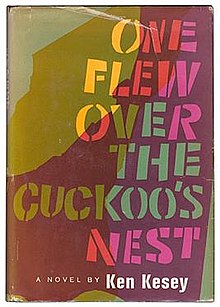
I asked my student why she was considering the idea of an specific antagonist. Maybe it’s because everyone loves a villain. Characters like Hannibal Lector (from Thomas Harris’ series of thrillers) Nurse Ratched (One Flew over the Cuckoo’s Nest, Ken Kesey),  or Stephen King’s Annie Wilkes (Misery),  have gone down in history to the point their names are synonymous with  cannibalism, bad nursing, and fandom obsession. It’s got to be fun to include a villain in your fiction, right? 

I wanted to suggest she gives this idea the wide, long view. A villain is only one type of antagonist, after all. Sometimes the protagonist in a story is faced with something that is not even human, such as natural or inanimate forces and events that take on the villain’s role. In The Handmaid’s Tale, Margaret Atwood isn’t pointing to one individual who is villainous. It’s the state itself, the Republic of Gilead, which sprang from the  ideas of  well-meaning people to become a monster in itself. 

Of course my student doesn’t have to have a villain in their story…but does she need any type of antagonist at all? There are two kinds of antagonist often overlooked, when talking about ‘the bad gal or guy’. Creators of conflict can be antagonistic. Such conflict-generating antagonists are characters with goals and desires in direct conflict with the protagonist. Look at Javert, the police inspector in Victor Hugo’s Les Misérables. Javert’s lack of empathy with any criminal leads him to ceaselessly search for Valjean.

Another kind of antagonist is the protagonist themselves. We all know someone who is their ‘own worst enemy’. Holden Caulfield in J.D. Salinger’s The Catcher in the Rye. is such a one. Holden comes into conflict with almost everyone he knows, because the antagonising conflict is based in his own obsessions and insecurities. In Atonement by Ian McEwan, Briony holds such a degree of guilt internally that her entire life becomes wrapped up in atoning for it.

 If  you’ve decided to seat the conflict of your story within the protagonist, rather than an external villainous force, a strong backstory will be imperative for fuelling that inner conflict. It also becomes tricky to create defined moments of conflict and the solution often lies giving your protagonist a distinct trait, such as anxiety, anger-management or dissatisfaction with their life. You’ll need a incentivising goal for the protagonist, which is fully hindered by their internal struggle.

Antagonists are often forgotten at the character sketch stage. Villains may remain shadowy on the page for very good reasons, and this is often the excuse a writer gives themselves. However, for a bad guy or gal to be plausible, you need to know them inside-out, especially their motivation and their history. Don’t just expect the reader to assume that the antagonist is evil – end of story. The writer needs to justify them, and  know them inside-out, especially their motivation and their history. 

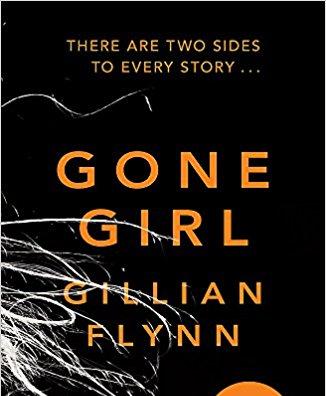
Some stories focus on conflicting protagonists. Here we encounter two characters, both taking the protagonist role, each with personally relevant but opposing, or incompatible, goals. Their conflicting struggle will cause them to want  to defeat the other, with the reader as onlooker, enjoying the clash, but not specifically invited to root for one over the other. Recent examples are Amy and Nick Dunne in Gillian Flynn’s Gone Girl, but we’ve seen conflicting protagonists as far back as Pride and Prejudice. Jane Austin shows us how to do this tricky conflict trick perfectly. Both main characters, Elizabeth and Darcy, have too much pride and too high a degree of prejudice, which almost prevents their happiness. Perhaps I’m stretching the description of ‘protagonist’ a little far by including Darcy here, but he is many a reader’s fantasy lover, after all. 
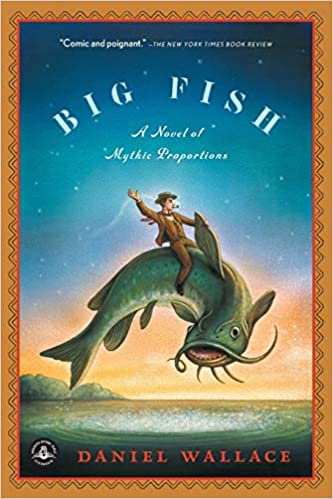
Conflicting protagonists can be wholly benign characters who make their own dramatic tension from almost nothing. In Daniel Wallace’s novel Big Fish; A Novel of Mythic Proportions, we meet Edward, who loves to spin a tale, and William, his son, who is often exasperated by what he desperately doesn’t want to think of as ‘Dad’s lies’.There is conflict between these two because they love each other. If you haven’t read the book, you may have seen Tim Burton’s movie version, where William only comes to terms with these tall tales at his father’s funeral. 
It’s possible that what my student really needs, is not a villain, or any type of full-blown antagonist but a contagonist. This term was coined quite recently by Dramatica, https://dramatica.com/dictionary/contagonist, but of course the concept has been around since novels began. Dramatica says…If Protagonist and Antagonist can archetypically be thought of as “Good” versus “Evil,” the Contagonist is “Temptation” to the Guardian’s “Conscience.” Because the Contagonist has a negative effect upon the Protagonist’s quest, it is often mistakenly thought to be the Antagonist. In truth, the Contagonist only serves to hinder the Protagonist in his quest, throwing obstacles in front of him as an excuse to lure him away from the road he must take in order to achieve success. The Antagonist is a completely different character, diametrically opposed to the Protagonist’s successful achievement of the goal.

In Enduring Love by Ian McEwan, Joe, the central character, and his wife Clarissa, become involved with a hot air balloon rescue with four others. One of these, Jed Parry, is so affected by the event that it changes all three lives. Jed offers the tension needed for the story without being in any way villainous. So if there is someone in the background of your prototype story who represents temptation and hinderance,  a character who throws damaging stumbling blocks in the protagonist’s way, luring them from any quest or goal they’re aiming towards, you might put dramatic tension in a contagonist’s hands. This character may be benign in aspiration, but would thwart the protagonist, often without knowing they have done so, and certainly without meaning to do so. 

What about the idea that fiction can survive without active opposition or  hostility from any quarter, human, or not? Can a writer completely do without an antagonist? Even the most worthy literature falls very flat without dramatic tension, and that does have to spring from some kind of conflict, which is usually described as the antagonist, whether this is a supernatural entity, an internal struggle, a jealous lover, or tsunami. Remember the first principle of writing; no conflict, no story.

If you’re not sure about the conflict levels in your story, ask yourself if your protagonist’s goal will seem too easily achieved if you keep the narrative arc as it stands at the moment. If the answer is ‘yes’, you may very well need an additional antagonist – something, someone, somewhat…to force your protagonist to struggle further before they can thrive.

So thank you, Henrietta, for your wonderfully reflective comment which has allowed us to wander among some pretty dark characters without harm to ourselves. 

Villains, eh? What would we do without them?  


Wednesday, 12 April 2023

Who Owns Books? A look at the history of publishing

In 1476 Caxton established the first printing press in England and set about printing Chaucer's Canterbury Tales, and Malory's Le Morte d’Arthur among other books. He was publisher, printer and bookseller combined. Once he had a handwritten copy of something, he owned it, never mind who actually wrote it. Quite often, the writers was already dead; but it didn't concern Caxton if they were still alive. He'd done all the work to make this a printed book, which looked comely and was easy to read, display, and store. 

The Gutenberg Bible
He hadn't even invented the process; that was  Johann Gutenberg who printed with moveable type in 1450s in Mainz, Germany.This new print technology involved setting pages of type from individually cast metal letter forms that were then run off on a hand press, and this idea was taken up by Caxton in Britain. He printed more than 100 books in his lifetime, books which were known for their craftsmanship and careful editing. He was also the translator of many of the books he published, using his knowledge of French, Latin and Dutch. He died in 1492.

For over 200 years things continued in that vein. The books a printer took off their press belonged to them for sale. The argument ran that the printer had bought the paper, and the ink, and owned the press, ergo, they owned the writing. Restrictions were enforced by the Stationers' Company, a guild of printers who were given the exclusive power to print and sell —and the responsibility to censor—literary works.


John Milton
  In 1694, parliament refused to renew the Licensing Act, ending the Stationers' monopoly, censorship and failure to protect authors. For the next 16 years, the lively debate over 'who owned books' raged. John Milton wrote about his experiences with The Stationer's Company, accusing Parliament of being deceived Finally Parliament put out the ‘Statute of Anne’ in 1710. Here are the opening words:


An act for the encouragement of learning, by vesting the copies of printed books in the authors or purchasers of such copies, during the times therein mentioned.

I. Whereas printers, booksellers, and other persons have of late frequently taken the liberty of printing, reprinting, and publishing, or causing to be printed, reprinted, and published, books and other writings, without the consent of the authors or proprietors of such books and writings, to their very great detriment, and too often to the ruin of them and their families: for preventing therefore such practices for the future, and for the encouragement of learned men to compose and write useful books; may it please your Majesty, that it may be enacted, and be it enacted by the

Queen Anne

Queen's most excellent majesty, by and with the advice and consent of the lords spiritual and temporal, and commons, in this present parliament assembled, and by the authority of the same;

II. That from and after the tenth day of April, one thousand seven hundred and ten, the author of any book or books already printed, who hath not transferred to any other the copy or copies of such book or books, share or shares thereof, or the bookseller or booksellers, printer or printers, or other person or persons, who hath or have purchased or acquired the copy or copies of any book or books, in order to print or reprint the same, shall have the sole right and liberty of printing such book and books for the term of one and twenty years…


To read the Statute of Anne, click here.


This began the acknowledgement of an author’s ‘intellectual property’ of their writing. As soon as you have written your work – even before it reaches editor – you own its copyright. This has been extended from twenty-one years, in 1710, until, in UK and EU law today, to seventy years after your death. 


The Statute of Anne states that you may not publish, or profit from, copyright material belonging to any other writer. This is a complicated area covered by different regulations – plagiarism, trading-off, unauthorised infringement of copyright, intellectual theft and so on. The rule here is simple – don’t try to pass off as your own something written by someone else. However, the Statute of Anne also established there is ‘no copyright in ideas’. Novice writers often worry unduly about their own work being plagiarised. Although you can’t protect your ideas, it’s the way you write them that makes them distinctive. Even if you believe that your plot has been copied, go right ahead and write it anyway in your own unique voice. 


An excellent example of this being tried in the courts was the case in 2006 against Anchor, the publishers of The Da Vinci Code (Dan Brown, 2003). This was brought by the authors of The Holy Blood and The Holy Grail, published in 1982. Baigent and Leigh claimed that The Da Vinci Code was an infringement of their copyright as it borrowed a lot of its fictional content from their non-fictional, heavily researched work. The case failed; it was clear there was little copying of the actual text. But it’s possibly that Baigent and Leigh knew this; the action brought their book back into the public’s attention and increased its sales. On the other hand, in 2008, Author J.K. Rowling won a copyright infringement lawsuit against Steven Vander Ark’s Harry Potter Lexicon. Rowling was quoted as saying…I went to court to uphold the right of authors everywhere to protect their own original work. The court has upheld that right. The proposed book took an enormous amount of my work and added virtually no original commentary of its own…


        to read more about this case, click here


The Small Print 

The UK prides itself on the freedom of speech that we enjoy (although the US, for example, offers writers a great deal more freedom than British law does). The restrictions in Britain fall into a number of categories, most of which have little bearing on the sort of writing we’re thinking about here but, like plagiarism, there are some statutes that are relevant to the professional writer. Bear in mind, it’s publication rather than writing, that generally causes the problem.

  • Obscenity, blasphemy and racism. These laws are continually under review. If you think there’s any possibility that you’re contravening the law in these areas, seek advice. Start with your tutor
  • National security laws relate to D-notices and the Official Secrets Act. You will be well aware if your writing contravenes these.
  • Special injunctions are court orders, issued by a judge in response to a direct application. These can forbid the publication of individual articles on specific subjects
  •  General injunctions are permanent – for example those that prevent young criminals being named. There are also the uniquely British sub-judice rulings, which severely restrict what can be written about people charged with a criminal offence but awaiting trial, so that an unprejudiced jury can be selected
  • Slander is saying untrue things about other people, which cause actual damage to their business or social standing. Slander only applies to the spoken word and therefore doesn’t need to worry you as a writer
  • Libel is writing (and publishing, including online publication) untrue statements that are potentially damaging to the business or social standing of a person – ‘defamatory’ is the technical term. Unlike slander, a person suing for libel does not have to prove that any damage has yet happened, only that the statements made are potentially damaging. This acknowledges the greater power of the written over the spoken word. However, there is no law against publishing damaging statements that are true. There’s also no law against publishing statements which are untrue but not damaging (unless fraud is involved, or a form of advertisement). You have to have tell a deliberate lie, or at the very least be negligent in checking the facts, to fall foul of this law. 
Look at some early work by authors you admire, especially authors you think have influenced you to do this sort of writing. Examining their juvenilia will demonstrate how their own work has grown and developed. It might be an interesting idea to ask yourself how valid your own voice is, and what for you is the difference between plagiarism and simply reflecting the writers you love. 
  • Take a book by an author you admire and love to read. Read enough to immerse yourself in the writing style and the writer’s voice as well as the themes and forms that are characteristic of this author
  • Put the book to one side and freewrite for twenty minutes. Allow yourself to emulate the writing you admire; this should be fairly easy if you’ve really immersed yourself in the writing
  • Don’t copy any actual words from the book, but if you want to write similarly on a similar subject, feel free to do so. Put the writing aside for half an hour or so, then reread it
  • Analyse the effect that this exercise had on your writing. Ask:
    • Did the immersion change your voice or style?
    • Did it ‘free up’ your pen?
    • Did the eventual piece resemble the voice of the original author?
    • To what extent? 
    • Is this writing plagiarism? 
  • What you wrote will be your own work, albeit in the style of another, so the answer  to the final question should be ‘no’
  • Put the writing aside again, perhaps overnight
  • Reread it, then put it to one side and try to write a similar piece in your own ‘voice’
  • Analyse the result as you did before. Ask:
    • What changes did you observe?
    • Did your writing resemble the original or were you simply influenced by it?

Friday, 31 March 2023

Virginia Woolf, A Writer's Joy - (Writers Writing about Writing).


 My copy of Virginia Woolf’s A WRITER'S DIARY

In this occasional series, A Writer's Joy (Writers Writing about Writing), I want to look at how writers use their notebooks and diaries to record their thoughts, reflections and ideas on writing. A wealth of interest and knowledge from down the ages can be found in these pages, often unpublished, but nevertheless facilitating and enlightening. 

 My copy of Virginia Woolf’s A WRITER'S DIARY seems to be a first edition of 1953 from The Hogarth Press. It has that smell of an old book about it – a mix of tobacco, spores and midnight oil. The original owner of the book has written her name in on the first page in slanting black ink...Marjory Todd...and dated it 1/1/54,suggesting that this was a Christmas present. Dipping into it on occasion, as I do, reminds me of  something Virginia wrote...What a vast fertility of pleasure books hold for me! I went in and found the table laden with books. I looked in and sniffed them all. I could not resist carrying this one off and broaching it. I think I could happily live here and read forever...Virginia Woolf’s diaries were kept over a period of twenty-seven years and after her death, her husband, Leonard, gathered extracts from them together. He went through 30 handwritten volumes and selected passages that related only to her writing life. They take us from 1919, when she was 36, to 1941. The last entry, just 20 days before she walked into the River Ouse with an overcoat filled with stones, finishes...I think it is true that one gains a certain hold on sausage and haddock by writing them down. 

    
     It has been suggested that Leonard kept the more intimate areas of Virginia’s diary from publication because she wrote of their relationship, her sexuality and the state of her mental health. But he maintained in his lifetime that the abridgement was far more to do with concentrating on the entries that demonstrated her art and intellect as a writer so that her reputation could be restored. It seems remarkable to me that this might need to be done, but in fact through the 50’s and 60‘s Woolf was not widely read and no university taught her work. She had lost her rating as a writer in the vanguard of modernism and English literature. And so the published diary accompanied her return to recognition; in the 80’s the full diaries were published for the first time and she become reinstated as a great writer.

     Woolf teaches the 21C writer through humility and humanity. She feels ‘like us’; we can empathize on the depressions and mood swings of a writer’s life...I’m a deal happier at 38 than I was at 28; and happier today than I was yesterday having this afternoon arrived at some idea of a new form for a new novel...(January 26th 1920)..the creative power that bubbles so pleasantly in beginning a new book quiets down after a time and one goes on more steadily. Doubts creep in...(May 11th 1920) I expect I could have screwed Jacob up tighter if I had foreseen, but I had to make my path as I went...(October 29th 1922 – all referring to Jacob’s Room). Sometimes she witnessess and records things that feel historic...It is a decaying village (Rodmell) which loses its boys to the town. Not a boy of them, said the Rev. Mr. Hawkesford, is being taught the plough. Rich people wanting weekend cottages buy up the old peasants' houses for fabulous sums...(September 25th 1927)

     Although she is modest in her own appraisal of her writing, clues to the homilies
    people have recently paid to Wolfe can be spotted. I was gripped to read on June 19th 1923.But now what do I feel about my writing?–this book, that is The Hours, if that’s its name? Finally, Woof called the book she was writing Mrs Dalloway, but that The Hours was the title Michael Cunningham chose for his Pulitzer Prize-winning novel about three generations of women affected by Mrs Dalloway. 

     Maybe I shouldn’t be, but I’m often amazed at how organized she was. On April 12 1919, she wrote...Moll Flanders, which I finished yesterday in accordance with my time sheet...Not everyone likes to be so regimented in their work, but any of my students who have suggested to me that they can’t get a routine going will know I do recommend using tick lists, time sheets, work diaries and pie charts to get motivated – I would certainly recommend reading A Writer’s Diary as a wonderful way to inspire your own writing, and one of my students has been doing just that...
     I’ve had a Virginia Woolf splurge this month...she wrote to me... I particularly liked Woolf’s discussions about using her notebook and especially her entry on 20 January 1919 which talks about her freewriting leading to “the diamonds of the dustheap”...She went on to say how the diary contained lots of very useful nuggets of advice on writing generally and this led to me reading To the Lighthouse and Orlando....which has provided some helpful lessons in bending the boundaries of life writing and I was inspired by Woolf’s amusing observation that when the facts aren’t there, sometimes the writer has to make them up... Helen quotes Woolf in Orlando...We have done our best to piece out a meagre summary from the charred fragments that remain; but often it has been necessary to speculate, to surmise, and even to use the imagination...explaining how this affected her  her own writing... With this in mind, I have conflated a number of events to create a more focused story... bringing techniques from fiction, I’ve used some stream-of-consciousness to try to convey the strangeness I felt ... 

    It has been said that writers are ‘born not made’, but they don’t come fully-formed from an egg – they have to practise their skills to hone them.As I write, my son is  playing the same phrase from Chopin over and over again. Perhaps he’ll perfect it and move on before I brain him! But, like musicians, writers do have to practise ‘over and over’, and it really does get better as you do that. Recording the slow improvements you make will help you see real progress.

    Keeping  a diary, as Woolf did, or a notebook in which you only write about your own writing can feel perverse to some new writers; they ask why on earth, when they're so busy writing creatively, why they should stop to talk to themselves about the process. But doing so is invaluable - and reading it back to yourself from time to time  will really inform and inspire you.

    The analysis you attempt will increase your ‘learning curve’ considerably –  do this for a week or two and you will quickly see the affects for yourself once you’ve begun. Reflecting on the progress of your writing life is an important aspect of starting to write.

    Even though it’s possible you may think you have nothing to record at the moment, that simply isn't true. I'm not, after all, suggesting you fill this diary with notes that start I got published today! Instead I'm suggesting you look at the process you use to write.

    At first, you might find it hard to know what to put down. Sectionalizing your analysis may help your understanding. Try writing about:
    • What works for you as a writer, and what you find difficult
    • Your journey through each session of writing.
    • Any advice you read or are given – what you understood and what you didn’t.
    • How any witing exercises you try out went – also make a note of those you wish to extend or repeat
    • Why you’ve chosen certain genres and ways of writing, 
    • What you think about your abilities – track their improvement
    • Explore various ‘parts’ of writing; your thoughts and your preferences on:
      • Dialogue 
      • Description
      • Narrative 
      • Characterization
      • Structure and plot
    • Your understanding and clarification of concepts such as Show, don’t Tell
    • Problems of drafting, redrafting, tightening
    • Discuss themes with yourself; look at how you can add symbolism to your work by exploring themes
    • Add commentaries on the books you have read
    • You can moan about the pitfalls of the writer’s life
    • And of course you can note down anything that feels like progress.
    Start this diary now! 
    A writing diary help you talk through your writing. It’s important to help yourself to make sense how it works for you – how your thought processes relate to your growing battery of skills and understanding. When you put all this down in words it begins to be understood on an intellectual level…whereas, when writing, you may be learning more on an intuitive level. It’s like ‘synergy’ in medicine – the idea that two separate things work okay separately, but together they work many times better. 
    Grab any bit of paper (you can always paste it into a nice book you later buy) and try to answer some of the bullet points above. Don't think too much about what you write. You're writing this to yourself, for you and only you to read back later. Even as you write, you might notice how you're putting your thoughts in order through the things you're jotting down.

    I  will be recommending other writers writing about writing – aptly titled 'A Writer's Joy'. To find these posts  search the Label for 'A Writer's Joy.'

    Meanwhile,  I can’t recommend Woolf’s diaries highly enough to any writer; it won’t matter one whit if you’ve not read anything else of her work...although reading the diary may entice you into the marvel of her novels. Perhaps we should end with Virginia's words; a marvellous description of the June 1927 eclipse of the sun...In our carriage were Vita, Harold, Quentin, Leonard and I. This is Hatfield, I daresay, I said. I was smoking a cigar...so we plunged through the midlands; made a very long stay at York. Then at 3 we got out our sandwhiches and I came in from the W.C to find Harold being rubbed clean of cream....We got out (at Barton Fell, Yorkshire) and found ourselves very high, on a moor, boggy, heathery, with butts for grouse shooting...We could see a gold spot where the sun was, but it was early yet. We had to wait, stamping to keep warm...Then, for a moment, we saw the sun, sweeping - it seemed to be sailing at a great pace and clear in a gap; we got out our smoked glasss; we saw it, crescent, burning red; next moment it had sailed fast into the cloud again; only the red streamers came from it; then only a golden haze, such as one has often seen. The moments were passing. We felt cheated; we looked at the sheep; they showed no fear; the setters were racing round; everyone was standing in long lines, rather dignified, looking out. I thought how we were very like old people, in the birth of the world - druids on Stonehenge. At the back of us were blue spaces in the cloud. These were still blue. But now, the colour going out. The clouds were turning pale; a reddish black colour. Down in the valley it was an extraordinary scrumble of red and black; there was the one light burning; all was cloud down there, and very beautiful, so delicately tinted. Nothing could be seen through the cloud. The 24 seconds were passing. Then one looked back again at the blue; rapidly, very very quickly, all the colours faded; it became darker and darker as at the beginning of a violent storm; the light sank; we kept saying this is the shadow; and we thought now it is over - this is the shadow; when suddenly the light went out. We had fallen. It was extinct. There was no colour. The earth was dead. That was the astonishing moment; and the next when as if a ball had rebounded the cloud took colour on itself again, only a sparky ethereal colour and so the light came back. I had very strongly the feeling as the light went out of some vast obeisance; something kneeling down and suddenly raised up when the colours came. They came back astonishingly lightly and quickly and beautifully in the valley and over the hills - at first with a miraculous glittering and ethereality, later normally almost, but with a great sense of relief. If was like a recovery.


    Wednesday, 15 February 2023

    Symbolism in Writing – The Chair.


    Using symbols to represent abstract ideas or qualities enhances the depths of your 
    writing. Poetry, fiction, nonfiction, film scripts, plays, they all use symbolism  because it offers a subtlety of meaning – a nuance – creating  layers in your work and giving your writing a poetic feel.  

    The crucial words in the paragraph above are 'nuance' and 'subtlety'.  To be  effective, symbolism has to be implied; you can't slam your reader in the face with it. In fact, if you are hitting your reader over the head with symbolism, then you are probably using clichés. 

    I've just read a couple of books that used the image of The Chair as a central symbolism, and this made me wonder – what comes into our heads when 'chair' is represented in story, and how long have writers been using it? 

    In art, the chair often features, making its own point about life. Vincent van Gogh's Chair (1888) shows a  simple, unpretentious rustic chair, wooden with a cane seat. It is clearly Vincent's chair; in the background is an onion box with his name, and a pipe and a pouch of tobacco has left in waiting. 

    In literature, an empty chair can signify a personal loss or absence of an important character or person. It can be the empty chair at a meal; the person dead or cold-shouldering the family. 
    In literature, an empty chair can signify a personal loss or absence of an important character or person. It can be the empty chair at a meal; the person dead or cold-shouldering the family. 

    The silence of the empty chair is used to amazing effect in The Little Red Chairs by Edna O'Brien.  It has wide-ranging themes, but the most clearly portrayed is that of exile; immigration and asylum. The chairs of the title were laid out in rows on the 6th of April 2012, to commemorate the 20th anniversary of the start of the siege of Sarajevo by Bosnian Serb forces. There were 11,541 along the 800 meters of the main street of Sarajevo -- one for every man, woman, and child killed during the siege of the city – many of them small,  representing the hundreds of children killed. This symbolic act is described at the beginning of this amazing novel, and then not mentioned again. You can read a review of the book here.

    In medieval times, chairs were an obvious indicator of a person’s wealth or craft. There is little mention of chairs in the Bible, or in  Homer, and in some plays by Shakespeare almost no one ever sits down. But by the middle of the 19th century, it is a completely different story. Charles Dickens, Thackeray, Hardy, Austin; they all have their chairs, mostly middle-class and often symbolising hearth, home and family.

    But then you can imagine an extravagant chair like a throne which symbolises status. Royalty traditionally are seated on chairs embellished with gold and gems, making the symbolism of  the throne an ultimate status of superiority –

     a place to sit high above the mass of people and judge those below you in order to make decisions about your realm.  As George RR Martin writes;

    When you play the game of thrones, you win or you die:'

    Throughout his series A Song of Ice and Fire, warring houses fight and plot for their moment on the Iron Throne, which stands as a bloody and brutal symbol of power.


    As with power, bondage is  unpleasantly linked to chairs. Think Casino Royal, if you can bear it. Or C S Lewis's  The Silver Chair (number six in the Narnia series), in which the children final find the missing Prince Rilian of Narnia –         
    a wicked witch has been keeping him under a spell, binding him to a silver chair every night, sending him mad to prevent  him  breaking free. Chairs as prisons and the way one can become 'pinned' to them, becomes a dark symbol. 

    This symbol can also represent restlessness. During the Mad Hatter's Tea Party, in Alice in Wonderland, everyone has to change seats (and change perspective), to the annoyance of Alice who finds herself sitting  where there is little to eat or drink, while in Madame Bovary, Emma sits in the chair by the window every day, to watch life pass, and also to see Leon, who never turns his head to return the gaze, even though he is familiar with the house. 
    This restlessness is also used to effect by Yevgeny Petrov in his USSR era satirical novel The Twelve Chairs. Bender is an unemployed con artist who joins forces with a former nobleman who hid a cache of missing jewels in twelve chairs during the revolution. These chairs have been appropriated by the Soviet authorities, and the search  takes the nobleman and Bender from Moscow to  Georgia to the Trans-caucasus mountains. In  1970  Mel Brooks directed the film of the same name, described as 'one of the funniest film in years'.
    Chairs can represent laziness in a big way, especially the easy chair. With sitting being called 'the new smoking', in that a  sedentary lifestyle is known to be bad for the health, the easy chair can become a symbol for that 'drug of choice'.  In film, perhaps the iconic chair is that  of the computer whizz kid, always in the middle of a bag of crisps as he hacks (pr prevents the hack) that will change the world from his enormous black swivel chair, complete with computerisation, in which he is fully enveloped. Or if you like the idea take a look at The Couch Potato by Jory John and Pete Oswald, which is a picture book for small children.
    The Couch Potato has everything he needs within reach of his sunken couch cushion. But when the electricity goes out, Couch Potato is forced to peel himself away from the comforts of his living room and venture outside. And when he does, he realises fresh air and sunshine could be just the things he needs...

    So chairs are fair game as symbols, and there are just so many other ways emotions and storylines can be represented by them. It may be simply describing the chair and thus describing the seated character. Or, like O'Brien and 
    Petrov, it may a symbol of something deeply important to society.

    To read more blogposts about symbolism in literature, click here