Friday, 23 June 2023

STARTING TO WRITE; Get Close to your Narrator though Internal Monologue


Starting your first fiction? Getting close you your main character is a crucial part of writing any story, of any length. 

Readers want to connect with the protagonist. This doesn't mean they have to like them ––  rather, understand their motivation. And this doesn't mean sympathy ––rather, they need a certain element of empathy with them. They want to be able to see how things are in their shoes, to identify with some of their responses or situations. 


The first thing a writers considers in the point of view they are going to use to write about this main character. If you are not sure how to tackle this technique, do read these two blogpost before you carry on with this one –– about POINT OF VIEW and about the more tricky OMNISCIENT POV

But now, you have chosen the perfect point of view for your narrator's voice and you are seeing each scene – all the action and description – through that point of view. You are also going to 'see' inside your narrator, using that POV. You must allow the reader to see what the narrator is thinking, although it is up to you, the creator, to decide just how much of the narrator's thoughts they will be privy to. Without this look inside, narration is bland and emotionless. We read what is happening (action) what people are saying  (dialogue) and what things around the setting look like (description) but with 'seeing' inside the narrator's head,  none  of that will engage the reader properly.

Interior (or internal) monologue
Seeing into the narrator's head is called  interior (or internal) monologue. It is used to create engaging narration, as the  Masterclass website points out.  “Internal monologue…is a literary device that allows the reader to observe the inner thoughts of characters in a narrative.” When internal monologue is used, the scene is described through the perspective and voice of the character, making it emotional and personal. In the real world, we all have our own voice which comes out in the way we talk. This is seen specifically through the words and phrases we use and the things we talk about.  Each character should have a clear voice, just like real people, and this voice is both the one they will use in dialogue, and the one they will use in interior monologue  

A Little Exercise

Take a look at something you've already written in a narrator's voice. 

Are you missing out on seeing what that narrator is thinking? If so, the result won't help the reader get that connection they need. Take that piece you've just read and try to redraft it, so that the character is thinking, and the reader is seeing what they think.  Doing this help you read an intimate point of view which increases empathy and identity for the reader. Now see if you can blur the line between your description and r interior monologue, so that you move effortlessly from seeing the world through your character’s eyes to seeing the world (including action and description) through your character’s mind and back again, as my character, Sabbie Dare, does here; 


    'Your life is not at risk. I wouldn’t ask you to do this if I thought it was.'

  It was the ‘I’ that made me stop. I reconsidered Ivan’s comment about police arriving in pairs. Why was this man alone? 'I want to see your ID again.'

   He slid it over the coffee table. I wouldn’t know a fake police badge if it had ‘Counterfeit’ stamped over it, but I rested my hand on the plastic coat and closed my eyes, to see what drifted into my mind. I gained a sensation; a recognition of strength and self-possession.      Hidden underneath was a split-second flash of utter fatigue, the sort one associates with huge amounts of health-abuse. But that might be me, stereotyping the guy. Maybe he was a teetotaler. 

  'You’re smart, Sabbie,' said DS Buckley. 'I’m here on a bit of a hunch. The man we’re interviewing is a puzzle, and I’m hoping you’ll be able to solve it.'

                                                  In the Moors Llewellyn International, Midnight Ink 


Interior Monologue and POV

In The Art of Fiction.  John Gardner explains how the close third person (sometimes called 'limited' or 'subjective' 3rd Person POV) is essentially the same as the first person except that each ‘I’ is changed to ‘she’ or 'he' or 'they'. This is almost the truth, but not quite, and is part of the joy of choosing the right POV in the first place. I chose the write In the Moors  in the first person as I did want to drill right down into Sabbie's mind with not the tiniest bit of distance because she uses shamanic techniques, and I was sure she would convince the reader of her use of this technique the better is she spoke directly to them. But there is no doubt that Gardner can be right; think back to the last book you read in a close 3rd Person POV. Did the narrator fully engage? Did you identify, even empathise with them? In that case, the writer managed that clever trick of persuading you to believe in their character, even the they are writing about them, rather than being them.  That is…she closed her eyes, to see what drifted into her mind… .rather than....I closed my eyes, to see what drifted into my mind…


Direct and Indirect Interior Monologue

Direct interior monologue tells you the exact thoughts of the character, using exactly the words he is thinking. If, when reading fiction, you see a short burst of italics, you'll know the writer is using a direct interior monologue, although that is their choice, you don't have to do it. However, spotting these italics can really help you understand what is going on with this writer and emulate the technique yourself.  Whether this is in italics or not it should be perfectly clear that these are the verbatim words going through the POV character’s mind.


Indirect interior monologue tells the approximate thoughts of the character, without giving the exact words he’s thinking. So far as I know, nobody ever writes these using italics.


Most novelists use both direct and indirect interior monologue, mixing them well, because it just feels better when you do so.


Here's some indirect monologue from In The Moors:

    Maybe it was just my lack of breakfast, but I was glad of this reprieve. I needed to think everything through; Cliff’s story, Rey and Ivan, dreams and hens. But instead, I thought about Josh Sutton.


And here's some direct (in italics): 

    I wasn’t ready to consider Ivan anything more than a casual date. We were as different as a ladybird is from a greenfly. 

     So  long as I was the ladybird.


Another Little Exercise 

If you are not getting any, or sufficient interior monologue into your fiction, think about any if the following suggestions; 

  • Focus on the POV character, ask yourself what are they thinking and feeling
  • Now decide if sharing this with your reader will increase connectivity, without spoiling any secrets you want to keep
  • Try sharing thoughts on the page
  • Read through your writing. Use a highlighter to highlight the Narrative Action, Dialogue and Description.  If you can see any Interior Monologue, highlight that in a  different colour. Action and Dialogue should show what characters are doing or saying. The Interior Monologue  should show what the POV character is thinking or feeling.
  • It should also describe, so that we see Description through their eyes. That makes description far more effective. 
Head-Hopping and Moving POV

Stories do not have to stay in one point of view. Sensible authors, though do stick with one narrator 
throughout an entire scene, even
better, chapter. One of the great exponents of this is George R R Martin, who's "Game of Thrones" series is written chapter by chapter, character by character, building up a tremendous 
empathy with almost all the Stark family, with Tyrion Lannister, and with Daenerys Targaryen in particular. These are the characters who are likely to build up the most empty and connection with the reader and we see almost all the other characters via their interior thoughts on them.

However, moving POV is not the same as head-hopping. If your readers are having to bounce from one character’s head to another in the same scene, you will fail them.  After all, you want to give your reader a powerful experience, and you'll do that best by putting your reader inside the skin of one character at a time. The reader sees only what that character sees. Hears what she hears. Smells what she smells. Feels what she feels. Your reader becomes that character for the scene. If you want to get into another character's head you wait for a new scene, or chapter, that way they are never confused. Head-hopping is often accidental for newer writers, Look what has happened to In the Moors when I head-hop:

'Your life is not at risk,' said DS Buckley, hoping what he was saying was true. 'I wouldn’t ask you to do this if I thought it was.'

    It was the ‘I’ that made me stop. I reconsidered Ivan’s comment about police arriving in pairs. Why was this man alone? 'I want to see your ID again.'  

     He slid it over the coffee table, the feel of the plastic cold on his fingers. I wouldn’t know a fake police badge if it had ‘Counterfeit’ stamped over it, but I rested my hand on the plastic coat and closed my eyes, to see what drifted into my mind. I gained a sensation; a recognition of strength and self-possession. Hidden underneath was a split-second flash of utter fatigue, the sort one associates with huge amounts of health-abuse. But that might be me, stereotyping the guy.            'You’re smart, Sabbie.'  Buckley meant it – he was attracted to this girl. 'I’m here on a bit of a hunch. The man we’re interviewing is a puzzle, and I’m hoping you’ll be able to solve it.'


Nonfiction
Interior monologue  can be used in nonfiction as well, but if you are writing something factual (your autobiography, or your travels, for instance) you must make sure that internal thoughts can be backed up by facts. Although, when writing biographical fiction, it is fine to get into a real character's head and suppose, or imagine, or deduce that's what he or she would be thinking. 

Tom Wolfe explains that in his book The Right Stuff, his style was developed to grab the readers' attention, to absorb them. ... He wanted to get into the heads of his characters, even if this was nonfiction. And so, at an astronauts' press conference, he quotes a reporter's question on who was confident about coming back from space. He describes the astronauts looking at one another and hoisting their hands in the air. Then, he's into their heads:

      It really made you feel like an idiot, raising your hand this way. If you didn't think you were 'coming back,' then you would really have to be a fool or a nut to have volunteered at all. ...


We will return to the subject of getting in the (right!) character's head in the next STARTING TO WRITE blogpost, when I look at psychic distance. 


Sunday, 11 June 2023

Symbolism in Writing - The Sun


As a writer, it's easy to forget that the sun is a strong and useful literary symbol. There it is, up there in the sky, and indeed at the moment perhaps shinning a tad too brightly for comfort in some places. I'm a druid, so at this time of year, 
coming up to the Midsummer Solstice, the sun means a lot to me and my life. I am
 in awe of the incredible strength of the sun and the divine powers that create life. This year (2023)  the solstice falls in the afternoon of 21st of June I'll be celebrating the growth and life that the summer sun brings.

Haleakelã in Hawaii as the sun rises over the volcano

People for millennia have celebrated the sybolism of our  sun – our own bright star, as it shines its light onto the Earth. Because the sun gives us life, growth, brightness and warmth, of course it might be worshiped.  Over the last few weeks in the UK, the sun has shone above us, strongly and brightly, reminding us of the glories of summer and brightening our world with the colour of flowers. The power of the sun at Midsummer is at its most potent, and its ability to make crops grow, is all around us; the earth is fertile with the bounty of life, wildflowers are on every verge, and flower borders are redolent with colour. This imbues us with new hope.


It’s not surprising to find the sun in literature, where it can be a symbol of hope, life, power, growth, health, passion and the higher self, as well as a link to the cycle of life. All this  is used as a representation in fiction and poetry especially. 


In the novel by Kazuo Ishiguro,
Clara and the Sun, the sun plays a god-like role. Ishiguro allows it to symbolise the emotional power of having faith in something bigger than oneself. The protagonist, Klara, is an Artificial Friend  – a humanoid machine bought  Josie's parents to help her loneliness. Josie responded badly to being ‘lifted’ and is often seriously ill with something that may have killed her sister.  Klara is solar-powered, so the sun actually does provide nourishment to her—she is sluggish when she doesn’t get enough sunlight. She tries to communicate with the Sun in her mind, as if it is a deity that can read her thoughts. Perhaps because of this, Klara seems to overestimate the effect the Sun has on humans. Josie makes a miraculous recovery on a sunny morning after Klara has pleaded with the Sun to spare her. In the book, as in previous millennia of humanity, the Sun  symbolises the power of believing in something bigger than oneself. And yet, none of the humans around Klara think about the Sun at all. As a result, the novel  represents how people in the futuristic world Ishiguro created have become out of touch with the natural world. 


Although the sun is often seen as a guiding light in the dark or as hope in times of despair, in  Albert Camus' famous and unconventional novel, The Stranger, the sun represents the bright light of the sun which clouds the thoughts and judgment of the protagonist, Meursault. The sun is personified to represent society, which throughout the story frustrates, angers and eventually takes control overs life.


The Sun Does Shine: How I Found Life and Freedom on Death Row is a memoir by Anthony Ray Hinton recounting his wrongful conviction of capital murder and the death sentence that resulted from the conviction. Hinton's sentence resulted in thirty years of solitary confinement at Holman Correctional Facility in Alabama as he awaited death by electric chair. In the memoir, Hinton recounts both his time in prison and his time as a child and young man. Hinton's mother raised Hinton and his nine older siblings by herself while confronting poverty and racism in rural Alabama. In The Sun Does Shine, the sun symbolizes Ray’s persistent hope for a better life. In maintaining that the sun will never refuse to shine for him, Ray implies that he will always keep up hope, even in his darkest days, because that hope is critical for his survival on death row. 


All Summer in a Day by American writer Ray Bradbury is a short story first published in a Sci Fi magazine in 1954


The story is about a class of students who live on the planet Venus, where the sun is only visible for one hour every seven years. Margot is the only one who remembers the sun from her early childhood on Earth. She describes the sun to the other children as being like a "penny" or "fire in the stove". The other children, refuse to  believe her and  lock Margot in a closet down a tunnel just before their teacher arrives to take them outside to enjoy their one hour of sunshine. In their astonishment and joy, they all forget about Margot and gleefully rush to play outside. When it begins to rain again, the children realise they won't see the sun again for another seven years. They let her out of the closet and stand frozen, ashamed over what they have done now that they finally understand what she had been missing.


One of  my favourite poets, Mary Oliver, looked at the symbology of the sun in a poem of the same name; 

 Have you ever seen 

anything 

in your life 

more wonderful 


than the way the sun, 

every evening, 

relaxed and easy, 

floats toward the horizon 


and into the clouds or the hills, 

or the rumpled sea, 

and is gone-- 

and how it slides again 


out of the blackness, 

every morning, 

on the other side of the world, 

like a red flower 


streaming upward on its heavenly oils, 

say, on a morning in early summer, 

at its perfect imperial distance-- 

and have you ever felt for anything 

such wild love-- 

do you think there is anywhere, in any language, 

a word billowing enough 

for the pleasure 


that fills you, 

as the sun 

reaches out, 

as it warms you 


as you stand there, 

empty-handed-- 

or have you too 

turned from this world-- 


or have you too 

gone crazy 

for power, 

You can learn more about these vivid descriptions and powerful images which invite  us  to reflect on our relationship with the sun at this webpage; https://poeminspiration.com/unlocking-the-meaning-behind-mary-olivers-the-sun-poem/.

In Count that Day Lost, by George Eliot, the sun is the primary image in the poem. Eliot begins the poem with the idea that at the end of day, if a person has been kind just once, that is a day well spent. 

If you sit down at set of sun 

And count the acts that you have done, 

And, counting, find 

One self-denying deed, one word 

That eased the heart of him who heard, 

One glance most kind 

That fell like sunshine where it went -- 

Then you may count that day well spent. 


But if, through all the livelong day, 

You've cheered no heart, by yea or nay -- 

If, through it all 

You've nothing done that you can trace 

That brought the sunshine to one face-- 

No act most small 

That helped some soul and nothing cost -- 

Then count that day as worse than lost.


Finally, there is  

The Sun Also Rises  Ernest Hemingway's first novel. It is said that he meant this to be a piece of nonfiction portraying his friends,  American and British expatriates, who travelled along the Camino de Santiago from Paris to the Festival of San Fermín in Pamplona and watch the running of the bulls and the bullfights.  The title is from a longer quotation from the Bible – One generation passeth away, and another generation cometh: but the earth abideth for ever. The sun also ariseth, and the sun goeth down, and hasteth to his place where he arose. Hemingway suggested though, that the book was not so much about a generation being lost, but that "the earth abideth forever." He thought the characters in The Sun Also Rises may have been "battered" but were not lost.

Although the sun may be thought of as a cliché when using it as a writer, there is plenty of flexibility in this symbol. Thinking about what it offers a writer as representation can help you create imagery that really stays with the reader. 

To read more blogposts about symbolism in literature, click here


Thursday, 1 June 2023

How to Write about Your Own Life


Lifewriting is a fairly modern term for some forms of creative non-fiction, although writing about your own life, and the things that touch it, has is actually one of the oldest genres known to reading man.
Even now, it grows all the time on the web, especially in the form of blogposts continually expanding the genre and (hopefully) enhancing its quality. 

With this expansion comes all the many sub-divisions.  People used to just talk about 'biography', 'autobiography' and the travel writer', but non-fiction, in its broadest sense, includes all writing that is not entirely of the imagination. Lifewriting is factual writing with literary form, flowing out of a desire to create writing that can speak to the heart, as well as the head. 


The story of the writer’s life can take many shapes and forms, from a simple diary, usually written every day or so, to a full-length recollection of an entire life and times.


Writing about your own life can be extremely liberating; it can develop your voice, add to range and depth and free up new ideas. 


  • Try keeping  a journal for seven consecutive days. Use freewriting to enter your daily routine, (you can find out about it if you click on this link) your thoughts on your relationships with the people round you and what‘s happening in the outside world. If you can, continue to keep this journal as you go through the course. It will help generate ideas for your life writing.

Penelope Lively
In a chapter entitled ‘The Children in the Sampler’ from her book A House Unlocked, the novelist Penelope Lively uses the furniture and artefacts from the house she loved as a child to take the reader on a journey of social history, widening each chapter into a personal essay. In this extract, she tells us of the London evacuees who stayed in the Somerset house:


  Sitting on the carpet in the Golsonscott drawing-room, I heard a thin dry man’s voice coming from the wireless and wondered why we all had to sit in silence and why everyone looked so solemn.

    At Wiliton station, four miles away, the war had begun two days before. Four hundred school children and their teachers arrived, allocated to the Watchet area; a similar number went to Minehead...

    My grandmother took it on the chin and set about reorganizing the house. The old nursery and night rooms were made over to the party, along with the attic rooms that had formerly been servants’ quarters. The evacuees ate in the servants’ sitting-room next to the kitchen. At night the children must have lain staring up at the night-nursery ceiling on which Margaret Tarrant fairies flew around a midnight blue sky spangled with stars. The children came from Stepney, a borough where around 200,000 people lived at an average density of twelve per dwelling. From there to Golsoncott. I assume that they did the normal and natural thing – howled for their mothers and wet their beds...

    A woman such as Joyce’s mother may well have had too many children because advice on birth control was not readily available. She was very likely anaemic – out of a sample of 1,250 women questioned by the Women’s Health Enquiry Committee of 1933, 558 had been diagnosed as anaemic...anyone who has been temporarily anaemic knows what it feels like – continuous lassitude, being out of breath if you climb the stairs or walk uphill, permanent fatigue. Before the war, huge numbers of working-class women felt like that all the time. Joyce’s mother may have suffered from headaches, constipation and haemorrhoids, rheumatism, carious teeth, gynaecological problems, varicose veins, ulcerated legs, phlebitis – conditions all found to have a high incidence among this sample of women. She was lucky if she sat down for half an hour between rising at 6.30 a.m. and winding up at 9 p.m.


  • Look at how Lively used her own memories to expand her story. Try this technique to free up your imagination and tap into the deepest levels of your thought processes. Choose a topic, and write freely about some event that you remember being caught up in. It doesn’t have to be a ‘great event’ – you could use the memory of being in a New Year’s crowd or attending a wedding. Try to create a piece that picks up the atmosphere of your event and your feelings about it.
  • Allow the words to freewrite themselves onto the page – try not to think at all about what you’re going to say next.
  • When you come to a natural end, read your work through. Sort out the free flow of your thoughts, working at balancing logical facts with the emotion of the piece.
  • If any of the exercises stimulate painful or conflicting thoughts or memories, take a break. Bear in mind, though, that these sorts of memories will often produce the most powerful writing.
  • Put the original draft away and begin a little research on the event itself, both that personal experience and events like this; their history and meaning. Go back to the draft and see in you can widen and refresh the piece without it ever looking as if you've 'seeded' the information you've gained into it. Wilton is a past master of doing this, but you can learn from the masters. 


The style and structure of life writing can be as experimental and literary as you please. Acclaimed works include Lorna Sage’s
Bad Blood (2001), J.M. Coetzee’s Boyhood (1997) and Things My Mother Never Told Me by Blake Morrison (2002).

Andy Miller was embarrassed about all the great books he hadn't read, so he set out to bring reading into his day-to-day life. His  decided that he hadn't read anywhere near the number of great books that he habitually claimed to have read and needed to redress the balance. A heroic stance was adopted: "to integrate books – to reintegrate them – into an ordinary day-to-day existence". A List of Betterment was drawn up, a dosage worked out (50 pages a day) and soon his long commute to work was spent wrestling not with sudoku but Bukowski, Tolstoy and Lampedusa.


The late Hilary Mantel's autobiography Giving up the Ghost details her fight with chronic endometriosis among other life events. It is a great start if you'd like to read how other writers have examined and detailed their lives. 


    Boys are what I have to fight at school. If you can’t join them, beat them. I am out of the babies’ class and released from the stinking stone pen beside the latrines, out into the broad playground under the dripping trees. I come home and say, ‘Grandad, a big boy hit me.’ He says, ‘Lovie, now I’ll teach you how to fight.’ He teaches me fair tactics, nothing low. But when the next fight comes I walk away with a different result. It’s too easy! Punch to solar plexus, big boy folds. His head is within range. ‘As you please, now,’ Grandad says, ‘keep it easy, no need to make a fist. Try a big slap across the chops.’ I do it. Tears spring from the eye of the big boy. He reels, clutching his diaphragm, away from the railings. Oh Miss, she hit me, she hit me!

    I am amazed: less by my performance, than by his; his alarming wails, his bawls. I don’t want to do this again unless I have to, I decide. In only a year I will have to go to confession and learn to examine my conscience. What I am experiencing is the beginning of compunction; but is it the awakening of a sense of sin, or is it the

beginning of femininity? Do boys have compunction? I don’t think so. Knight errant? They have compunction for all the weak and oppressed. Shame is somewhere among my feelings about this incident. I don’t know who it belongs to: to me, or the boy I’ve beaten, or some ghostly, fading boy I still carry inside.


 Some autobiographies explore a remarkable experience. This might be a single incident or period in a person’s life, for example the moment they achieved their life’s ambition, or their part in a catastrophe. My Life in Orange by Tim Guest is a first-hand account of a child growing up in the Osho movement, whose members dye their clothes orange:

    The evidence has taken me years to gather together. I can look at these artifacts now and see myself; but in the late 1980s, as a teenager living with my mother in North London, after the communes ended, I had no evidence of our history. In a small fire out in our back garden my mother burned her photos, her orange clothes, her mala necklace with its 108 sandalwood beads and locket with a picture of Bhagwan. Despite my pleas to let me sell it and keep the money, she even burned the bright gold rim she had paid a commune jeweller to fix around her mala locket in the later, more style-conscious commune years. A week after the fire, I borrowed a pair of pliers, prised the silver rim off my own mala and threw the beads away.


  • Think about the milestones in your life. These do not have to be world-shattering to make effective writing. Rather they will be events that are important – memorable – to you. Go for moments, encounters, events, experiences that still raise emotions in you when you think about them. 

  • Note down at least half a dozen of these, perhaps in rough chronological order
  • Now adjust the order, putting the events that still raise the strongest emotions at the top.

  • Choose one of these milestones and freewrite about it for 15 minutes. Try to:

• write from the heart, from your own point of view

• include relevant imagery in any of the five senses

• engage the reader in how your emotions are re-emerging – and how they felt then

• slow down time as you describe the past, getting close up.


  • Don’t be afraid to voice your opinion or perceptions.
  • Return to your list and choose further options if this exercise is pertinent to your personal life writing.


Do post your thoughts on your own writing here, and let me know what you thought of my exercises, too. 


Friday, 5 May 2023

The Bad Guys -- Do Novels Need Villians and Antagonists?


I've just had this email from a student; 

 I realised I had only thought of all my characters internal conflicts; however, I have not thought of a definite villain, and I am unsure of whether I want to include one after reading The Gloaming by Kirsty Logan. In The Gloaming, there is not one major external conflict that influences every character. Rather, it is a retelling of life and its unexpected twists. The book made me think of how I want to present the story; do I want there to be a villain to defeat? Or am I satisfied with writing only about their internal conflicts, and their battle with the storm?

Not all stories have a bad guy or gal. Conflict, and the thwarting of desire, can come from many other sources. In fact, having a villain at all could be thought of as an artefact of certain genres; action, crime, romance and adventure, for instance, although for the purpose of this blogpost, I’m casting my net more widely. Some of the greatest literature features ‘the villain’, Shakespeare being master of the purposefully evil human intent on destruction and full of hate, and Dickens taking up that mantle willingly, creating iconic villains such as Uriah Heep.

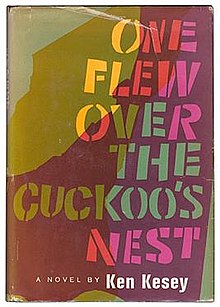
I asked my student why she was considering the idea of an specific antagonist. Maybe it’s because everyone loves a villain. Characters like Hannibal Lector (from Thomas Harris’ series of thrillers) Nurse Ratched (One Flew over the Cuckoo’s Nest, Ken Kesey),  or Stephen King’s Annie Wilkes (Misery),  have gone down in history to the point their names are synonymous with  cannibalism, bad nursing, and fandom obsession. It’s got to be fun to include a villain in your fiction, right? 

I wanted to suggest she gives this idea the wide, long view. A villain is only one type of antagonist, after all. Sometimes the protagonist in a story is faced with something that is not even human, such as natural or inanimate forces and events that take on the villain’s role. In The Handmaid’s Tale, Margaret Atwood isn’t pointing to one individual who is villainous. It’s the state itself, the Republic of Gilead, which sprang from the  ideas of  well-meaning people to become a monster in itself. 

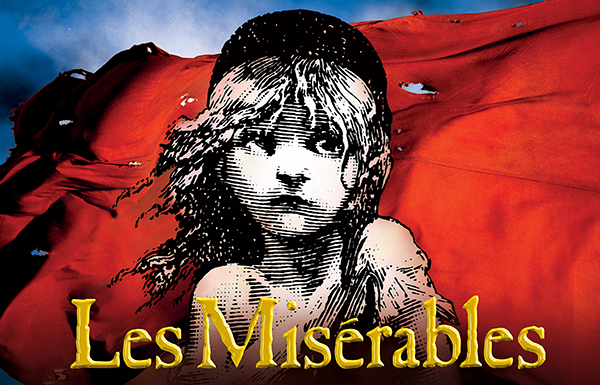
Of course my student doesn’t have to have a villain in their story…but does she need any type of antagonist at all? There are two kinds of antagonist often overlooked, when talking about ‘the bad gal or guy’. Creators of conflict can be antagonistic. Such conflict-generating antagonists are characters with goals and desires in direct conflict with the protagonist. Look at Javert, the police inspector in Victor Hugo’s Les Misérables. Javert’s lack of empathy with any criminal leads him to ceaselessly search for Valjean.


Another kind of antagonist is the protagonist themselves. We all know someone who is their ‘own worst enemy’. Holden Caulfield in J.D. Salinger’s The Catcher in the Rye. is such a one. Holden comes into conflict with almost everyone he knows, because the antagonising conflict is based in his own obsessions and insecurities. In Atonement by Ian McEwan, Briony holds such a degree of guilt internally that her entire life becomes wrapped up in atoning for it.

 If  you’ve decided to seat the conflict of your story within the protagonist, rather than an external villainous force, a strong backstory will be imperative for fuelling that inner conflict. It also becomes tricky to create defined moments of conflict and the solution often lies giving your protagonist a distinct trait, such as anxiety, anger-management or dissatisfaction with their life. You’ll need a incentivising goal for the protagonist, which is fully hindered by their internal struggle.

Antagonists are often forgotten at the character sketch stage. Villains may remain shadowy on the page for very good reasons, and this is often the excuse a writer gives themselves. However, for a bad guy or gal to be plausible, you need to know them inside-out, especially their motivation and their history. Don’t just expect the reader to assume that the antagonist is evil – end of story. The writer needs to justify them, and  know them inside-out, especially their motivation and their history. 

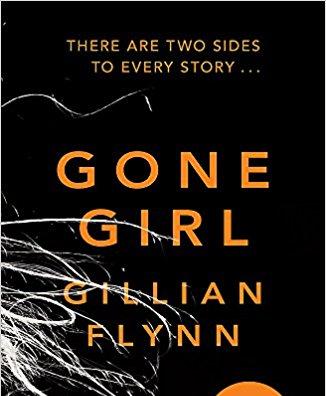
Some stories focus on conflicting protagonists. Here we encounter two characters, both taking the protagonist role, each with personally relevant but opposing, or incompatible, goals. Their conflicting struggle will cause them to want  to defeat the other, with the reader as onlooker, enjoying the clash, but not specifically invited to root for one over the other. Recent examples are Amy and Nick Dunne in Gillian Flynn’s Gone Girl, but we’ve seen conflicting protagonists as far back as Pride and Prejudice. Jane Austin shows us how to do this tricky conflict trick perfectly. Both main characters, Elizabeth and Darcy, have too much pride and too high a degree of prejudice, which almost prevents their happiness. Perhaps I’m stretching the description of ‘protagonist’ a little far by including Darcy here, but he is many a reader’s fantasy lover, after all. 

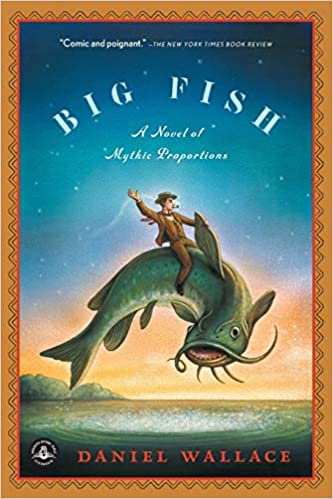
Conflicting protagonists can be wholly benign characters who make their own dramatic tension from almost nothing. In Daniel Wallace’s novel Big Fish; A Novel of Mythic Proportions, we meet Edward, who loves to spin a tale, and William, his son, who is often exasperated by what he desperately doesn’t want to think of as ‘Dad’s lies’.There is conflict between these two because they love each other. If you haven’t read the book, you may have seen Tim Burton’s movie version, where William only comes to terms with these tall tales at his father’s funeral. 

It’s possible that what my student really needs, is not a villain, or any type of full-blown antagonist but a contagonist. This term was coined quite recently by Dramatica, https://dramatica.com/dictionary/contagonist, but of course the concept has been around since novels began. Dramatica says…If Protagonist and Antagonist can archetypically be thought of as “Good” versus “Evil,” the Contagonist is “Temptation” to the Guardian’s “Conscience.” Because the Contagonist has a negative effect upon the Protagonist’s quest, it is often mistakenly thought to be the Antagonist. In truth, the Contagonist only serves to hinder the Protagonist in his quest, throwing obstacles in front of him as an excuse to lure him away from the road he must take in order to achieve success. The Antagonist is a completely different character, diametrically opposed to the Protagonist’s successful achievement of the goal.

In Enduring Love by Ian McEwan, Joe, the central character, and his wife Clarissa, become involved with a hot air balloon rescue with four others. One of these, Jed Parry, is so affected by the event that it changes all three lives. Jed offers the tension needed for the story without being in any way villainous. So if there is someone in the background of your prototype story who represents temptation and hinderance,  a character who throws damaging stumbling blocks in the protagonist’s way, luring them from any quest or goal they’re aiming towards, you might put dramatic tension in a contagonist’s hands. This character may be benign in aspiration, but would thwart the protagonist, often without knowing they have done so, and certainly without meaning to do so. 

What about the idea that fiction can survive without active opposition or  hostility from any quarter, human, or not? Can a writer completely do without an antagonist? Even the most worthy literature falls very flat without dramatic tension, and that does have to spring from some kind of conflict, which is usually described as the antagonist, whether this is a supernatural entity, an internal struggle, a jealous lover, or tsunami. Remember the first principle of writing; no conflict, no story.

If you’re not sure about the conflict levels in your story, ask yourself if your protagonist’s goal will seem too easily achieved if you keep the narrative arc as it stands at the moment. If the answer is ‘yes’, you may very well need an additional antagonist – something, someone, somewhat…to force your protagonist to struggle further before they can thrive.

So thank you, Henrietta, for your wonderfully reflective comment which has allowed us to wander among some pretty dark characters without harm to ourselves. 

Villains, eh? What would we do without them?