Tuesday, 2 July 2024

Read the first Chapter of the latest Shaman Mystery here!


The 4th Shaman Mystery
by Nina Milton


THROUGH THE FLOODGATE 


Chapter One


Boiling Blood in his Brain


John Spicer was already waiting, when Larry drove down into Harper’s Coombe.

It was like a lover’s tryst – a lung-drying desire.

Larry pulled the old pickup to a halt behind John’s Audi and jumped out the cab. The ground was so soft he felt his wellingtons sink by inches.  Across the coombe there were patches of shining water, the start of little lakes.

Bloody rain. It was never-ending. Even down here in the coombe, the wind behind it was throwing water into his face.

He pulled the fur of his trapper hat down around his ears and went to the back of the pickup. Water pooled on the tarp, trickling down to the metal base as he shifted it, wetting the random items he carried. His fingers were slippy as he spun the combination lock. It was an old-fashioned document case, but it did the job. Empty, of course, because the previous money he’d carried home was now in a Second World War tin box, which had belonged to his father’s father and had previously held old documents and his sister’s first baby shoes. 

Soon, he would buy a soft leather case with a laptop inside, slender as a slate tile.

He left the briefcase ready and waiting to be filled, and splashed over the wet grass towards the Audi, obscenely large, less than a year old and glowing gold-brown with its metallic finish.

He’d told people he’d been getting migraines since the disaster, but it wasn’t actual pain. It felt more like boiling blood. Eighteen months of acid thoughts rolling in his brain, steam pushing at the lid.

At first, he had blamed God for his ruin. Then, with the promise of compensation, he had blamed the government. But one afternoon, standing in his own yard, a chance remark lit the gas beneath his stew pan of resentment, and the truth rose in the steam.

John Spicer was to blame.

Spicer had taken
everything away from Larry, taken more than his livelihood, taken the man he was. He could afford to pay for his mistake and Larry saw it as his duty to suck at the man until he was hollow inside.

The window of the Audi rolled down, but Spicer didn’t look at him. 'This is the last time I come here. You’re getting no more, Larry.' 

Spicer’s voice had a softness about it, as if he’d just eaten ice cream. Through that gentleness came the final trace of Somerset accent that going to posh schools couldn’t get rid of. Listening to John’s soft voice made his own speech sound unnaturally rough, hoarse, and littered with swear words, like his tongue was a lash.

'If you think this is the last time, you’re a stupider fuckhead than I thought you were.' 

'I only came here to say it to your face.'

Yet he was not saying it to his face; he was still staring though the windscreen as if there was a football match being played on the far side of the coombe, rather than the damp drip of willows, green with moss and pale with age, stubby things that rose almost vertically out of the steep sides.

From the start of this, Spicer had rarely done him the courtesy of glancing his way, and it made his brain boil harder, the knowledge that he couldn’t stand the sight of Larry.

It had been late July, the first time they’d met in Harpers Coombe. Midday, the sun warm on the balding crown of his head. The dell had been full of colour – meadowsweet and marsh marigolds and huge clumps of loosestrife, as if someone had thrown a quilt, ready for a picnic. He’d asked for a grand. He hadn’t expected Spicer to agree, but as the pack emerged from the half-open window, a flexible wodge wrapped in plastic, still warm from Spicer’s touch, he’d realised he should have asked for more.

Once the money was in Larry’s hand, the Audi shot forward by a couple of feet then reversed skilfully around the Land Rover pickup, whining as it sped up the track.

He’d had a flash of panic, ripping open the plastic there in Harper’s Coombe. Bank notes spilt into the briefcase, crisp from a bank clerk’s count. For the first time since the flood, his head felt cool, rested…atoned. He had scared John Spicer, a man not easily frightened.

In August, he’d put a zero on the end –  ten grand, you fucker, or I go to the police. 

It was chilly and damp when they met in September, with sedge growing at the soggy edges of the coombe. 

By October it felt like he was amassing a small fortune. 

End of November, John had not turned up.

He’d gone to his house, under cover of darkness. The windows glowed against the storm outside. The Christmas decorations were already up. They were playing music and their voices rose, fell, cheerful and relaxed. He heard John chuckle and Alison was chattering to her granddaughter in that baby voice people did.

He’d turned his collar up against the storm and slunk away.

He’d taken too long to think what to do, finally scribbling something down, sealing the envelope and stuffing it into the postbox at the end of the Spicer’s half-mile driveway.

The run-up to Christmas was in full swing when the brief reply, unsigned, had fallen through his letterbox. Capital letters exploded across the page;

WE SHOULD TALK.

TOMORROW.

Well, yeah, John. We should. You’re a month behind. That’s what we should talk about.

Rain dripped into his collar from the back of the trapper hat and he sensed that his right sock was getting damp; there was a small hole at the heel of his boot that only let in water when he was actually standing in it. He shifted, trying to find a dryer spot and saw how the Audi’s wheels were sinking into the boggy turf. John would probably be bleating for a tow, when they left.

'I’ve had enough,' Spicer was saying. 'It’s taken me this long to realise that I should never have started it.'

'You’d like to forget what you did,' Larry hollered back. 'Sabotage! You put people in clear danger!'

'I never meant to! But blackmail? That’s what you are doing, Larry Waish, damn you!'

He’d never heard the man let out an oath. 'Okay. You’ve had your little rant. Now it’s time to pay. You missed last month. I need the money. It’s fucking Christmas.'

John shifted in the seat, until, finally they were staring at each other. 'It’s over, mate. No more money. I’m going straight to Bridgwater to make a police statement. Tell them what I did; tell them what you are doing.'

The look on the man’s face. Pity. Larry stepped away from what was in those eyes, forgetting the boggy ground, and suddenly, his butt was in the mud.

John did not laugh. As if Larry Waish, and his pathetic life – never married, living with his weirdo sister, scraping a living from a barn full of poultry – was not a matter for mirth or taunts, but for compassion. The knowing chaffed the bottom of his stomach. All this time, John Spicer had felt sorry for him.

He sucked his boots free of the marshy ground and scraped himself up. He was mired. Shat upon. 'Fuckhead,' he hissed. 'Fuckhead, fuckhead.'

Spicer looked away, like he hadn’t seen the fool he’d become, and dropped the stick into drive. The fat, black tyres flew round with a high whining sound, splattering further mud over Larry’s jeans. The engine screamed. His foot must have been on the floor. He punched at the wheel and the horn burped out.

‘All right,' said Larry. His heart was pounding, he could hear the rhythm of it in his voice. 'All right. Make this the last time. Give me your payment and we’ll call it  a day.'

Perhaps John Spicer’s lips twitched, in and out of a smile. 'You’re too late. Because, Larry, blackmail is the bigger crime.'

'I call it fair payment. I lost two-thirds of my living.'

'You got compensation. I heard in the village.' Spicer tried to reverse, taking it steady, but the wheels dug deeper into the furrow he’d already made. The engine hollered for mercy. He stuck his head out of the window. 'Could you pull back up the lane?' As if they’d only stopped here to exchange pleasantries. 'Give me a bit of room, please?'

'You’ll need a tow,' Larry grunted. 'You’re in too deep.'

He mashed his way to the pickup, his jeans stuck to his backside. Somewhere in the back was a bit of good rope they could use to get the Audi out of its predicament. He shifted the briefcase to one side. It was still wide open, like a dog waiting for a treat.


The bastard owes. 

A double payment.

Fucking feels sorry. 

For me.

Fuckhead.

He’s in too deep.

Bloody fluid fizzed inside his brain until it felt like it was oozing out of his eye sockets. He wiped them and looked at his hands. Nothing but mud and rain and hot, invisible tears.

Blackmail is the bigger crime.


The back of the pickup was littered with his stuff. Bits from the farm, bits for the car, a spare sack of layer’s pellets. He spotted the fat coil of blue rope towards the bottom and reached down for it. His hand knocked against his shotgun. 

How did this happen? How did that sod turn his one bit of luck around like this?

He picked up his gun so he could pull the rope out. His shotgun. It felt good in his hand, like a friendship.

  As he walked along the side of the Audi, he drew his right hand behind him, the shotgun nestling against his back. The rope dangled from his left arm, almost tripping him.

'Look, Larry…I’m sorry, mate,' said John.

And he really was; sorry he couldn’t pay him any more money, as if the Waishes were a charity case.

Had he only agreed to pay him because he was a fucking charity case?

'You will be sorry.' 

He dropped the rope in the mud and poked the barrel of the shotgun through the window. It crashed against John’s teeth. The man veered away as best he could within the confines of the seat belt he’d never undone, his hands clutching at the barrel, struggling with the gun. The fucker had not been expecting this.

He couldn’t think. Couldn’t control his head anymore.

He fired. His eyes slapped shut with the recoil. When he cracked them open, he couldn’t make out where John’s face had gone. 

For a few further seconds, everything was motionless. 'Mate?' 

He went to wipe away the blood. His hand touched bone, and the slippery stickiness of innards. Like the entrails of a drawn chicken. He tried to help John up. The body moved. There was no sound as it gained momentum, just a single soft, squelch as Spicer collapsed towards the steering wheel.

He couldn’t take it in. He had no idea his shotgun could do this damage. It could kill a fox, from across a field, but he’d never used it on anything close up before.

He couldn’t recall what had gone through his mind before he pulled the trigger, or even if he had pulled it. All he remembered was the look of pity in John’s eyes, the mud on his jeans. The stew boiling bloody in his head. The friendly gun in his hands.

And then, a soul-saving moment of clarity as he realised no one knew they were here. No one knew they had ever met here.

He walked back to the car and threw in the tow rope. He pulled on a pair of chainsaw gloves and polished his gun with an old rag, burnishing it as if for a game show.

It was quiet in the glade. Even the crows had been scared away. Was Spicer dead? 

He had left Spicer’s brain splattered over the Audi. Of course the man was dead.

He stood in front of the car for a long time, thinking about positions. How a man might kill himself with a shotgun in a car. He rested the stock of the gun on the open window, so the trigger was just inside. Yes, that seemed to work. He let go of it and it fell into the driver’s well, where blood was pooling.

It wasn’t Spicer’s gun, but luckily, it wasn’t his, either. He’d picked it up somewhere, probably in some pub for a good price.

Sinking into the wet ground was the discharged cartridge. He nudged it towards the car with his foot. 

As he did so, the clarity left. As if the last of his luck had turned and walked away.

He was on his knees before he knew he’d fallen. A thin trail of bile ran from his mouth into the grass and was dissipated by the rain. He’d only had whisky for breakfast. His eyes stung. He ran his fingers over them and this time, yes, blood came away, smearing the bright colours of the chainsaw gloves. 

But it wasn’t his blood.

It was John Spicer’s.


Now read on by following
this link;


Saturday, 11 May 2024

Psychic distance – is it telling or showing?


Psychic distance  – also known as narrative distance – is how close or removed a reader feels from your characters and the events of your story. It affects how emotionally invested a reader becomes and how much they care about what happens, especially to the narrator. 

As a writer, you can control narrative distance and achieve the right balance by incorporating both near and far narrative distance. But before attempting this it is vital to know exactly what you are doing. If you accidentally create too much narrative distance, you can leave a reader feeling disconnected from characters and less likely to read on. If you have too close distance too often, things can become confused.

Psychic  distance is part of understanding point of view. And that's a very complex technique in itself, which I've already written about extensively. If you still feel a bit wonky over how to use POV, or even what it really is, first check out this blogpost HERE and this blogpost HERE.

Within POV is the technique of creating a character's  internal monologue.  Usually, we only see the internal monologue of the narrator, whose POV we are in. To quote MasterClass;

 “

Getting inside the mind
of the narrator isn't easy
Internal monologue…is a literary device that allows the reader to observe the inner thoughts of characters in a narrative.” Internal monologue prevents the narrative becoming emotionless.  When internal monologue is used, the scene is described through the perspective and voice of the character, making it emotional and personal. This prevents the writing becoming expositional. In other words internal monologue veers towards being SHOW, rather than TELL.  Browne & King put it this way: “One of the signs that you are writing from an intimate point of view is that the line between your description and your interior monologue begins to blur. Readers move effortlessly from seeing the world through your character’s eyes to seeing the world through your character’s mind and back again.” 

Psychic distance is the gap the reader feels between themselves and the events in the story. It can range from feeling like youre deep inside the protagonists mind, experiencing their experiences to a wider, impersonal view. Psychic distance can be thought of as occurring at different levels of distance; in other words this is  a spectrum, or scale

In his work, The Art of Fiction, John Gardner (1983) offer five points on the scale, with the largest distance between the reader and the events of the story being represented as the beginning “level” at level 1. As the psychic distance between the reader and the story narrows, psychic distance progresses through levels 2-4,  with level 5 representing the closest distance between the reader and the events of the story. Gardner gives five examples showing how psychic distance exists on a continuum. 

The furthest psychic distance, viewing the scene from far away and with some formality would be: It was winter of the year 1853. A large man stepped out of the doorway. In contrast, the closest psychic distance, where the reader experiences first-hand the events of the story, reads like this: Snow. Under your collar, down inside your shoes, freezing and plugging up your miserable soul. 

A single piece of fiction may require a mixture of psychic distances, and Gardner makes the point that skilled authors control the inevitable shifts that are needed with care and without alienating the reader. At one end, readers are up close and personal with characters, experiencing the world through their senses and getting to know their innermost thoughts and emotions. At the other end of the narrative distance scale, readers get very little character insight. The story’s setting, events and character behaviour are conveyed objectively and unemotionally.

Most novels travel up and down the psychic distance scale. Authors vary narrative distance to give rhythm to their writing – and to share both the inner world of a viewpoint character and the wider context of the external world. Too great a narrative distance can cause problems for your story. When you create too much narrative distance:

  • Readers struggle to make an emotional connection to your characters
  • Readers are less invested in story events
  • Readers are less engaged with your story as a whole

These are all problems associated with SHOW, DON'T TELL. That is because  psychic distance  is linked to SHOW, DON'T TELL. This may feel an odd thing to say, but look at the Level One example from Gardner, that with the widest distance: 

It was winter of the year 1853. A large man stepped out of the doorway

This is remote and objective. It is exposition, in other words, it is TELL.  

It doesn't give us ay sense of   particular characters in the story as  persons with thoughts and feelings. The narrator is very much in charge,TELLING us a lot about where we are and what's happening: it's all about information and context. But if it stays at this level we might not care much about the people that the story is telling us about, and it limits the writer's scope for exploring how they experience the world and themselves. 

Compare this to the Level Five example; Snow. Under your collar, down inside your shoes, freezing and plugging up your miserable soul.  Here, the reader is already inside the character's head to such a degree we can see him most intimate thoughts. The author is SHOWING us the character's thoughts. They are close-up and subjective: almost a brain download, with thoughts and sensory information all jumbled up. The character's voice is wholly present and the narrator's voice has faded out. It's extremely expressive of this person's character and situation. 

One of the reasons for moving around in the spectrum of psychic distance is that staying at such a close level, where the character's thoughts are all on SHOW,  the reader may fail to understand what's going on in the outside world of the story.  


Lisa Cron, in her book,
Wired for Story, (2015) argues that the best way to convey thoughts in the third person limited is akin to telepathy) and that the greatest stories clue you into what the characters are thinking so deftly that when it comes to figuring out exactly how they did it, youre still left wondering. She cautions against the use of italics, quotation marks and tags because once you master the art of slipping your charactersthoughts onto the page, the reader can automatically differentiate a characters inner thoughts from the narrators voice’ 

It is generally considered that the first-person is a more subtle way of gaining access to a characters mind, where you can go deeper into a character. But by using the technique of closer psychic distance, the limited third-person point of view can be just as intimate, if you wish it to be. 

 Virginia Woolf, who famously was able to enter the deepest parts of a characters mind always uses masses of close psychic distance, to the point of stream of consciousness. The does make her books a challenge! 

Thinking no harm, for the family would not come, never again, some said, and the house would be sold at Michaelmas perhaps, Mrs. McNab stooped and picked a bunch of flowers to take home with her [...] There it had stood all these years without a soul in it. The books and things were mouldy for, what with the war and help being hard to get, the house had not been cleaned as she could have wished. It was beyond one person’s strength to get it straight now [...] This had been the nursery. Why it was all damp in here; the plaster was falling. Whatever did they want to hang a beast’s skull there for? gone mouldy too. And rats in all the attics. The rain came in. But they never sent; never came. Some of the locks had gone, so the doors banged. She didn’t like to be up here at dusk alone neither. It was too much for one woman, too much, too much. To The Lighthouse (1927)

However, Philip Pullman successfully uses a more distant psychic narration  in his fantasy trilogy, His Dark Materials. 

In Book One, Northern Lights, (1995) the heroine, Lyra 

Belacqua, has been captured and is in danger:
 It wasnt Lyras way to brood; she was a sanguine and practical child, and besides, she wasnt imaginative. No one with much imagination would have thought seriously that it was possible to come all this way and rescue her friend Roger’.

Pullmans style is to give objective comments and observations about his protagonist, leaving us with little doubt that it must be true.

Here is a great example from Hilary Mantel of closing in, slowly, from a greater psychic distance towards a very close one. It's from Wolf Hall (2009). Watch how we see Stephen from a distance, as Mantel TELLS us about him, and then zooms in tightly until she's SHOWING us his thoughts.


New Year 1529: Stephen Gardiner is in Rome, issuing certain threats to Pope Clement, on the king’s behalf; the content of the threats has not been divulged to the cardinal. Clement is easily panicked at the best of times, and it is not surprising that, with Master Stephen breathing sulphur in his ear, he falls ill. They are saying that he is likely to die, and the cardinal’s agents are around and about in Europe, taking soundings and counting heads, chinking their purses cheerfully. There would be a swift solution to the king’s problem, if Wolsey were Pope. He grumbles a little about his possible eminence; the cardinal loves his country, its May garlands, its tender birdsong. In his nightmares he sees squat spitting Italians, a forest of nooses, a corpse-strewn plain.


I'm not the only writer to think that psychic distance is part of showing and telling. Here's Emma  Darwen in The Itch of Writing;


My own lightbulb moment about this stuff happened when I saw that John Gardner's Psychic Distance fits beautifully with Showing and Telling, (or as I like to call it, Informing and Evoking)...The takeaway idea, if you like, is that different voices - the narrator's and the characters' - combine to make the narrative, interpenetrating each other to different degrees depending on the writer's decision about the best psychic distance for that moment in the story.


And  Writers in the Storm blog agrees with this idea. SHOWING is part of advanced POV techniques, especially when psychically close to the character's internal monologue; 


Point of view (POV) is the silver bullet of writing. If you master this, 95% of the common writing problems a writer faces will vanish. A solid point of view puts you (and your readers) firmly in a character's head, seeing the world through their eyes, and experiencing that world as they would naturally experience it. ..Seeing the story through a character's eyes means you'll write it as that character sees it, not as you see it. It helps keep you from pulling away and describing (telling) the scene from afar.


What am I thinking and feeling?

Because thinking about SHOW, DON'T TELL allows readers to understand what the characters are feeling, and why they act the way they do, you can use this close perspective when you want to make this clear, and pull the reader in, making them part of the story, not a spectator on the sidelines. It involves them emotionally. Sometimes, that's just what you want as the writer of your story. 


Friday, 3 May 2024

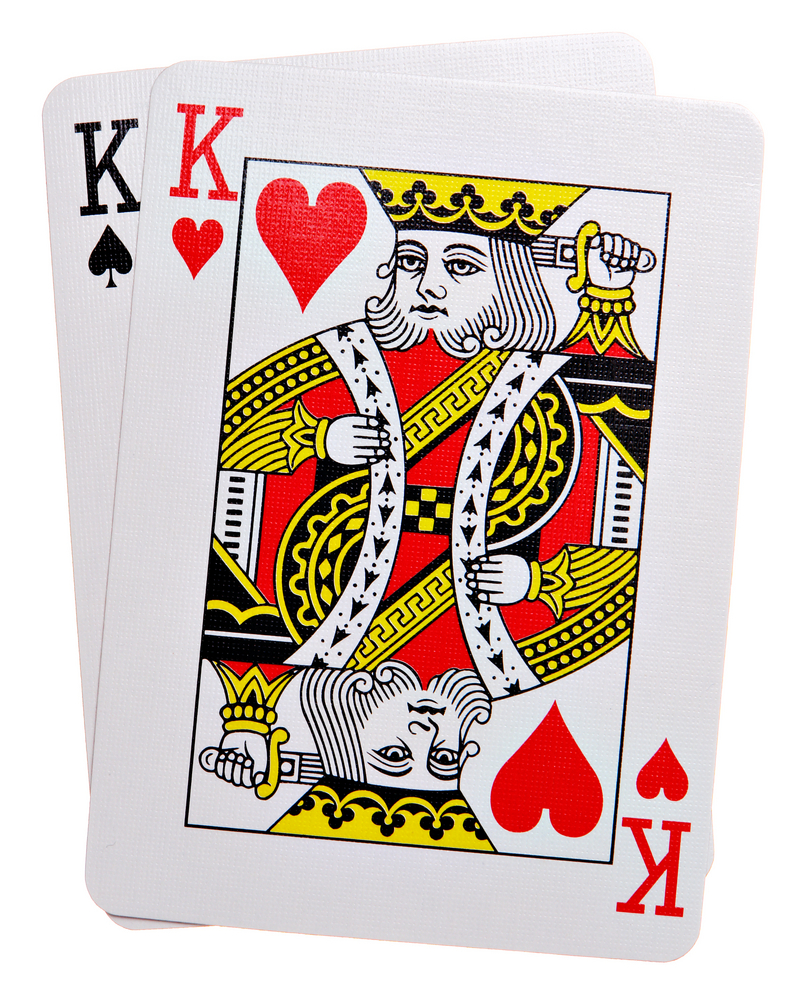
Are you a King of Hearts Writer? 7 Reasons to Write a Novel Out of Order.

King of Hearts Meaning

“Begin at the beginning," the King said, very gravely, "and go on till you come to the end: then stop.” 


In Lewis Carroll's Alice in Wonderland, the King of Hearts was  definite in his opinion.

And when you  flip through a new novel it’s easy to imagine that the writer sat down and did just that; the story is so beautifully tight and compelling –  it's as though it had been written from the opening words, with the writer almost not pausing to draw breath until they reached 'The End' . 

Certainly, that's what I have always done. I start at chapter one and keep going until I get to chapter Z. I call that 'writing with the plot line'. First, I'll complete a plot outline, It will be a bit grey in places, and the ending will be blurred. Whether writing a novel or a short story, or even a poem, I work chronologically through. Even if I'm not sure what the plot will develop…even if the ending changes a hundred times, I keep going

Sometimes, this obvious strategy doesn't work well because the timeline of the story is deliberately disjointed a
nd out of order. Chapter One may be set in 1840, chapter two in 2023 and chapter three in 1955. An example of this is
Great Circle by Maggie Shipstead, which has two disjointed  timelines running alongside each other. In such a story, is sometimes better to write 'the story' rather than 'the plot'. One would start at the beginning of that story and move chronologically thought the storyline as each event occurred, then chop and change each section to create the 'disconnections'  planned in the structural plot. 

Both these methods can be see as 'writing chronologically', but many writers do not follow the King of Hearts advice at all. A journal article by Nancy Sommers suggests that  experienced writers  tend to work on whatever is easiest for them at the moment, rather than forcing themselves to work in a specific order.

To a degree, the writer's personality will dictate which strategy is right for them, but there are cons and pros to each method, which I'm going to take a look at in this blog, to help you feel freer to choose, and happier about your individual method. 

1. Free up the drafting phase

Writing in plot outline or timeline order helps you tell yourself the story and keeps your head from bursting! 
HOWEVER; 

Writing out of order may allow the story to flow freely from your imagination. When we write out of sequence, we don’t have to remember that great idea or save it for later—we can just write it!


IN EITHER CASE try not to worry what the second or third draft will look like. Write with freedom and enjoy. the process… you don't always need to know what happens next. A 'blank' chapter can just be a paragraph (or even a sentence) of notes to jog your memory for the next draft. And of you have a great idea for a future scene while you’re working on an earlier on, you can move straight onto to it.

2.  Conjour New Ideas

Writing to plot outline doesn't negate new ideas.
HOWEVER
Writing freely, with less of an overall plan gives you a special kind of freedom. This is when all sorts of possibilities for the novel come into your mind. 
I personally find going for a long walk alone always helps me brainstorm in this way, and I find I am manifesting conversations, developing or inventing characters, imagining descriptions of places, working on complete scenes, even full chapters. 

IN EITHER CASE ideas may come and go, so keep a notebook near. And some may have to be ditched, but that's all part of writing a novel. 

3. Avoid Writer's Block

I think that writing to an outline helps me avoid writers block because I never have a completely blank screen; the next step is always outlined in my plot plan.

HOWEVER

Ronald T Kellog's research on working memory shows that complex writing tasks (and yes, wri
ting a novel or short story definitely comes into THAT category), put pressure on our working memory. If you have every had to stop typing because you just can't remember the direction your story was supposed to take, or the order it was supposed to go in, then that's because you have overtaxed your working memory. Writing in order of plot or timeline feels to me like a way of not taxing working memory, because the plot outline is there in front of me. But when you write out of order, the work becomes less a plot outline and more a freewrite, rather than 'an important
 manuscript'.  

IN EITHER CASE make sure your thinking energy is focused into the characters and their story. This helps take the pressure off you, which every strategy you accept. You should always try to enjoy the development of characters, and feel proud as the scenes build up.

4. No Time to Write? Work Off-plan
It can be tough to find large blocks of time for crafting your novel. You have go to work, you have look after family, you have a social life...well, okay, the social life might have to be curbed. In fact, when I start a novel, I put my head down and keep going, cutting out 
evening telly and making the family cook for themselves.
HOWEVER
I've met writers who entirely wrote their novel on the train to work, piecemeal. Finally they notice that the word count is growing. It's all a bit of a mess, but it is GETTING WRITTEN.  

They are not writing in linear form, but aiming for incremental pieces that may at first look like the jigsaw in the box. They are writing that paragraph and calling it a day, then building those paragraphs into the order once that first draft is finished.

IN EITHER CASE, progress is progress, and that’s what matters.

5. Push through the Barriers

Even when writing to a plot outline, you find yourself going over speed bumps w


hich slow progress. When I'm not sure my outline is working, I do skip scenes. I
f I'm not sure about a chapter I just make notes on the page and keep moving on, then sort out any problems about the order or any missing bits in draft two.
HOWEVER
Doing that too often can lead to writer's block. If you throw away the plot outline and just write the scene that is in your head, then you are on your way to pushing through those barriers. Being able to stop writing the scene with the blockage, and start a new, random scene, may even help you solve the problems, as new ideas pop into your now freed-up mind.
IN EITHER CASE, there will be blockages, barriers and 'sleeping policemen' getting in your way. Sometimes, you won't know where to go with the story next. So use both strategies in turn to try and push though barriers.

6. "I Can't Work Without a Plot Outline"

Many writers, including myself, will state this. I love my outlines and timelines because I think they help my progress, prevent the 'blank page syndrom' and save time in the long run.
HOWEVER
If you're stuck inside a novel, it is very refreshing to throw away the plot outline and just enjoy writing. Use techniques like 'write a scene that won't be in the final draft',  explore previously written scenes for more description and imagery, create 'character contemplations in which they think their way through their problems and start a character diary which covers the time before the novel begins....or after it finishes.
IN EITHER CASE, even if you already have a plot outline, it is still possible to write the scenes and chapters within it  flexibly. You've created a structure, but allowed yourself  the freedom to move within it and outside of it when you choose and create as you go.

7. Keep Your Passion Flame Going

If you aren't passionate about your story, it will probably not get finished. You have to be absolutely enthusiastic about this story in your head and the characters you love, or love to hate, to want absolutely to get to the words 'The End'. That drive is necessary because writing a novel is very hard; the hours are long, and the immediate rewards are small...in fact the only reward until you see a contract in sight is the joy of writing this story, about these people. Of course my plot outline changes constantly, and I revamp it regularly, but having it in front of me helps keep up the joy of the writing.

HOWEVER

Writing out of order, and with very little idea of what will come next can be a lot of fun. It makes the writing feel less of a chore, because you chose what you write next in your story and that can help keep that flame of passion alive. You give yourself freedom and for many writers that's where the passion comes from. They maintain the thrill and motivation by jumping to a new chapter when the progress slows with a previous one. 

Which Would Work For You?

If you haven't thought about using a different method of writing your novel before, do so now. Asking if you are writing in the best way for you. You might think; in my normal life, do I like a plan? Or am I more random. Am I a  non-linear thinker – the person who cleans the house at ten at night? Or do I like to come home after work to a well-ordered evening? 

And if the approach you are taking with your novel at the moment isn't really working for you, then see if you can make the writing process easier by swapping techniques. 

I've actually never tried to write a novel out of order, but if I was feeling stymied by the writing, I might try this  strategy. Nothing is lost, because all your writing is 'grist to your mill'.

Looking at that novel on the bookseller's shelf, it's seamlessness, its tight and perfect storytelling, don't forget that you can’t compare that book to its very first draft. Who knows how much blood the writer sweated? Who knows which tools and strategies they used, to craft that perfect novel? Just think about which methods might be the right ones for you and perhaps your completed novel well be 
just as seamless.