Saturday, 19 April 2025

Core Emotional Truth: A Craft of Creative Writing


…
Emotional truth is elusive and difficult to capture. No standard definition exists. Here’s my crack at it: Emotional truth allows readers to feel a certain way about the experiences of people who may live different lives from them. It’s the lens that allows us to see ourselves in a story that results in a heartfelt connection in a fictional narrative. Emotional truth transcends facts...Writer's Digest. 

Writing fiction? Have you ever pulled back from what you are writing and asked, what does this…my writing…mean? It it making sense to me? Will it make sense to a reader? 


To answer that question, I’d like you to think about the Core Emotional Truth of your writing. This is something that grows with the creation of a story. In other words, you might not recognise such a truth when you start writing––in fact such a truth might not be present when you start writing––but as the story comes into itself (often around the point you might finish a first rough draft), it is something you should think about. 


This core emotional truth (CET for short), is like a golden thread running all the way through a piece of fabric, and like beautiful embroidery it is usually bound up with the passion behind it.


Being passionate about your work will help tighten and bind it. But to create a narrative that really pulls the reader into the text and along the entirety of it, you have to believe yourself in its need to be released out there into the world; to be appealing to readers. Searching for the ‘point’ of what you are writing, so that the reader can understand why they should continue to read, suggests working towards fully understanding what has developed in your story (be it a short story or a longer novel). . You can, if you like, call it your  'Vision', 'Thesis' or 'The Premise'  (and even, perhaps wrongly 'your Theme')…the CET is a central, single concept that sums up your work; your ‘Core Emotional Truth’.

Don't get confused by my used of the word 'truth' here. Novels are inventions, made up in the writer's head, at least in part an invented narrative...a lie. Finding a core truth in such a fabrication is an emotional experience, not rooted in facts––for readers and their writers alike. To gain the readers empathy, there must be some sort of true thing that you are attempting to commnunicate, and that emotional truth will engender empathy and help hook the reader into the story. Most great classics of literature do this perfectly, and it is what they are loved for. 


Most of those great classics can have their core emotion truth summed up in a phrase––at most a couple of objective sentences, preferably in an abstract style, such as an aphorism. This phrase won't necessarily tell us about the contents of the story, or its subject, but about some fundamental truth of life, something that makes us all human. It doesn’t have to be a statement that everyone would agree with, but it must make sense to anyone reading it. Here' we're thinking about a summary of what a story is truly about – the deep core of what it is saying to its readers.


As an example let us think about a book we all probably know in some way; A Christmas Carol. The CET of this Dickens' small masterpiece would not be, for instance,


…Scrooge learns to be a better person when he’s visited by the ghost of his partner…


That’s more of a ‘blurb’ really.  What about...


Financial wealth never makes you happy?


This is separate and slightly different from any themes you've been thinking belong to your work. The themes that run through a short story or novel can be reflected in symbolism within the story. They can usually be summed up in a word or phrase. In A Christmas Carol, the themes might be; ghosts, meanness, poverty––poverty of emotion…These probably will  link with the CET, but can be thought of as far more observable, something that the reader will ‘see’ as they read, and be able to isolate after reader, so, easier to explain to friends or use in a review. The CET is often ‘felt’ rather than discerned. 


I can recall the first CET I 'got' after reading a book. I was hanging out some washing and why ever the book came into my mind at that point, I dont know––hanging out washing is a pretty mindless task, after all. I'd just finished The Inheritors by William Golding, and though I'd enjoyed it and understood its themes of a doomed species, of violence and pacifity, I'd not thought further. Suddenly, as I pulled a peg out of the bag to pin up a sock, I realised how the entire story was explaining to me how people are; how humanity always behaves. In the book, Neanderthals are portrayed in the novel as peaceful, in contrast to the more aggressive Homo sapiens and are at the point of dying out. Now I could see how true that was; over and over, we've killed each other just as the new speces kills out the old. 


Exercise; Find your CET.

What do you believe your own CET might be? Remeber, the truth will grow with the writing of the story, so if you are still planning it out, don’t allow any attempt to be written in stone–– the time to finalize what your story is deeply about is when you have finished at least a single draft. But you can still have a go at developing something, because sometimes, isolating the emotional truth in your story can make the writing of it really zing; once you know what this story means to the world, you can drive towards a satisfying conclusion.


You can bear your themes, characters and plot structure in mind when you to sum up your novel, but be sure the CET is an entirely abstract sentence stating the core values of the book – something objective, not personal – it shouldn’t talk about characters or plot or be at all subjective. 


Writing your CET is amazingly revealing and can help whittle all those disparate thoughts down to a single essence. If often helps open and lift your narrative, so you can write from your heart. This is bound up with the ‘passion’ I spoke about above. Being passionate about your work will help tighten and bind it. But to create a narrative that really pulls the reader into the text and along the entirety of it, you need to let them see the ‘point’ of what you are writing, so that they understand why they should continue to read.


You can also read about the symbols that help form your themes in Kitchen Table Writers click on the links; 

Symbolism in Writing - The Tree

Symbolism in Writing - The Snake

Symbolism in Writing - The Chair

Symbolism in Writing - The Sea

Symbolism in Writing – The Sun


Tuesday, 15 April 2025

The Absent Heart by Ali Bacon


I've just finished the most marvellous book. What genre would I put it in? Victorian  fiction? Feminist historical novel? Historical romance? Biographical fiction? None of these bland categories do this wonderful book justice. 

The Absent Heart blends elements of fiction with the real-life events and experiences of historical figures. It's based on the lives of three real people, who were linked––in fact, glued––together; the mercurial Robert Louis Stevenson, the beautiful Frances Sitwell and the introverted literary critic, Sidney Colvin. 

Frances Sitwell was an author and article writer, a woman who earned her own living. In her time she was known as…a spirited and intellectual woman, a remarkable personality … the soul of honour, discretion and sympathy … with rare insight into the developments of life’s problems. But Frances was viewed  by Victorian era’s puritanical and ‘polite’ society as rather 'loose'; she had a circle of male friends, and a partner of 35 years whom she did not marry until she was 63.


She'd known Sidney Colvin since she was struggling to extracate herself from her brutal, abusive husband. He had promised himself to her, but divorce was out of the question, and Sidney had money worries. By the time she met Stevenson, she was separated from her vicar husband and staying with her two young boys at her friend's house. It was there she met the very young Stevenson, a raw but vital talent. Frances introduced him to Colvin, who helped him get his writing established and remained his friend until the end of Stevenson's short life. In fact, it's possible the Sidney Colvin was as in love with the flamboyant young writer as Frances was.

It is clear that RLS fell deeply in love with Frances, but she had already promised herself to Colvin. Even so, they met and corresponded throughout his life. She had asked him to burn her letters to him, but she kept all his to her. They are now housed in the National Library of Scotland.

Ali Bacon took those 100s of letters and poured through them, creating a novel out of previously disregarded possiblilities. She has used creative, poetic liberity to write narrative, dialogue, and characterization, filling in gaps and imagining the inner thoughts and emotions of these three lives. This has allowed her to provide a more intimate and nuanced portrait of the historical figures, allowing readers to gain a deeper understanding of the lives, motivationsof all three, and the impact on the world of Robert Louis Stevenson.  

Many biographies have been written about this extrordinary Scottish man of letters, but The Absent Heart offers a clarity which explains some of the hidden puzzlements the writer's life. However, there are three people in this book and Bacon has illuminated the human experience of all of them, searching behind the facts of history. The work she's achieved here is at the same time a massive academic feat, and a scintilating and absorbing piece of fiction.


Ali Bacon was born and brought up in Scotland, and gained her degree from St Andrews University. She now lives near Bristol, but her writing remains influenced by her Scottish roots. After publishing  In the Blink of an Eye ( listed in the ASLS best Scottish books), she turned her attention to The Absent Heart through a family connection to this bebuiling 19th century three-way relationship. She says, 'My maternal great great uncle, Charles Lowe, knew Robert Louis Stevenson at university.'

That was all the start she needed!

Read my interview with Ali Bacon here; https://kitchentablewriters.blogspot.com/2024/08/an-interview-with-author-ali-bacon.html


Sunday, 9 March 2025

HOW TO WIN THE BOOKER: Creation Lake by Rachel Kushner


A little hobby of mine is to try to read the shortlist of the Booker Prize and the Women's Prize.  It's fun comparng books and pretending for just a moment that I'm a judge. But to save pennies, I use my library a lot, and one novel on my Booker list was very, very, popular; I've only just received it, ages after the Prize Winning Date passed. 

left: Deccan chronicle---British writer Samantha Harvey's space-station novel 'Orbital' wins the Booker Prize for fiction


I'd already chosen my winner, and just for once, that was the actual winner––Samantha Harvey’s Orbital––an intergalactic story set on a space station, but definitely not a sci-fi, rather, it is almost a poem.


Would reading this mega-on-trend book change my mind?

Creation Lake by Rachel Kushner was the fattest (over 400 pages), and, like almost all the shortlist, responded to and interrogated current themes, particualry our varied human response to the climate crisis, but Kushner uses the thriller genre to stake her claim in this catagory. And in places, it really was quite thrilling, and in all places pretty un-put-downable. 

Rachel Kushner

A jobbing agent with the cover name of Sadie takes a contract with a mysterious employer. She is deliciousy free of moral considerations––she'll sleeping around to get a job done and promises us she'll kill anyone who gets in her way.  She is sent to infiltrate Le Moulin, a group of green eco-activists in Guyenne, south-west France, who almost worship an ageing guru called Bruno who lives in cave and believes we should adopt the lifestyle of his favourite of our great ancestors, the Neanderthals. 

Sadie is acerbic in her mocking of these people, especially Bruno. Shame, she suggests, that the Neanderthals didn't have a mobile link, as Bruno so obviously has when sending his epistle-like emails. As she hacks his emails, she becomes drawn in, enticed by his ideas of simplicity.

But her mind's still on the job. A farming co-op is staging a protest against a local scheme to turn local fields into a corn-based monoculture and Le Moulin is planning to help them. Sadie secrets a gun to one of the more thuggish members, hoping the death of a Paris polititian will fullfil her brief.

Anthony Cummins in The Guardian loved this book, describing it as hugely enjoyable…espionage drama pulsating with twisty revelation and drip-fed backstory, dealing with anarchy, agriculture and prehistory, it adds a killer plot and expert pacing to the reach and sophistication of her previous work, as well as vital fun. 

On the other hand, reviewing all the Bookers in the i Paper, Anna Bonnet's enthusiasm is more muted; Creation Lake was the biggest disappointment on the shortlist for me. It isn’t that it’s a bad book, but though I went in to it prepared to have a lot of fun, overly long passages about the Neanderthals somewhat got in the way. However, it has got some brilliantly dark humour, isn’t short on plot, and has some thoughtful things to say about activism and corporate land grabs. I don’t think it should win, but you can see why Kushner is one of the few women often referred to as a Great American Novelist.

Weirdly, I can see both perspectives, having read the book. While reading, I could not put it down; no wonder the library version was so popular. The final 100 pages, which Cummins describes as…pinballing between peril and farce, are amazingly tense: wall-to-wall entertainment, and a real treat...were a delight to read; hilarious and dramatic, just as he suggests. 

But once I'd put the book down, and mused over the length of it, I began to see its flaws. 

The final excitments of the last chapters felt over-plotted and a little too slapstick for me. 

The idea that Sadie was influenced by Bruno as she sails away into a James Bond type deserted tropical sunset, is slightly fogged by the amount of money she's extracted from her employer and her continued  self-interested stance. 

I always feel mean talking about the flaws in other people's novels. What about all those gaping holes in mine? What about the fact I'm never, never, going to be shortlisted for these big prizes? How dare I criticise a Great American Novelist? 

I'm going to let Christina Sanders have the last word; her blog describes Creation Lake as a …nearly excellent book, but...Where is the follow through? I am left feeling there was so much excellently laid build up for so little reward. The dirty kitchen doesn’t get another mention, the entrapped men fade away. Not sure what happens to the guy in the cave, who really could be interesting but this is not his story and if you want a story about Neanderthals among us I suggest you read Seventh Son instead. 

Well, I'm just reading that, so watch this space for the review!

The other Booker shortlist reviews are here;

https://kitchentablewriters.blogspot.com/2024/12/how-to-win-booker-everett-and-wood.html

https://kitchentablewriters.blogspot.com/2024/11/how-to-win-booker-prize-held-by-anne.html

https://kitchentablewriters.blogspot.com/2024/11/how-to-win-booker-safekeep-by-yael-van.html

https://kitchentablewriters.blogspot.com/2024/11/how-to-win-booker-prize-orbital-by.html


Monday, 6 January 2025

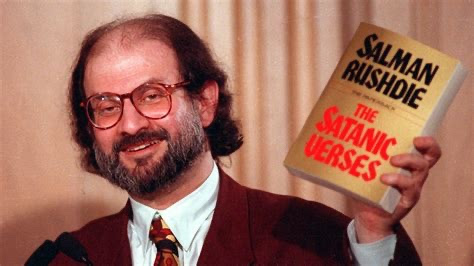
Salman Rushdie's Victory City: Stellar Author


Salman Rushdie's Victory City

'Stellar Author'

 an occasional series of posts on 

Kitchen Table Writers

Copyright New Yorker

Salman Rushdie was born in 1947 in what is now Mumbai, India, but is also a British-American citizen. One might say he's a citizen of the world, being a writer whose novels are  allegorical examinations of historical and philosophical issues. He achieves these heights by using magical realism, non-linear narratives and surreal but very believible characters. There is always a dark, yet gentle strain of humor, and a dramatic, exhuberant, unconstrained prose style. Rushdie has never muted what he wants to say about sensitive religious and political subjects, and as a direct result of this, he barely escaped with his life in New York in 2023.

I first encountered him when Midnight's Children came out in 1981 and immediatey won the James Tait Black Memorial Prize  and the Booker Prize. It was also awarded the special Booker of Bookers prize in 1993, and the Best of the Booker in 2008. It was so well recieved, it's been called 
Copyright  Sky News

a watershed in the post-independence development of the Indian English novel,  and in the 80s subsequenty became known as 'post-Rushdie'. The story moves back and forwards in time, but is focused on the children born in India at midnight on the moment of its independence. In it he employs inherited myths, and generates new myths as it traces the story of these children. 

Having loved Midnight's Children, which was his second novel, I couldn't wait to read The Satanic Verses when it came out in 1988. This is the story of two Muslims confused by the temptations of the west. The first returns to his cultural roots. The other, intellectually unable to return to the faith, finally kills himself. I loved it. One of its themes is the way immegrants are treated in the UK and another looks at the very foundations of Islam.  

As I read, it was being burnt. Despite the fact, that to me, a westener, I couldn't see any content that seemed to denounce or critique the faith of Islam, Muslims had many issues with the book, including the story, the title, and some of the names used. In December 1988, around 7,000 Muslims in Bolton held a peaceful protest where they burnt a copy of the book. The Ayatollah Khomeini, leader of Iran, announced a Fatwa was on 14th February 1989.

Could Rushdie have expected this reaction? 

Writers stick out their necks. By the nature of being able, especially via fictional works, to say anything about anything, they constantly fall foul of current morals, ethics and the law. Of course, it’s wise not to be disrespectful, especially without researching and understanding your chosen subject. On the other hand, remaining neutral and inoffensive generally results in bland, insubstantial writing. 

An attempt at a private prosecution to get The Satanic Verses banned was unsuccessful, in fact, the Home Office announced it would not allow any further blasphemy prosecutions. 

Martin Amis, who interviewed Rushdie, suggests… a Fatwa is at once a death sentence and a life sentence. In his own phrase, Rushdie is firmly ‘handcuffed to history’. He is neither a god nor a devil; he is just a writer – comical and protean, ironical and ardent…I bought an evening paper. Its banner headline read: EXECUTE RUSHDIE ORDERS THE AYATOLLAH. Salman had disappeared into the world of block caps. He had vanished into the front page…His uniqueness is the measure of his stoicism. Because no one else – certainly no other writer – could have survived so well…. Amis interviewed Salman in September of the same year, at a Mystery Location…‘When I first heard the news, I thought: I’m a dead man. You know: that’s it. One day. Two days’… (Visiting Mrs Nabokov, Penguin Books 1993  pg 172) 

After a failed assassination attempt  in 1989, Rushdie began came out of hiding and soon became a central figure in debates on free speech and censorship. In 2007 he received a knighthood for services to literature and by then, was in public more and more. 

On 12 August 2022, he was about to start a lecture in New York, when man rushed onto the stage and stabbed him repeatedly, including in the face, neck and abdomen. Rushdie was airlifted to a trauma centre  and underwent surgery. Only one day later, he was taken off the ventilator and was able to speak. He had lost sight in one eye and the use of one hand but survived the murder attempt and was soon writing a memoir about the attack, Knife: Meditations After an Attempted Murder, which hit number one in the Sunday Times Bestsellers List straight away. 

Perhaps the most Rushdiean part of this awful event was the fact he reported remembering a vivid dream, in which he was stabbed in a Roman amphitheatre, only two days before the actual stabbing occurred. The intensity of the dream caused him to consider canceling the event–but he eventually decided on attending.

Since then, just one novel has been released, an amazing, rich and vibrant story called Victory City which was mostly written before the attack. 

The story is  purported  to have been found, hidden in a earthenware pot by a woman called Pampa Kampana, who is reaching the end of her 250 years of life. It begins when she is nine, and watches her mother commit Sati along with hundreds of village women. Immediately after this tragedy, a goddess enters Pampa and she becomes magical, and long-lived.  She takes refuge in a cave with a holy man, and is abused by him, but also educated. 

She is still a young woman when the magic begins. Pampa instructs two of her brothers, Hukka and Bukka, to sow a bag of seeds at the site of their old village.  A city grows, and  people sprout from the earth. Pampa whispers memories into them, so they feel they have a history. The brothers become the first kings. Pampa marries them each in turn, though her daughters are born of her true love, a Portuguese horse trader who names the city Bisnaga.

The city she founds becomes a utopia—a feminist one–Pampa is an avid advocate for gender equality, and wishes her daughters to rein after her husbands’ deaths. This request is met with much conflict and her sons seize control of the kingdom. Pampa and her three daughters are forced to flee into a magical forest where they shelter for several decades. The three daughters eventually grow in separate directions and Pampa returns to Bisnaga. In her absence, she had become a legend, and, as she still looks much the same age, can move about the city freely. Eventually,  she becomes the advisor of the latest monarch, Krishnadevaraya.

After many wars to guard and widen the borders of the kingdom, Krishnadevaraya goes mad and Pampa, caught in one of his rages, is forcefully blinded with an iron-rod. She takes up refuge with a holy man, finally beginning to feel her age which is now over two hundred. The residents of the city become outraged at this betrayal and turn against their king and the kingdom degenerates and is ransacked and destroyed. The novel ends with Pampa burying her written history in a pot and waiting for the Goddess to release her so that she may die.

So what is this allegory about? 
It is possible that he has used an ancient empire, the  Vijayanagara, and to a degree followed major turning points in the history of the empire. But it strikes me we could actually be following major turning points of human history. Even so, there are moments that need careful analysis; for instance the invasion of the pink monkeys in the forests where Pampa and her daughters have settled. Who are the conniving pink monkeys who inveigle their way into the monkey tribes and then take them over? Maybe that is what human history was: the brief illusion of happy victories set in a long continuum of bitter, disillusioning defeats (pg 155).

 And why, when she takes refuge in a cave with a holy man after her mother’s death, is she regularly abused by him? This passage struck me: That's how men were, Pampa Kampana thought. A man philosophized about peace but in his treatment of the helpless girl sleeping in his cave, his deeds were not inlignment with his philospopy. 

Virupaksha Temple, Vijayanagara, Karnataka

In some ways, Pampa could almost be Salman, who has experienced both adoration and opprobrium for his acts of creation. Without doubt, to me, the writer is saying that we humans are both good and evil. In this book we meet oppression, religious zealotry, authoritarianism, divide, patriarchy. But there is also equality, redemption, the power of love, and a demonstration of how humans can be at their most creative when they live in an atmosphere of openness, tolerance, and egalitarianism.


The 'Stellar Author' series of posts on Kitchen Table Writers has looked at several amazing writers, including:

George Eliot

HenryJames

Cormac Mccarthy

Virginia Woolf

A S Byatt

Herman Melville

Boris Pasternak

Just click on the link to read the blogs. 

Monday, 30 December 2024

Finding your Writing Voice Part 3: A Craft of Creative Writing


In the previous two  blogposts in this short series, we looked at how you could start the process of finding your own unique writing voice. We established that your writing ‘voice’ is as valid as anyone’s, so long it has sufficient flow to hold a reader’s attention. You were offered some exercises to practise gaining a hold on your voice, and beginning to have confidence in it. You can find this blogpost here. 


We then looked at writing in a character's voice, and how this might be different...and the same...as your own unique writing voice. 


Hopefully, you're gaining that confidence as you write––whatever you write––because ‘voice’ matters whether you're engaged in poetry, fiction, nonfiction or whatever form or genre you write.You can find this blogpost here.


It might be said that the essence of a poet’s work is involved in voice. The prose writer’s decision on how the narrative voice should sound is also an essential one. Although more subtly understood, it’s important for the script writer to understand how they can employ voice in their work. Here is David Mamet (Great American Plays): The dramatic poetry (the text) must possess all the fluidity, rhythmic forces and tonal beauty of which the author is capable. This is to say it would be good if the playwright could actually write… 


In Writing for TV and Radio, Teddern and Warbutten, suggest ‘voice’ is about: direct address – talking to the audience The technique of direct address is frequent in radio plays, and was employed to great effect in the US version of the TV drama House of Cards. Here is Frank Underwood, in the opening scene of the first series.


He’s bending over a dog injured by a car. After sending the only other witness to fetch help, he turns directly to the camera and says: 


There are two kinds of pain. The sort of pain that makes you strong, or useless pain, the sort of pain that's only suffering. I have no patience for useless things. Moments like this require someone who will act, who will do the unpleasant thing, the necessary thing… And, looking down at the dog…There. No more pain… The voice, and what it shows us about Underwood, who has just broken the animal’s neck off screen, has our early attention.


We established that voice is closely related to pouring your thoughts into your writing, and you’ll find that your voice will be at its most confident when you write about the things you know best. ‘Write what you know’ is one of the oldest pieces of advice offered to writers, but confusion arises about this because the advice seems contradictory. Many writers create vivid pieces after researching a subject from scratch. Writers of fiction invent new worlds, or set stories in historic periods they can’t experience. How does this fit with the notion of writing only what you know?

Writing what you know means drawing on your experience, memories, knowledge and your passions. Struggling with subjects that have no interest for you will result in work that is flat and stilted. The very act of researching new ideas will be made easier if you have a sincere interest.


Style and Tone

The terms style and tone are often spoken about, especially in connection to whether a reader enjoyed a book and is talking about the voice of the author. But what are they, and how do they differ from the writer's voice? Are they something you should think about when you are writing or do they just happen? And aren’t they essentially the same thing?


Both are ways to express yourself, and serve an important purpose, while being quite different from each other.  


The words, sentence structure, and grammar—the nuts and bolts of language––create your style and form the way you tell your story. One writer's style might be long, flowing sentences, other writers love sparse, short sentences.  and simple, easy-to-understand words.Think about some of the authors or different genres you’ve read. Typically, each genre will have some style similarities, but each author will put his or her own touch on it. 


Start by asking if your writing style fits the genre you’re writing. For instance, a crime press release should not read like a crime thriller. After all, the reader will have expectations, and veering too far off the established path can cause them to lose interest or simply be too puzzled by the disparity between theme and style to keep reading. So your first step, then, is to find the appropriate style for the genre you are writing, and make it your own.


Tone

can be described as your ‘attitude’ when writing a piece; the feelings about the subject and content. Here is Donna Tart's protagonist: They were deep in their own world; for all the attention they were paying to me I might as well have been in Idaho but that was fine with me; I knew this story. My dad who’d been drama star in college, had for a brief while earned his living as an actor: voice-overs in commercials, a few minor parts (a murdered playboy, the spoiled son of a mob boss) in television and the movies. Then – after he’d married my mother – it had all fizzled out. (The Goldfinch). The tone Theodore takes as he describes his parents explains and illuminates his attitude to them.


When done well, the skilled writer can use the tone of their voice to entice the reader right into the mood – the way the writing makes you feel – of the narrator or other characters.


Exercise: Immersing in Style and Tone

Take a book by an author you admire and love to read (not necessarily contemporary). Read enough to immerse yourself in the writing style and the writer’s voice as well as the themes and forms that are characteristic of this author


Now think how you can use those skills without sounding like that writer. In other words when writing with your unique voice. 


Start by being intentional – Do some research, and figure out what styles and tones can work effectively for your genre. How do you want your work to come across to the reader? Choose your style and tone before you even begin. Remember, you want to find the appropriate style and tone and then make them your own.


Also be consistent – Make sure your writing stays true to those choices or make a full change if needed, but don’t flip flop. This involves reading your work closely after you have finished, to ensure your style and tone stays consistent throughout. Inconsistencies in style and tone can leave the reader confused or annoyed.


Verbal Inventiveness

Alongside the use of sound devices such as assonance, consonance, alliteration and euphony, writers of all disciplines have the opportunity to use phono semantics, employing sounds that create a meaning in the reader’s mind. Children’s writers often take advantage of onomatopoeia, which young readers enjoy. Phonetic symbolism – the emotional use of sounds – can work for adults, but needs to be subtle. Take for instance the use of certain longer sounds, such as EE OO and SS. These are often used in the genres of horror, sci-fi and ghost stories, while GL is visual – glittering, glowing and gleaming. S can sound underhand and slippery, while STR feels strong – strong enough for words used in connection with punishment, such as strapping, striking and even strangling. To find and use sounds in this way, without the reader consciously noting your use, keep an ear open yourself, as you read.


Eimear McBride uses audaciously radical and challenging language  in her book  A Girl Is A Half-formed Thing: 


Feel the roast of it. Like sunburn. Like a hot sunstroke. Like globs dropping in. Through my hair. Spat skin with it. Blank my eyes the dazzle. Huge shatter. Me who is just new. Fallen out of the sky


 McBride’s subject matter is harrowing and she wanted her novel to be a physical experience – a disjointing, sickening and often frightening experience. It was described as being written in…not so much a stream of consciousness, as an unconscious railing against a life that makes little sense… McBride wanted it to be seen as a clear attempt to push literary boundaries and break new ground in how language was used. Read the interview she gave for The White Review describing how she was trying to give us the thoughts in the first person of a young girl before those thoughts become words. http://www.thewhitereview.org/interviews/interview-with-eimear-mcbride/.


Exercise Thinking about Language

  • Advertising is a particular area where language is pulled apart and re-invented to help in the selling of goods and services.  So copy-writers come up with new words like melty, dependability, manscaping and ‘Stoptober’, for the NHS October campaign to help smokers quit smoking.
  • Choose any advertisement from any medium which attracts you because of its use of language (rather, say, than it imagery).
  • Write a poem, a prose freewrite, or a very short scripted scene, using any lingual inspiration or influences you can take from the advert.
  • Reflect on your use of language – whether this exercise made you think about the language you use, or if you want to experiment further with these elements – in your writing diary.


Sunday, 15 December 2024

HOW TO WIN THE BOOKER: EVERETT AND WOOD.


James: Shortlisted for the Booker Prize 2024

Although the  Booker shortlist is revered, and always anticipated, it has, in the past, been sometimes a bit of a let-down, often featuring books that are filled with 21st century angst, that are just too long or obscure or unnecessarily dense. Quite often they offer nothing but a bleakness that surely we can do without. This year, though, I've loved them all and can't wait to tell you what each book is about.  So far, in three posts, I've looked at the winner, which has  greener-than-green credentials...Orbital by Samantha Harvey, the deepest and most poetic, Held by Anne Michaels, and the raunchiest, The Safekeep byYael Van Der Wouden. In this post I'm going to look at two more before I finally turn my attention to the only 'quite long' novel on the list. 

James, by the long-acclaimed American author Percival Everett, who is back on the Booker shortlist after being there two years ago with The Trees, has written what I think is the funniest and most powerful novel on this list. 

Stone Yard Devotional, by Australian writer Charlotte Wood, is also a book that made me smile. Maybe Wood didn't want her book to be thought of as  'comic' but  it features, quite heavily, an infestation of mice in an isolated community of nuns, which decidedly raises more than one chuckle.

Percival Everett
Percival Everett
Before I began James, I did wonder if the world needed yet another retelling of Huckleberry Finn. But James is a hilariously dark, beautifully compassionate yet deeply corrective, perfect for the 21st Century reader. The titular James, as he'd rather be called, is nothing like the 'Yessum' Jim of the original. In fact, he, and his fellow Mississipi slaves only use such language when the white masters are around. In their heads, in the narrative of this book, and when they talk together, their English is perfectly received. This device allows Everett to present James as  a fully-rounded character, enabling his voice to be heard properly  and giving him the agency to direct his own life, even under threat of the whip.
 
Here's James teaching his children how to speak to slave owners. 

    "Let's try some situational translations. You're walking down the street and you see Mrs Holiday's kitchen is on fire. She's standing in her yard, her back to the house, unaware. How do you tell her?"   

     "Fire, Fire," January said.

    "Direct. And that's almost correct," I say.

    "The youngest of them, lean and tall five-year-old Rachel, said, "Lawdy, missum. Looky dere."

    "Perfect," I said. "Why is that correct?"

    Lizzie raised her hand, "Because we must let the whites be the ones who name the trouble." 

The reviewer Anna Bonet also loved this book; “Powerful” is an overused adjective when it comes to describing books, but it feels right here. In fact, James is more than that. At times, it is brutal to read – necessarily so, given that slavery is one of its primary subject matters – but it also manages to be light and funny and completely gripping. I could barely put it down.

When he realises he is going to be sold away from his beloved wife and children, he runs, falling in with Huck in much the same way as in the original Mark Twain, but in this story, he's the one who cares for the lad, leads their escape and engineers the happy ending. 


Charlotte Wood.
Charlotte Wood

Stone Yard Devotional has an unnamed narrator, who constantly surprises us. At the start of the novel she has abandoned her job and husband and, although not religious, decides to spend a short time in a rural Australian nunnery. The convent's routine of bells and service turns out to be just what she needs and she stays; a decision she never fully explains. As she moves through each day as a secular member of a convent, she reveals that she has uncomfortable memories of a girl in her class at school. This woman is now a famous nun, and is about to visit, bringing with her a corps the nuns wish to bury in their grounds. 

The story quickly becomes surreal, almost oppressive, as we watch, fascinated, a dance of manners between  the narrator, the charismatic Helen and the society of nuns. it takes a long time to get permission to give the corps a Christian burial, but meanwhile we witness the infestations of millions of mice being unceremoniously dumped into a deep hole in the ground. 

Orlando Bird, in the Telegraph, says this of the book;  Our narrator’s world is one of “dormant” truths waiting to be “released into the open at last”. Yet Stone Yard Devotional is all the more accomplished for resisting neat conclusions – “I don’t know why” is a familiar refrain – and recognising that even the examined life sits only “on the edge of comprehension”. Wood may not be the first artist to embrace uncertainties, mysteries and doubts, but at its best her novel does it beautifully.

It's a good read, but of the two, I will never forget James' journey up and down the Mississippi.